


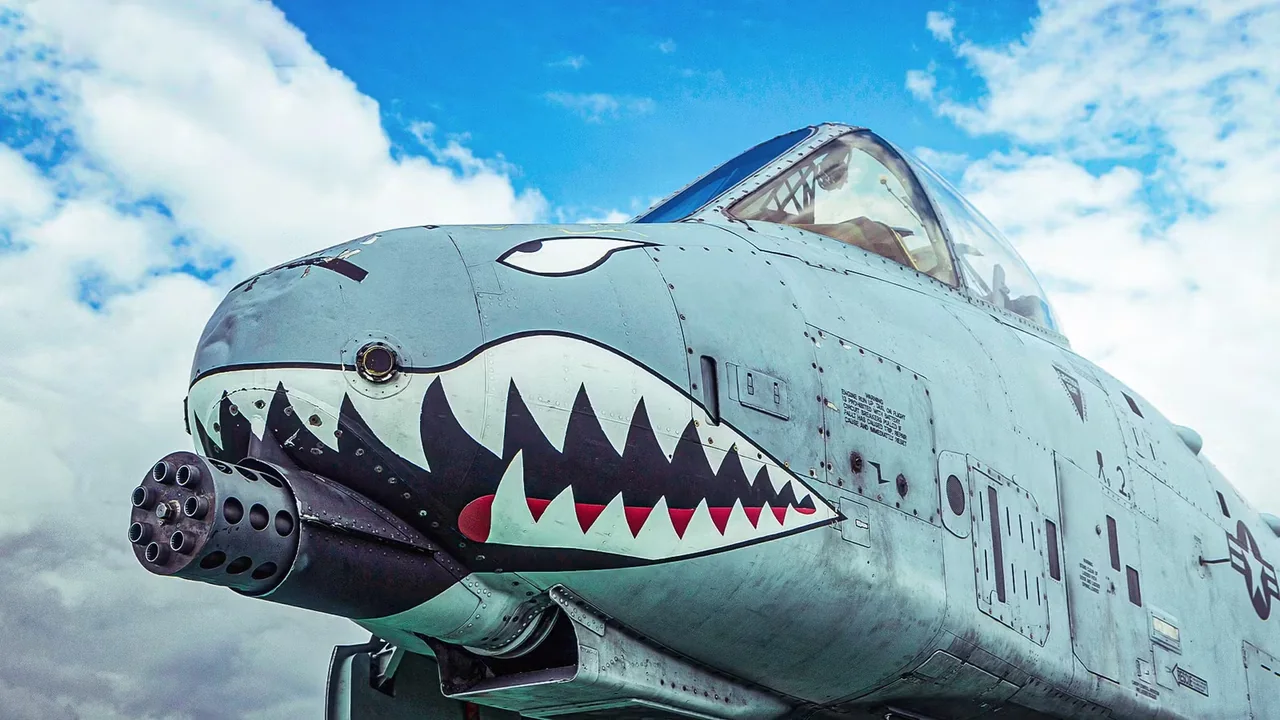
The US Air Force has extended the service life of the Fairchild Republic A-10 Thunderbolt II, also known as the Warthog, by several years. One squadron will remain operational until 2029, while two more squadrons will continue to fly until 2030.
This decision comes after the aircraft's impressive performance in Operation Epic Fury, where it demonstrated its ability to counter low-tech threats such as suicide drones. The A-10 has proven itself to be a superior asset in this type of warfare.
The Warthog's rugged design and simple maintenance make it an attractive option for militaries looking to operate at a lower cost. In contrast, fifth-generation fighter jets like the Lockheed Martin F-35 Lightning II are significantly more expensive to operate.

This decision highlights the importance of adaptability in modern military aviation. The A-10 has shown itself to be capable of adapting to new threats and technologies, making it a valuable asset for the US Air Force.
The aircraft's ability to hunt drones and provide close air support is particularly noteworthy. Its high readiness level thanks to its simple design makes it an attractive option for militaries looking to operate at a lower cost.
New weapons specifically designed for drone hunting have also played a key role in the A-10's success. The Precision Kill Weapon System II, for example, converts unguided 2.75-inch Hydra 70 rockets into precision-guided munitions.

The system was developed to be used on multiple aircraft platforms, including the Boeing F-15E Eagle and Lockheed Martin F-16 Fighting Falcon. Its low cost and effectiveness make it an attractive option for militaries looking to counter emerging threats.
The A-10's survival is directly tied to its ability to adapt to modern threats that more advanced jets struggle to address cost-effectively. This decision underscores the importance of investing in platforms that can effectively operate at a lower cost.
The A-10's adaptability and cost-effectiveness make it a valuable asset despite its age.


