
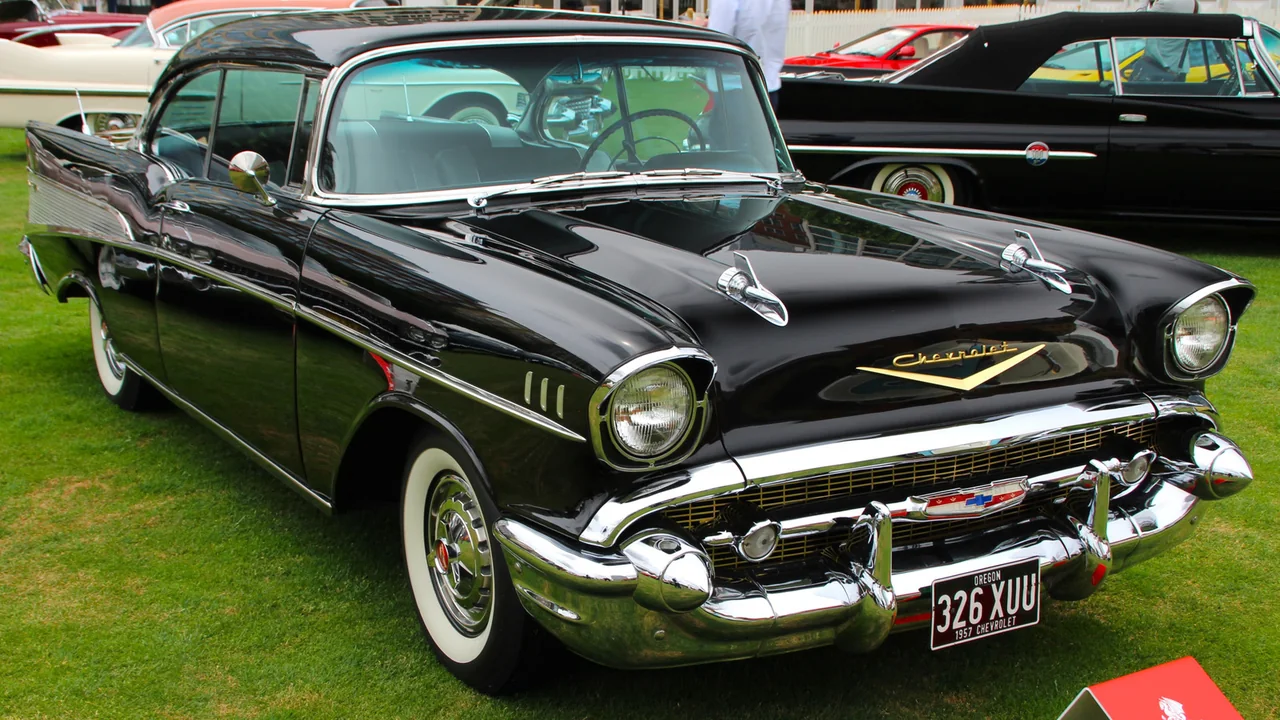
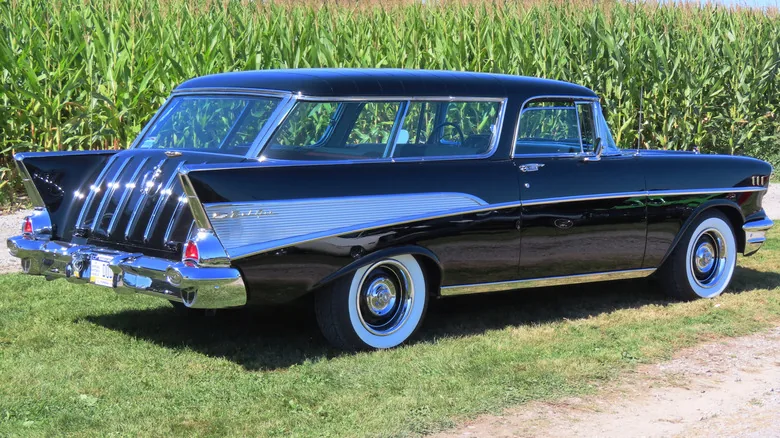
The 1957 Chevrolet Bel Air is a highly debated topic among car enthusiasts, with some considering it a true muscle car and others viewing it as a family vehicle. The Bel Air's bold style, innovative features, and strong performance make a strong case for its inclusion in the same class as early muscle-car legends like the Pontiac GTO, Ford Fairlane Thunderbolt, or the Dodge Charger. Its availability with the Super Turbo-Fire naturally aspirated 283-cubic-inch V8 engine, backed by Rochester Ramjet mechanical fuel injection, adds to its muscle-car credentials.
The Bel Air's motor was good for 283 horsepower at a time when making 1 horsepower per cubic inch was no mean feat. This impressive performance is often overlooked in favor of the car's more practical aspects, such as its station wagon body style offering two- or four-door configurations. However, this formula – stuffing a hi-po V8 into what was originally a large family-focused ride – is indeed a defining characteristic of a muscle car.
The Bel Air's engine options were varied, with six-cylinder and five available V8 setups offered as standard and optional upgrades. The top-of-the-line 283 V8 was a $480 option, which may seem steep by today's standards but highlights the car's performance capabilities.
The 1957 Chevrolet Bel Air is often compared to the Corvette due to its similar engine options, including the 283 V8 with fuel injection. This engine played a significant role in transforming the Corvette into a true sports car and delivering what's considered the first mass-produced and domestically branded car to achieve a 1:1 horsepower-to-cubic-inch-displacement ratio.
The Bel Air was bigger than the Corvette but still rode on the same-sized wheelbase, adding credence to its muscle-car claim. Its original styling cues gave it a length of 200 inches, which is comparable to other midsizers from the era.
The debate surrounding the muscle-car label and whether it should only be applied to cars from American brands is ongoing. Some argue that the term should encompass all high-performance vehicles, regardless of their country of origin.
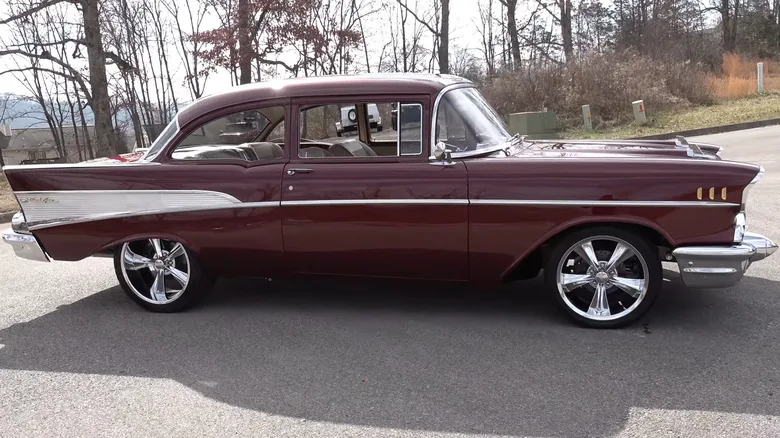
Others insist on drawing a distinction between muscle cars and pony cars, with some considering the Bel Air a pony car due to its more practical aspects. However, this classification overlooks the car's impressive performance capabilities.
The 1957 Chevrolet Bel Air is an iconic vehicle that embodies the spirit of American automotive innovation. Its strong performance, innovative features, and bold style make it a compelling argument for inclusion in the muscle-car category.
Ultimately, whether or not the 1957 Chevrolet Bel Air should be considered a muscle car depends on individual perspectives and definitions of the term.
The debate surrounding the Bel Air's classification as a muscle car serves as a reminder that the automotive industry is constantly evolving and that our perceptions of what constitutes a 'muscle car' may change over time.
The muscle-car label is often subjective and can vary depending on individual perspectives.