
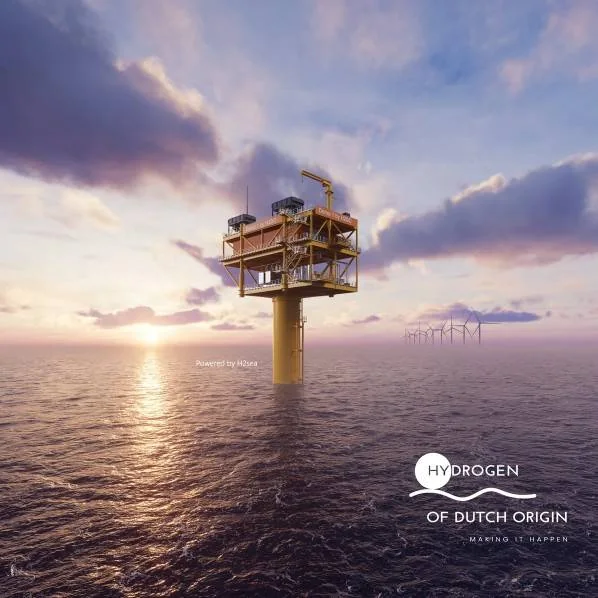
The Dutch North Sea is set to become a hub for green hydrogen production, with Hydrogen of Dutch Origin (H2DO) and its partners launching a feasibility study for a 30-50 MW offshore project. The initiative aims to demonstrate how offshore hydrogen can support the growth of offshore wind while reducing pressure on onshore infrastructure.
The study will evaluate the development of an offshore hydrogen production facility connected to shore by pipeline, with the goal of converting electricity from offshore wind farms into green hydrogen at sea. This concept has the potential to alleviate grid congestion and reduce the need for additional electricity transmission infrastructure.
H2DO's project is part of a broader effort to mature the concept of offshore hydrogen production, which is aligned with the objectives of the Hamburg Declaration. The declaration promotes offshore hydrogen as a means of supporting offshore renewable energy growth and strengthening Europe's energy security.
The consortium behind the project includes H2sea, Haskoning, TCI Risk Management, ECHT Regie in Transitie, Smulders HSM, and other participants involved in the offshore hydrogen value chain. The partners will assess technical, commercial, regulatory, and permitting requirements for the project.
The study's objective is to deliver a FEED-entry-ready concept design for an offshore hydrogen installation with a capacity of 30-50 MW, including hydrogen export infrastructure. This will help evaluate compliance with European renewable fuel standards and spatial planning considerations in the North Sea.
Commercial structures for hydrogen sales and the comparative economics of offshore hydrogen production versus onshore facilities supported by high-voltage direct current transmission systems will also be assessed during the study.
The project is expected to make significant contributions to the development of a resilient, European hydrogen value chain. By supporting offshore wind growth and reducing pressure on onshore infrastructure, the project can help achieve the Hamburg Declaration's objectives.
H2DO managing partner Patrice Hijsterborg described the study as a 'concrete step' towards making the ambitions of the Hamburg Declaration real at mid-sized scale. The project is expected to mature in 2031, with the potential for further development and demonstration projects in the future.
The launch of this feasibility study marks an important milestone in the development of offshore hydrogen production. As the energy landscape continues to evolve, initiatives like this one will play a crucial role in shaping the future of low-carbon energy production.