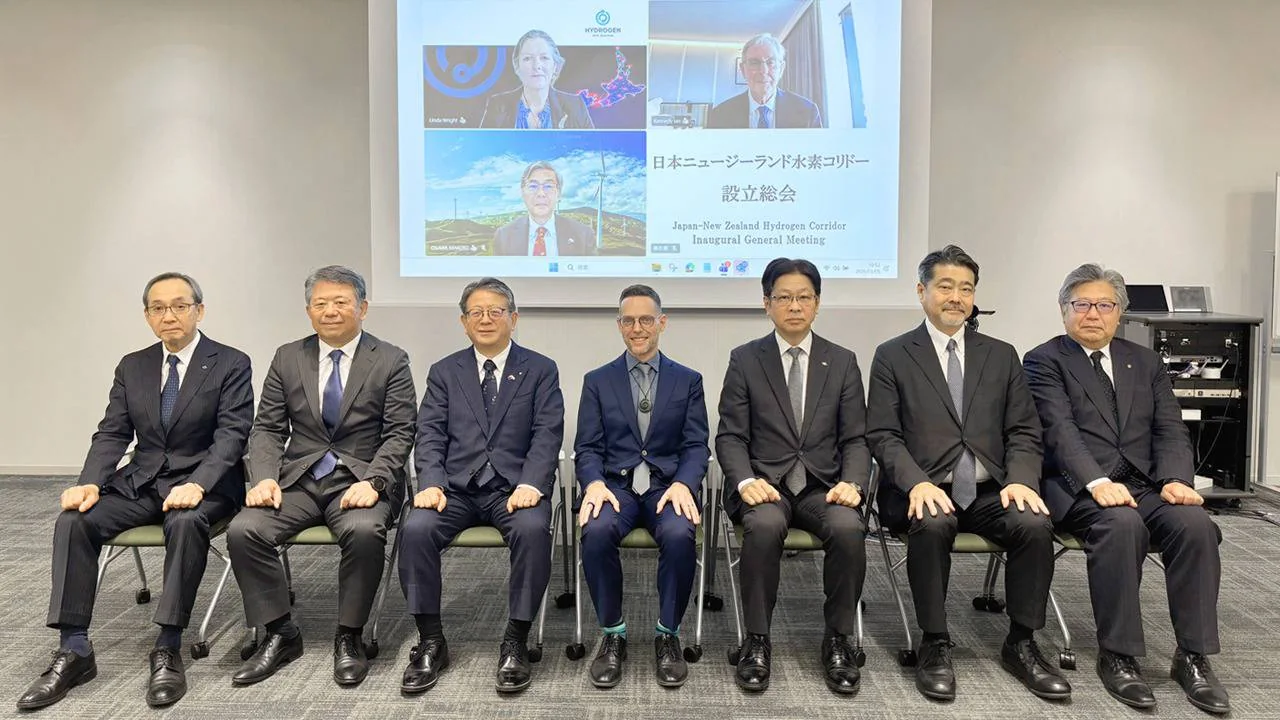
A significant step towards reducing greenhouse gas emissions has been taken by a consortium of four major Japanese companies, which have established the Japan–New Zealand Hydrogen Corridor. The initiative brings together Mitsui O.S.K. Lines, Obayashi Corporation, Kawasaki Heavy Industries, and Chiyoda Corporation to study the commercialization of green hydrogen production in New Zealand and export operations to Japan. By doing so, they aim to create a sustainable energy supply chain that will play a crucial role in Japan's decarbonization efforts.
The importance of green hydrogen as a clean energy source cannot be overstated. When burned, it produces only water vapor and heat, making it an attractive alternative to fossil fuels. However, the production and transportation of green hydrogen are still in their infancy, and significant investments are needed to make them economically viable.
Japan's energy self-sufficiency rate is alarmingly low, with renewable energy accounting for a mere fraction of total energy consumption. This has led the government to seek alternative sources of clean energy, and the Japan–New Zealand Hydrogen Corridor is seen as a key component of this strategy.
The consortium believes that meeting future large-scale demand for green hydrogen solely through domestic supply will be difficult, if not impossible. By partnering with New Zealand, which boasts abundant renewable energy resources, they hope to create a robust and sustainable supply chain.
New Zealand's geothermal power and hydropower resources are particularly well-suited for green hydrogen production. The country's government has also announced a policy to prioritize the development of its hydrogen industry, further solidifying its position as a leading hub in the Asia-Pacific region.
The Japan–New Zealand Hydrogen Corridor is expected to make significant contributions to advancing Japan's decarbonization efforts and strengthening its energy security. By importing green hydrogen from New Zealand, Japan can reduce its reliance on fossil fuels and lower its greenhouse gas emissions.
Imports of green hydrogen are also seen as a key component of Japan's sustainable energy supply under stable international relations. The country's diplomatic and trade ties with New Zealand make this a particularly promising partnership.
The consortium plans to begin studies in fiscal 2026, with the goal of building a hydrogen supply chain commencing in the early 2030s. This ambitious timeline reflects the companies' confidence in the potential of green hydrogen to transform Japan's energy landscape.
Ultimately, the success of the Japan–New Zealand Hydrogen Corridor will depend on the ability of the consortium to overcome technical and economic challenges. However, if successful, this partnership could pave the way for a new era of clean energy trade between Japan and New Zealand.
The partnership between Japanese and New Zealand companies highlights the growing importance of green hydrogen in the Asia-Pacific region.