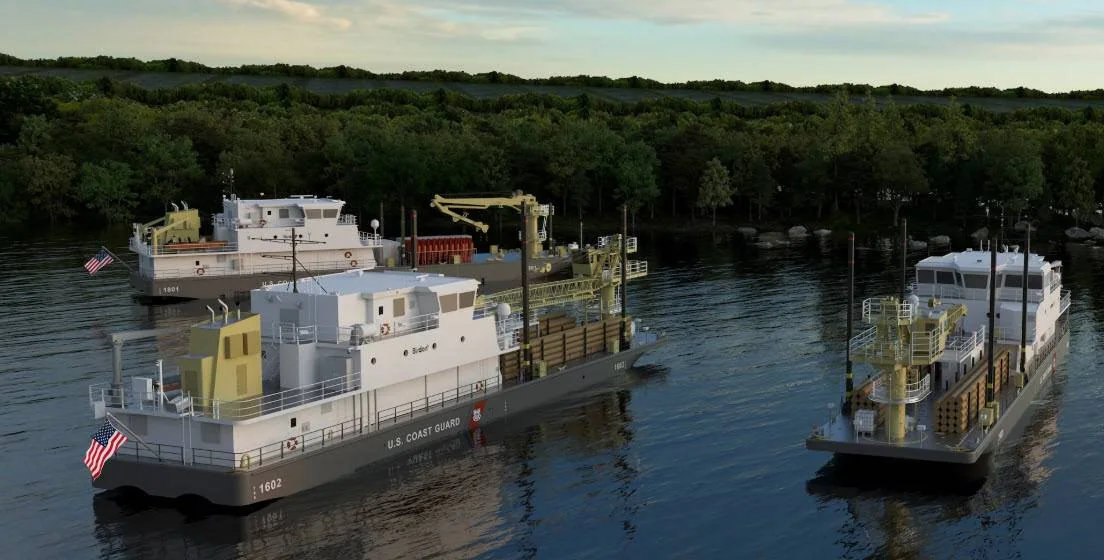
The U.S. Coast Guard has taken a significant step towards modernizing its inland fleet by authenticating the keels for three future Waterways Commerce Cutters (WCCs) on Friday in Bayou La Batre, Alabama. The ceremony marked a departure from traditional single-vessel ceremonies, where the keel of each vessel is authenticated simultaneously. This unique approach reflects the Coast Guard’s commitment to accelerating production rates and delivering the new fleet ahead of schedule.
The WCC fleet will be instrumental in maintaining the United States’ 12,000-mile marine transportation system, which supports over $5.4 trillion in annual economic activity and millions of American jobs. The acquisition of this fleet is supported by funding from the One Big Beautiful Bill Act, the largest single funding commitment in Coast Guard history, which included $162 million to accelerate production rates.
The first Waterways Commerce Cutter is expected to be completed in 2027, with all three cutters scheduled for completion within a decade. The new fleet will be designated as the 'Chief Petty Officer’s Class', in recognition of the close involvement of the chief petty officer community in its development.
Keel authentication is a time-honored maritime tradition that involves the ship's sponsor welding their initials onto a ceremonial plate permanently affixed to the cutter, signifying the foundation of the vessel. This ceremony marks an important milestone in the construction process and serves as a symbol of the Coast Guard’s commitment to its legacy.
The 'Chief Petty Officer Class' designation highlights the close relationship between the chief petty officer community and the new fleet. Many of the chief petty officers who will serve on these cutters were in attendance at the ceremony, demonstrating their pride and dedication to their roles.
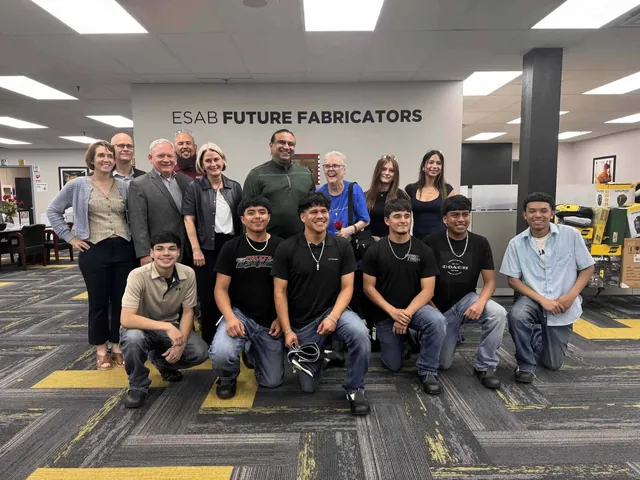
All three cutter sponsors attended the ceremony, including Delia Corbley, Kristin Permenter Melvin, and Barbara Wilson. These individuals have a deep connection to the Coast Guard and its history, with some being direct descendants of the cutters' namesakes.
The new fleet will play a critical role in controlling, securing, and defending America’s ports and waterways. The Coast Guard's modernization efforts are essential for maintaining the country's maritime security and economic stability.
The WCC fleet is expected to replace the Coast Guard’s legacy inland tender fleet, which has been in service for decades. This transition will enable the Coast Guard to focus on emerging threats and maintain its ability to respond to a wide range of maritime challenges.
As the Coast Guard continues to modernize its fleet, it is clear that the Waterways Commerce Cutters will be an essential component of its efforts to protect America's ports and waterways. The new fleet's designation as the 'Chief Petty Officer’s Class' serves as a testament to the close relationship between the chief petty officer community and the Coast Guard.
The new fleet will play a critical role in controlling, securing, and defending America’s ports and waterways.