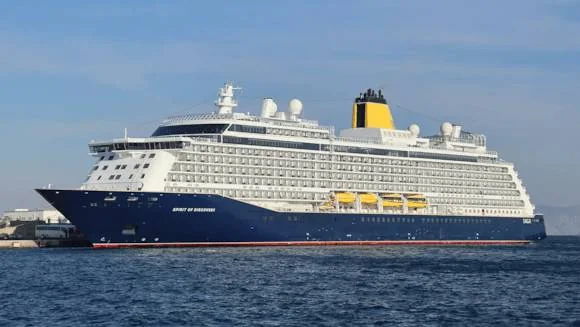
The UK Marine Accident Investigation Branch has released its report into the loss of propulsion experienced by the passenger vessel Spirit of Discovery in the Bay of Biscay, a region notorious for its unpredictable weather patterns. The incident occurred on November 4, 2023, and resulted in over 100 injuries and one fatality. The crew's decision to cross the Bay of Biscay was not effectively challenged by the operational teams ashore, leaving the vessel vulnerable to the harsh conditions.
["The report reveals that the initial loss of control was exacerbated by unexpected parking of both propulsion pods at 90 degrees to the vessel's heading, which led to violent motion and propeller exposure. This critical failure highlights the need for improved communication and coordination between crew members and shore-based teams. Furthermore, the lack of implementation of the mass casualty incident plan contributed to the medical team becoming overstretched, leaving patients without adequate care.", ['The Spirit of Discovery tragedy is a stark reminder of the importance of prioritizing vessel safety and crew decision-making in heavy weather conditions. The incident serves as a wake-up call for the cruise industry to re-examine its safety protocols and take proactive measures to prevent similar incidents from occurring in the future. By learning from this tragic accident, the industry can work towards creating a safer and more resilient maritime ecosystem.', ['The report identifies several key safety issues that contributed to the incident, including the loss of propulsion due to violent motion, overspeed, and automatic shutdown. These findings underscore the need for improved vessel design and maintenance, as well as enhanced crew training programs. By addressing these critical areas, the industry can reduce the risk of similar incidents occurring in the future.', ['The Cruise Lines International Association has been recommended to increase the number of medical personnel with an Advanced Trauma Life Support qualification carried on passenger vessels, a crucial step towards improving response times and patient care during emergency situations. Additionally, updating policies on securing vessel furniture in heavy weather will help prevent similar accidents from occurring in the future.', ['The incident highlights the importance of effective communication and coordination between crew members, shore-based teams, and medical personnel. By fostering a culture of transparency and cooperation, the industry can work towards creating a safer and more responsive maritime ecosystem. This includes implementing standardized safety protocols and providing regular training for crew members on emergency procedures.', ['The Spirit of Discovery tragedy is a sobering reminder of the risks involved in cruising and the importance of prioritizing vessel safety. As the cruise industry continues to evolve, it is essential that safety remains at the forefront of every decision-making process. By learning from this tragic accident, the industry can work towards creating a safer and more resilient maritime ecosystem.', ['The incident has sparked a renewed focus on vessel safety and crew decision-making in heavy weather conditions. The Maritime and Coastguard Agency has been recommended to propose international carriage requirements for electronic inclinometers, which will help improve vessel stability and reduce the risk of similar incidents occurring in the future.', ["Ultimately, the Spirit of Discovery tragedy serves as a reminder that safety is everyone's responsibility in the maritime industry. By working together to address the critical issues identified in this report, the industry can create a safer and more resilient ecosystem for all passengers and crew members."]]]]]]]]
The Spirit of Discovery tragedy highlights the importance of prioritizing vessel safety and crew decision-making in heavy weather conditions.