
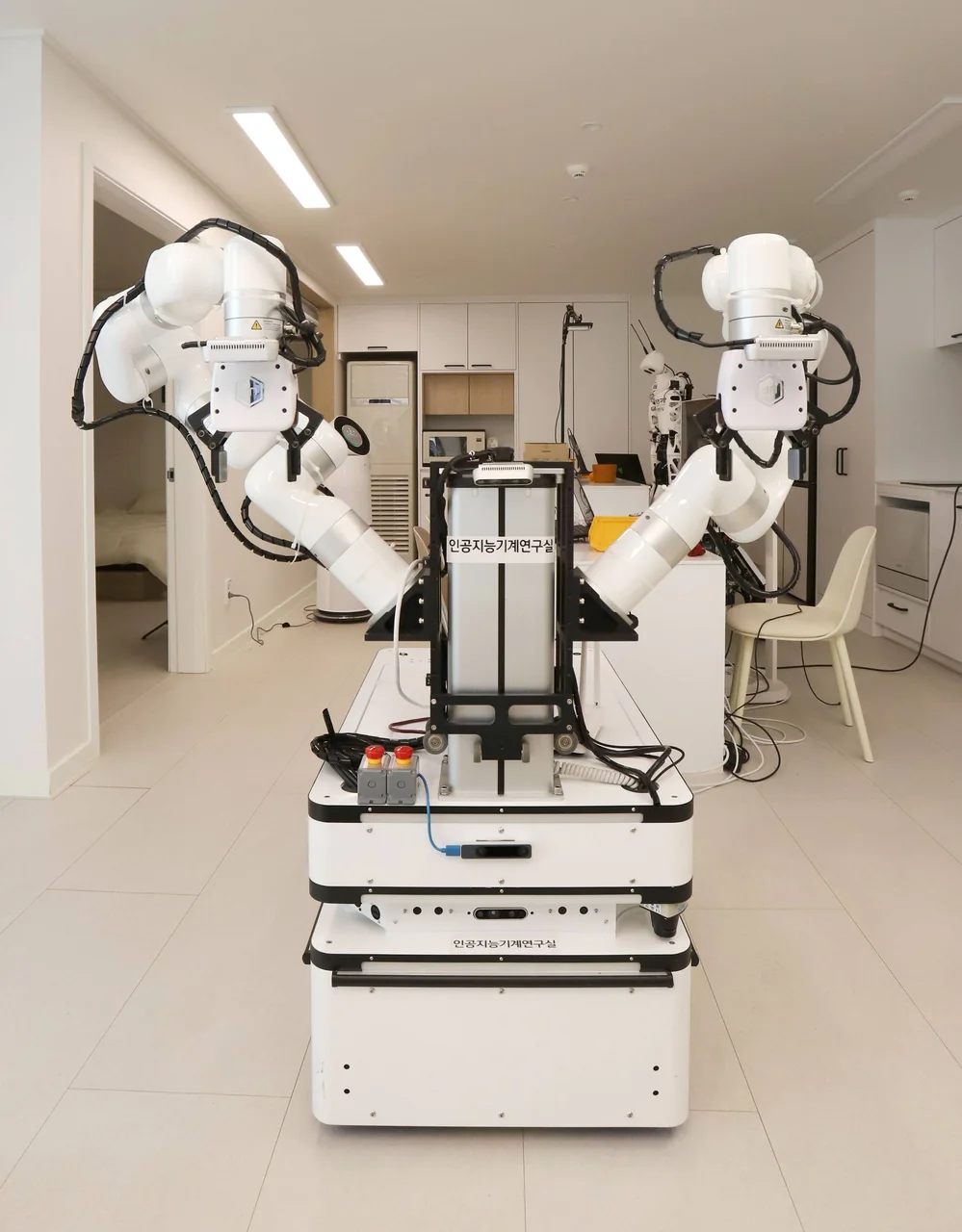
Korea Institute of Machinery and Materials (KIMM) has made a groundbreaking achievement in the field of robotics by developing a cutting-edge AI system designed to learn and perform everyday repetitive tasks. This innovative technology is the result of extensive research conducted by a team led by Dr. Jeong-Jung Kim at KIMM's Research Institute of AI Robotics. The system, which is poised to revolutionize the way robots interact with their environment, enables robots to complete common activities such as organizing items, clearing tables, and manipulating objects with unprecedented efficiency.
The technology developed by KIMM's research team is designed to automate labor-intensive routine work across various environments, including homes, offices, retail stores, and logistics facilities. By leveraging this system, industries can significantly reduce the burden of manual labor, leading to increased productivity and improved worker safety. Furthermore, the integration of AI in these settings will also enable robots to adapt to changing environmental conditions, ensuring seamless operation even in dynamic environments.
At the core of the platform lies a hierarchical task execution framework that allows robots to break complex jobs into sequential steps and carry them out systematically. This innovative approach enables the system to learn tasks by observing how humans perform them, converting those demonstrations into data that the robot can use to replicate the process. The AI learning process is facilitated through three key technologies: task extraction, virtualized training environments, and hierarchical execution AI.
The KIMM-developed platform differs from many existing robot task systems, which often rely on single-task datasets or simulation-only testing. In contrast, this new framework integrates the full development pipeline—from dataset construction to real-world testing using physical robots. This comprehensive approach ensures that the system is thoroughly tested and validated before being deployed in various settings.
During extensive testing, the system achieved success rates above 90% across multiple tasks, demonstrating strong reliability and adaptability even when environmental conditions change. This impressive performance underscores the effectiveness of KIMM's innovative approach to AI development in robotics. The ability of the system to learn from demonstrations and adapt to new situations will be crucial in real-world applications.
According to KIMM researchers, the technology has significant implications for the expansion of service robots in sectors such as retail merchandising, warehouse logistics, and general workplace support. By automating routine tasks, these robots can focus on more complex and high-value tasks, leading to increased productivity and improved customer satisfaction. Furthermore, this development will also pave the way for the creation of more sophisticated robots capable of supporting a wide range of daily service tasks.
The research is part of KIMM's RoGeTA (Robot General Task AI) framework program running from 2024 to 2029, which aims to develop robot intelligence capable of supporting a wide range of daily service tasks. The researchers also plan to release task datasets and virtualized models of real environments to help accelerate development of future service robots. This collaborative effort will ensure that the benefits of this technology are shared across various stakeholders in the industry.
The KIMM Research Team's achievement marks a significant milestone in the advancement of service robots, enabling them to perform complex tasks with increased reliability and adaptability. As the field continues to evolve, it is essential to recognize the importance of innovative research initiatives like this one, which will drive progress in robotics and transform industries for the better.
The successful development of this AI system by KIMM's research team demonstrates the power of interdisciplinary collaboration and cutting-edge research. By pushing the boundaries of what is possible in robotics, this achievement has the potential to revolutionize various sectors and improve the lives of people around the world.
The development of this new robot task artificial intelligence system marks a significant milestone in the advancement of service robots, enabling them to perform complex tasks with increased reliability and adaptability.