
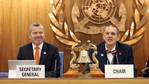
The International Maritime Organization's Sub-Committee on Ship Design and Construction (SDC) held its 12th session at IMO Headquarters in London, January 19-23, and was chaired by Mr. Erik Tvedt (Denmark). Outcomes include the development of a safety regulatory framework for ships using new technologies and alternative fuels to reduce greenhouse gas emissions.
The draft workplan will be submitted to the Maritime Safety Committee (MSC 111) for approval in May 2026. The Sub-Committee has also progressed the work on reducing underwater radiated noise from commercial shipping, with an extended experience-building phase until 2028. Additionally, a study on URN emissions was agreed upon, aiming to generate in-water estimates and help determine targets for reducing URN by 2030.
The completion of these initiatives will ensure that safety considerations evolve in parallel with the rapid technological progress driven by the IMO's Strategy on the Reduction of GHG Emissions from Ships. This will enable ships to adopt new technologies and alternative fuels, while maintaining the highest level of safety standards. The Sub-Committee has made significant progress in addressing the challenges posed by emerging technologies and environmental concerns, setting a positive direction for the maritime industry.
The completion of these initiatives will provide a solid foundation for the implementation of sustainable shipping practices, reducing the impact on the environment and promoting safe and efficient navigation. The IMO's efforts to reduce GHG emissions from ships are crucial in mitigating climate change, and the Sub-Committee's work will play a vital role in achieving this goal. By adopting new technologies and alternative fuels, the maritime industry can significantly reduce its carbon footprint and contribute to a more sustainable future.
The Sub-Committee's progress on reducing underwater radiated noise from commercial shipping is also noteworthy, as it highlights the importance of addressing environmental concerns while maintaining safety standards. The extension of the experience-building phase until 2028 will provide valuable insights into the implementation of the Revised URN Guidelines and help identify areas for improvement. Overall, the Sub-Committee's work demonstrates a commitment to innovation, sustainability, and safety, setting a positive example for the maritime industry to follow.
By adopting these initiatives, ships can reduce their environmental impact while maintaining the highest level of safety standards, creating a more sustainable future for generations to come.