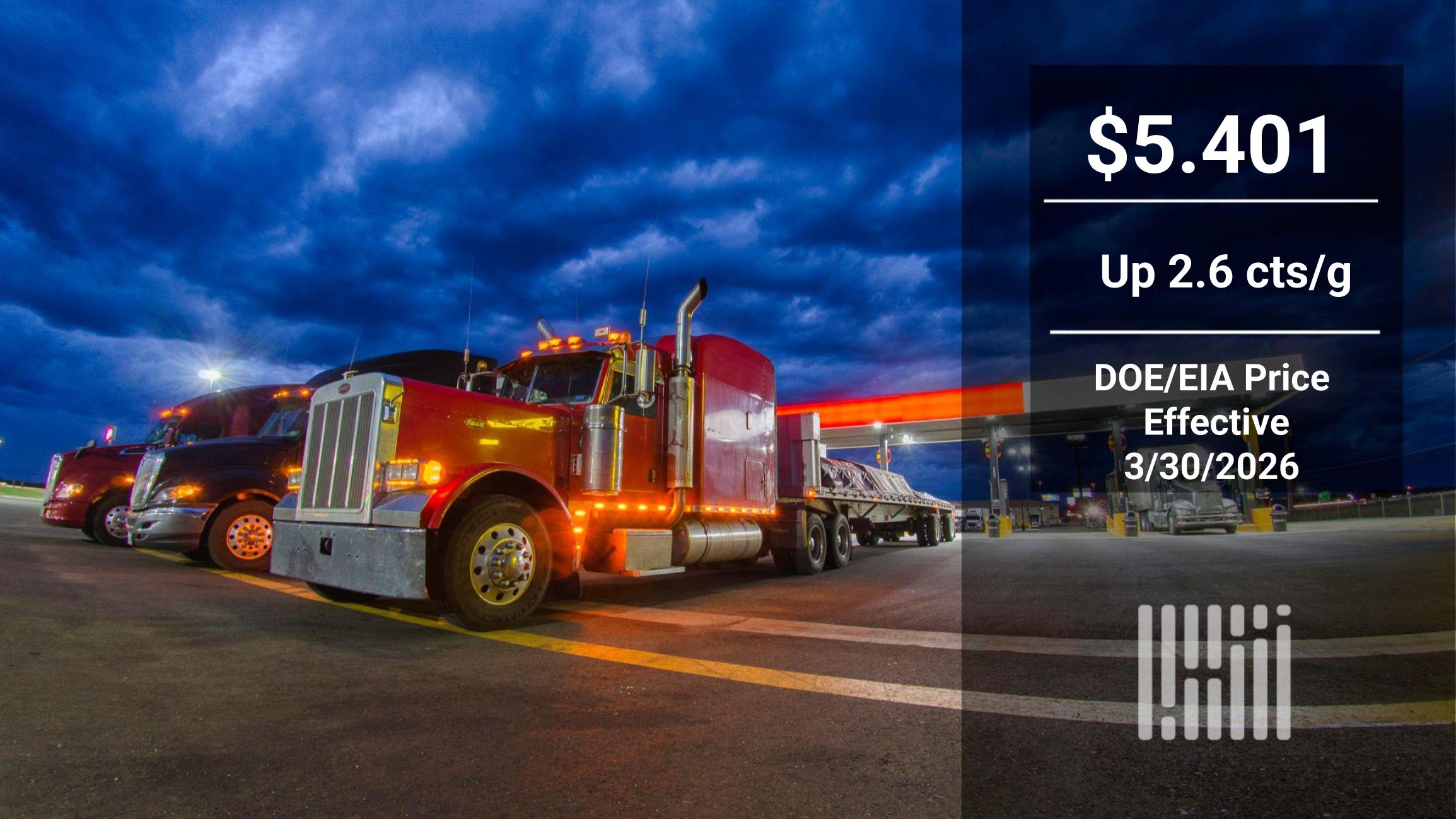



The national average price of a gallon of diesel has reached $5.40, with California's average price exceeding $7 per gallon, according to the latest data from the Energy Information Administration. This represents a significant increase from last year, with prices rising by nearly $1.81 over the past 12 months. The current surge in diesel prices is largely driven by global events, including the ongoing conflict in the Middle East and its impact on oil production and supply chains.
The recent price hike has already started to have a ripple effect on the trucking industry, with carriers responding by cutting deadhead miles, looking for lighter loads, and slowing down. According to Industry Analyst Dean Croke, DAT Freight & Analytics, these measures are designed to reduce fuel costs and increase profitability. By doing so, carriers can mitigate the impact of rising diesel prices and maintain their competitiveness in a rapidly changing market.
The national average fuel surcharge for dry van freight has also increased, from 44 cents to 60 cents per mile, following the strikes on Iran. This rise is largely driven by the uncertainty and volatility surrounding global oil markets, making it challenging for carriers to predict and prepare for future price fluctuations.
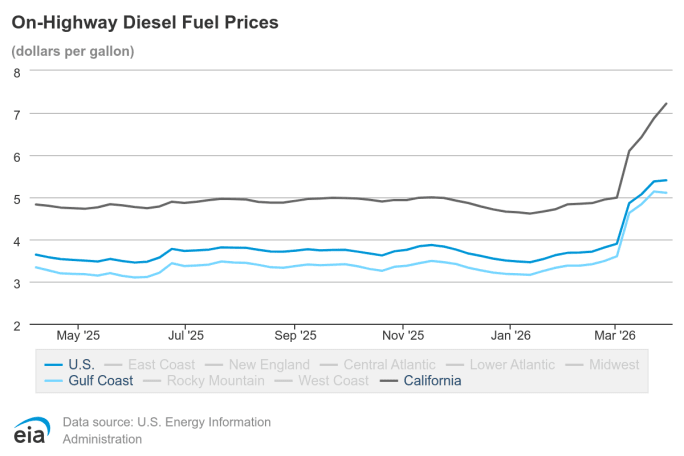
Despite these challenges, some regions have seen slight decreases in diesel prices, with the Lower Atlantic, Midwest, and Gulf Coast experiencing moderate declines. However, most other regions have witnessed significant increases, underscoring the widespread impact of rising diesel prices on the trucking industry.
The current situation highlights the delicate balance between fuel costs and carrier profitability. As diesel prices continue to rise, carriers must adapt their business strategies to stay competitive and maintain profitability. This may involve exploring alternative routes, negotiating better rates with shippers, or investing in more fuel-efficient vehicles.
The war in the Middle East has also had a significant impact on global oil markets, with crude oil futures prices continuing to be volatile. Despite recent signs of hope for a peaceful resolution, the ongoing conflict remains a major concern for energy markets and the trucking industry.
Crude oil futures on March 31 dropped slightly on signs of hope for the end of the war but were still over $100 per barrel. This volatility is likely to continue, making it challenging for carriers and shippers to predict and prepare for future price fluctuations.
The impact of rising diesel prices will be felt across the supply chain, from carriers and shippers to consumers and ultimately, the broader economy. As the situation continues to unfold, it will be essential for industry stakeholders to remain vigilant and adapt their strategies to mitigate the effects of these price increases.
In conclusion, the current surge in diesel prices is having a profound impact on the trucking industry, from carriers' business strategies to shippers' negotiations and consumers' wallets. As the situation continues to evolve, it will be crucial for industry stakeholders to work together to find solutions that balance fuel costs with carrier profitability and support economic growth.
As the global energy landscape continues to shift, one thing is clear: rising diesel prices are here to stay for the foreseeable future. Carriers must prioritize their business strategies to remain competitive and maintain profitability in a rapidly changing market.
As diesel prices continue to rise, carriers are forced to reevaluate their business strategies, prioritizing profitability over volume.