

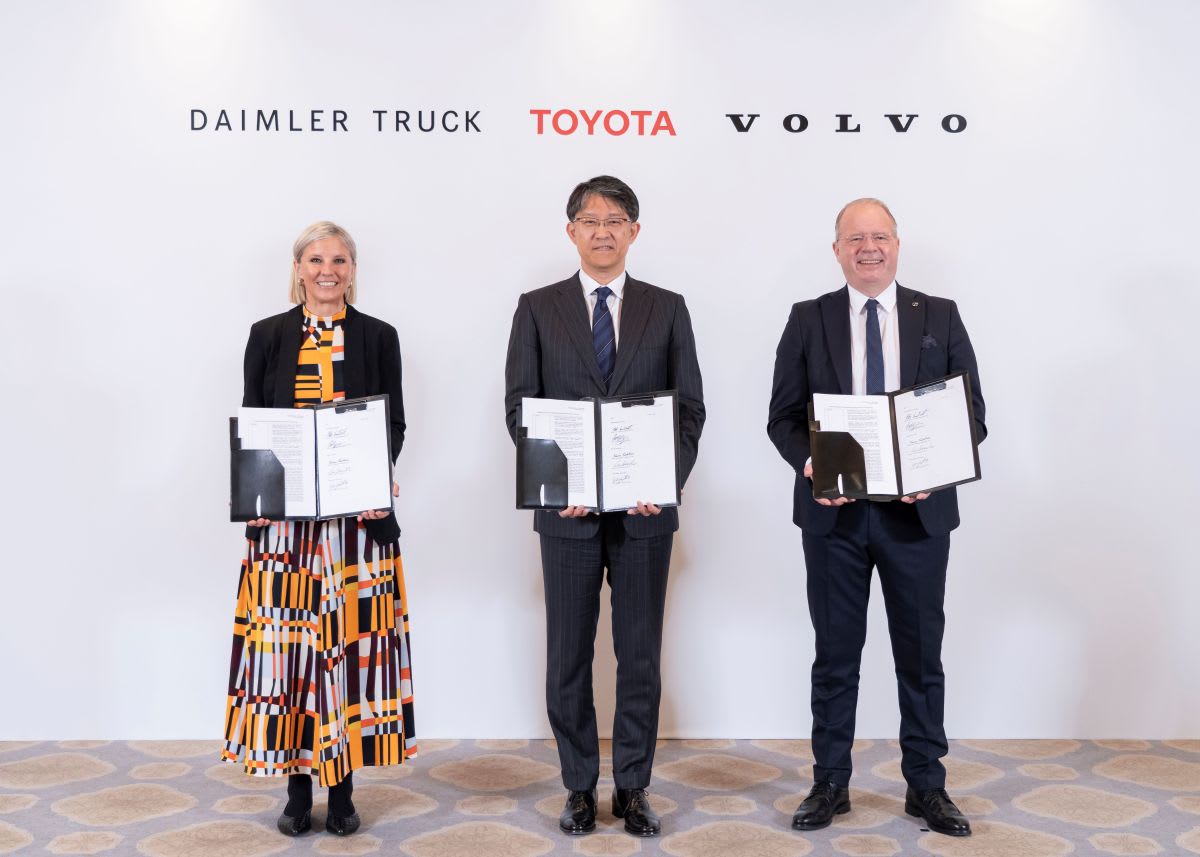
Toyota is preparing to join forces with Daimler Truck and Volvo Group in a move aimed at accelerating the development of hydrogen fuel cell technology for heavy-duty trucks. The three global manufacturers have signed a non-binding memorandum of understanding that would make Toyota an equal partner in Cellcentric, the fuel cell joint venture Daimler Truck and Volvo launched in 2021. This partnership is expected to bring together Daimler and Volvo's commercial-vehicle expertise with Toyota's decades of fuel-cell development experience.
The companies intend to share technological developments and address common challenges, with the aim of achieving sustainable and effective implementation of fuel cell systems for heavy-duty applications. By combining their capabilities, the parties believe they can move faster toward commercialization, which remains a challenge for hydrogen trucking due to cost, infrastructure, and production hurdles.
Toyota would contribute its experience in fuel cell stack development and manufacturing, while working with Cellcentric on core components such as fuel cell unit cells and related systems architecture. This collaboration is critical to scaling hydrogen-powered transport, as the companies recognize that a unified approach is necessary to overcome the technical and economic barriers currently hindering widespread adoption.
The partnership also reflects the growing recognition within the industry that hydrogen fuel cell technology has a unique role to play in heavy-duty trucking. While batteries are expected to dominate shorter-haul applications, fuel cells are seen as a solution for long-haul and high-load operations where range and refueling time are critical.
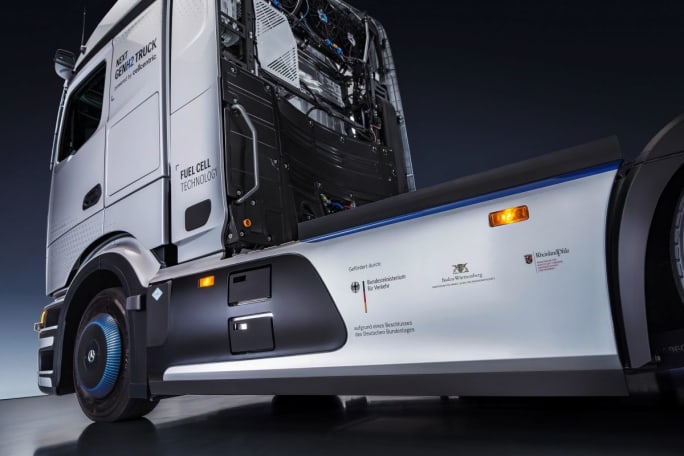
Daimler Truck's recent unveiling of the Mercedes-Benz NextGenH2 Truck is a notable example of this trend. The company plans to manufacture 100 units in a small-series production run at its German plant, with deployment expected to begin near the end of 2026.
For Daimler Truck and Volvo, trucks powered by hydrogen fuel cells are seen as complementary to battery-electric trucks. By joining forces with Toyota, the companies aim to accelerate the development of this technology and make it more viable for heavy-duty applications.
The partnership is also significant because it brings together three major players in the industry, sending a strong signal to the broader ecosystem about the importance of collaboration in scaling hydrogen technology. This, in turn, could help to stimulate investment and innovation in the sector.
However, momentum for hydrogen fuel cell trucks in the United States seems to have largely stalled since the exit of Nikola and Hyzon from the market early last year. The entry of Toyota into Cellcentric is a welcome development that underscores the ongoing commitment of major manufacturers to this technology.
The partnership is likely to have a positive impact on the industry, as it demonstrates the growing recognition within the sector of hydrogen fuel cell technology's potential to play a key role in decarbonizing transport. As the companies work together to overcome the challenges facing hydrogen trucking, they may be able to create a more sustainable and effective solution for heavy-duty applications.
The partnership between Toyota, Daimler Truck, and Volvo Group marks a significant step towards accelerating the adoption of hydrogen fuel cell technology for heavy-duty trucks.