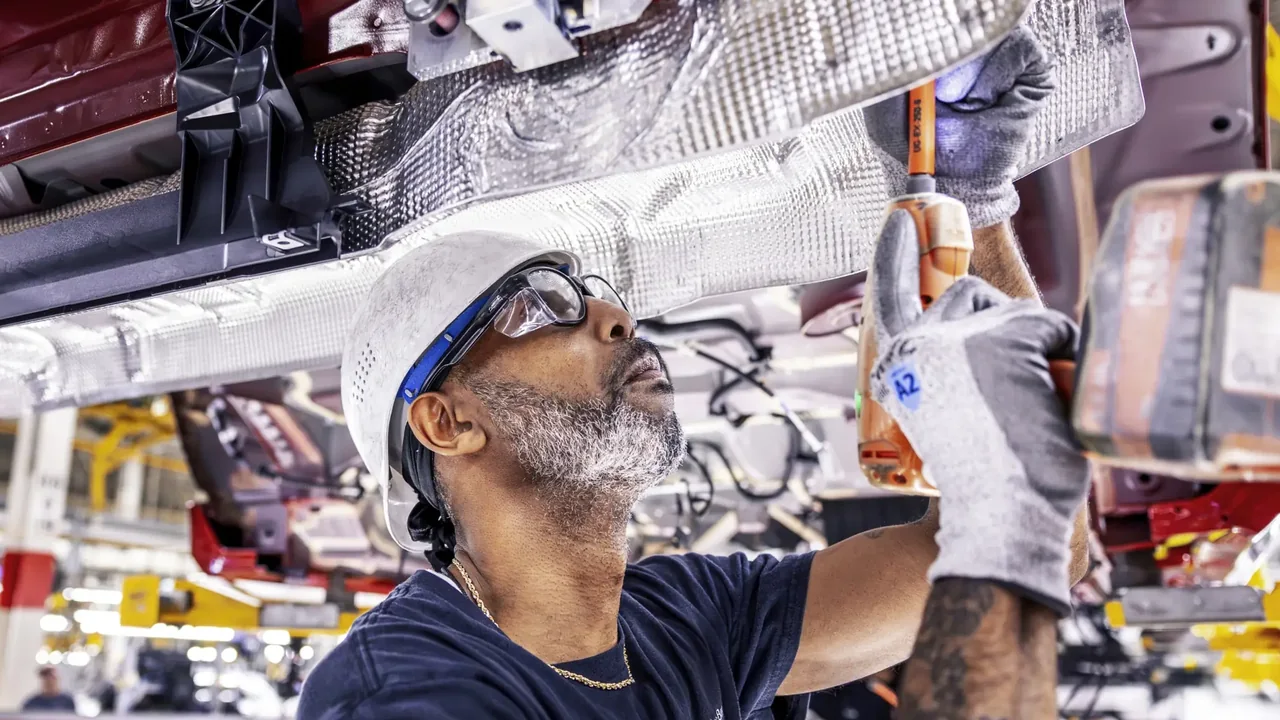
Mercedes-Benz has announced a significant investment plan for its Vance, Alabama plant, with a total value of $4 billion by 2030. The German automaker's first U.S. production facility has been in operation since 1997 and employs over 5,800 people. This new investment will further solidify the plant's position as a major manufacturing hub in the region.
The Vance plant is one of two M-B plants served by Norfolk Southern, with the other being a van production facility located in North Charleston, South Carolina. Both plants are among the railroad's 26 auto assembly customers, highlighting the importance of rail transportation in supporting the automotive industry.
According to the Alabama Department of Commerce, the Vance plant exports approximately 60% of its annual output. This significant export component underscores the plant's importance as a driver of economic growth and job creation in the region.

At a ceremony marking the production of 5 million vehicles since the plant opened in 1997, Governor Kay Ivey praised the partnership between Mercedes-Benz and Alabama, stating that 'Thirty years ago, Mercedes-Benz changed the landscape of Alabama, and there is no doubt that Alabamians have changed the landscape of Mercedes-Benz.' This sentiment reflects the significant impact that the plant has had on both the state's economy and the company's operations.
Mercedes-Benz board member Michael Schiebe emphasized the importance of the Vance plant, saying 'This plant has built something remarkable, not just cars but a legacy.' The company's commitment to the plant is evident in its plans for further growth and investment.
The Vance plant produces a range of vehicles, including the GLE, GLS, and GLE Coupe SUVs, as well as AMG performance variants and the Mercedes-Maybach GLS. Additionally, the plant will soon begin production of the GLC SUV, marking an expansion of its product lineup.
The investment in the Vance plant is part of a broader trend in the automotive industry, with other major manufacturers such as Honda, Hyundai, and Mazda-Toyota also establishing assembly plants in Alabama. Combined, these plants produce over 1 million vehicles per year, highlighting the state's growing importance as a hub for automotive manufacturing.
The growth of the automotive industry in Alabama has significant implications for the region's economy and transportation infrastructure. As the demand for vehicles continues to rise, it is likely that the Vance plant will play an increasingly important role in meeting this demand.
Overall, the investment by Mercedes-Benz in its Vance plant represents a major commitment to the region's economic growth and job creation. As the company looks to expand its operations and increase production, it is clear that Alabama will remain a key partner in its success.