


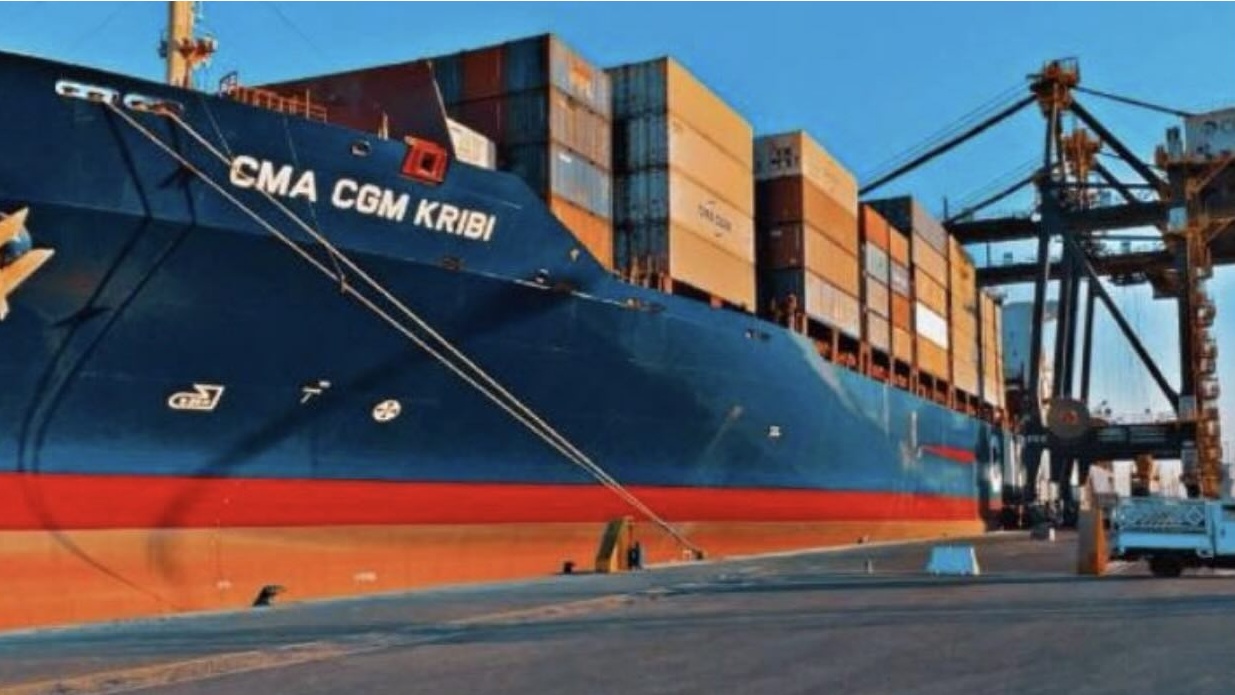
A French-operated container ship became the first vessel of a major liner to exit the Strait of Hormuz since Iran asserted control of the gateway to the Persian Gulf. The 5,500-TEU CMA CGM Kribi crossed the narrow passage on its way out of the Persian Gulf. Online tracking showed the ship broadcast an “owner France” identification message, indicating it was not subject to any restrictions or tolls.
The exact terms under which the liner company agreed to allow the Malta-flagged ship’s transit are unknown. Tehran has been reported to have charged a toll to permit other vessels safe passage through the strait. This move by CMA CGM is significant as it highlights the growing importance of finding alternative routes for global trade.
CMA CGM was the lone major carrier to continue scheduled operations through the Red Sea after Houthi rebels in Yemen shut down the Suez Canal route in 2024. The company operates its Medex, Mex and Bex2 services connecting Asia and the Mediterranean through the Red Sea. This move by CMA CGM demonstrates its commitment to maintaining a reliable supply chain despite the challenges posed by global tensions.

The Strait of Hormuz is a critical trade route for global oil and gas supplies, with Iran and Oman reportedly discussing how to manage control of the strait. The United Kingdom has convened 35 countries – excluding the United States – for discussions on how to reopen the critical trade route. This move highlights the growing importance of international cooperation in addressing global supply chain challenges.
The Kribi’s transit was first reported by Lloyd’s List, and its departure marks a significant shift in the way major carriers approach the Strait of Hormuz. The fact that CMA CGM chose to exit the strait without incident suggests that it has found alternative routes that can meet the needs of its customers.
The closure of the Suez Canal route in 2024 had a significant impact on global trade, with the United Nations reporting that Houthi rebels had extorted billions of dollars from vessels. The move by CMA CGM to continue operations through the Red Sea demonstrates its resilience in the face of these challenges.
As the global economy continues to navigate the complexities of international relations and supply chain disruptions, companies like CMA CGM are playing a critical role in finding alternative routes and maintaining reliable supply chains. Their efforts will be closely watched by s and policymakers as the situation continues to unfold.
The departure of the CMA CGM Kribi marks an important milestone in the ongoing debate about the future of global trade and the importance of the Strait of Hormuz. As the world grapples with the challenges posed by global tensions, companies like CMA CGM are adapting and innovating to meet the needs of their customers.
The incident highlights the need for greater international cooperation and transparency in managing critical trade routes. By working together, countries can help ensure that supply chains remain reliable and resilient in the face of global disruptions.