
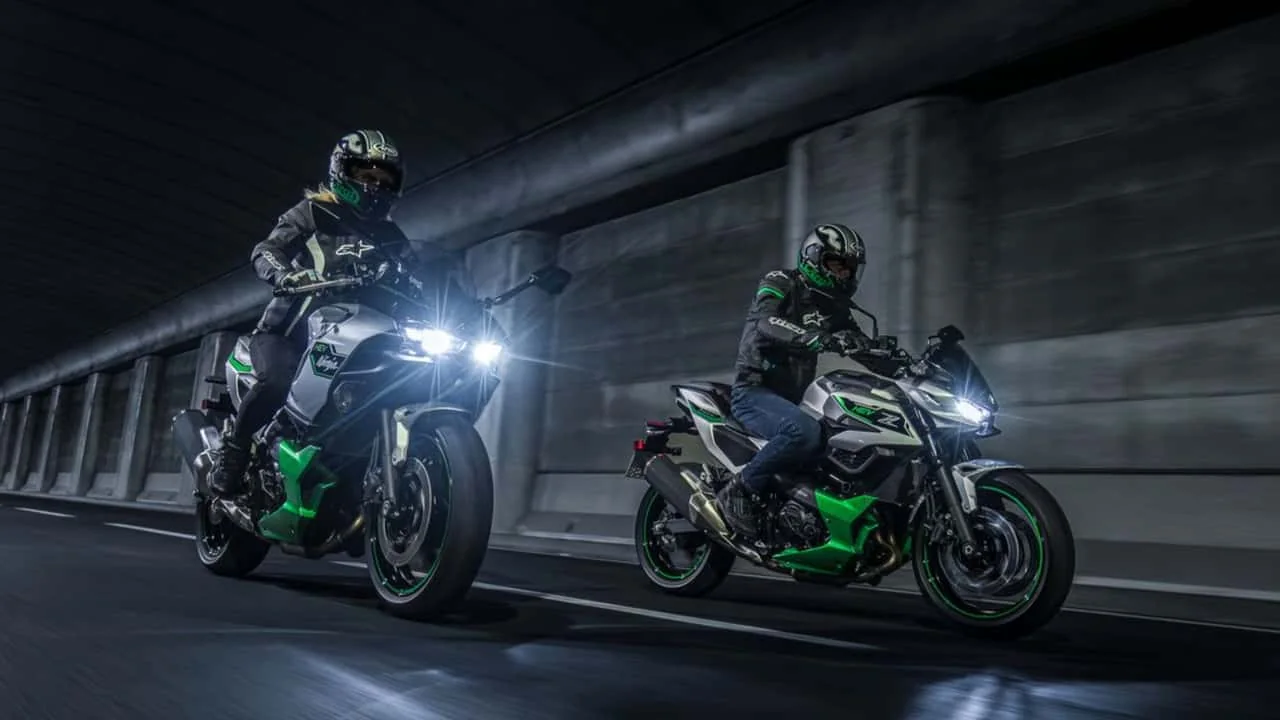
Kawasaki has been at the forefront of innovation in the motorcycle industry, and their latest updates to the Ninja and Z7 Hybrids are no exception. The Japanese manufacturer has made significant improvements to the transmission mapping and added an EV mode to these models. This upgrade makes them even more practical for riders who want to experience the benefits of hybrid technology on a daily basis.
The updated transmission mapping allows for smoother and more efficient shifting, which in turn improves the overall riding experience. This is particularly beneficial for commuters who need to navigate heavy traffic or hilly terrain. By optimizing the transmission, Kawasaki has made it easier for riders to tackle these challenging conditions without compromising performance.
The addition of an EV mode is another significant development that sets Kawasaki's hybrid models apart from their non-hybrid counterparts. This feature enables riders to switch between electric and gasoline powertrains seamlessly, making it ideal for urban riding where traffic congestion is common. The EV mode also reduces emissions and noise pollution, contributing to a more sustainable transportation option.
Kawasaki's commitment to innovation and sustainability is evident in their latest updates to the Ninja and Z7 Hybrids. By incorporating advanced technologies like hybrid transmission mapping and EV mode, they are catering to the growing demand for environmentally friendly vehicles. This move positions Kawasaki as a leader in the motorcycle industry, one that is poised to capitalize on the shift towards more practical and eco-friendly transportation solutions.
The Ninja and Z7 Hybrids have already gained popularity among riders who value performance, efficiency, and sustainability. With these updates, Kawasaki has further enhanced their appeal, making them an attractive option for those seeking a hybrid motorcycle experience. The updated models are now more competitive in the market, with improved features that set them apart from other hybrid motorcycles.
The impact of these updates on the industry cannot be overstated. As consumers become increasingly environmentally conscious, manufacturers like Kawasaki are responding by incorporating sustainable technologies into their products. This trend is expected to continue, with more manufacturers adopting hybrid and electric powertrains in the coming years.
Kawasaki's decision to prioritize practicality and sustainability in their latest updates demonstrates a clear understanding of consumer needs and preferences. By focusing on features that enhance the riding experience and reduce environmental impact, they are well-positioned to capture a significant share of the growing hybrid motorcycle market.
The future of motorcycles looks bright, with advancements like Kawasaki's hybrid transmission mapping and EV mode paving the way for more sustainable transportation options. As consumers continue to demand more practical and eco-friendly vehicles, manufacturers will need to respond by incorporating innovative technologies into their products.
With these updates, Kawasaki has sent a clear message to the industry that they are committed to innovation and sustainability. By leading the charge in hybrid motorcycle technology, they are setting a high standard for other manufacturers to follow. As the market continues to evolve, it will be interesting to see how Kawasaki's competitors respond to this challenge.
The updates to Kawasaki's hybrid models demonstrate a growing trend in the industry towards more practical and environmentally friendly vehicles.