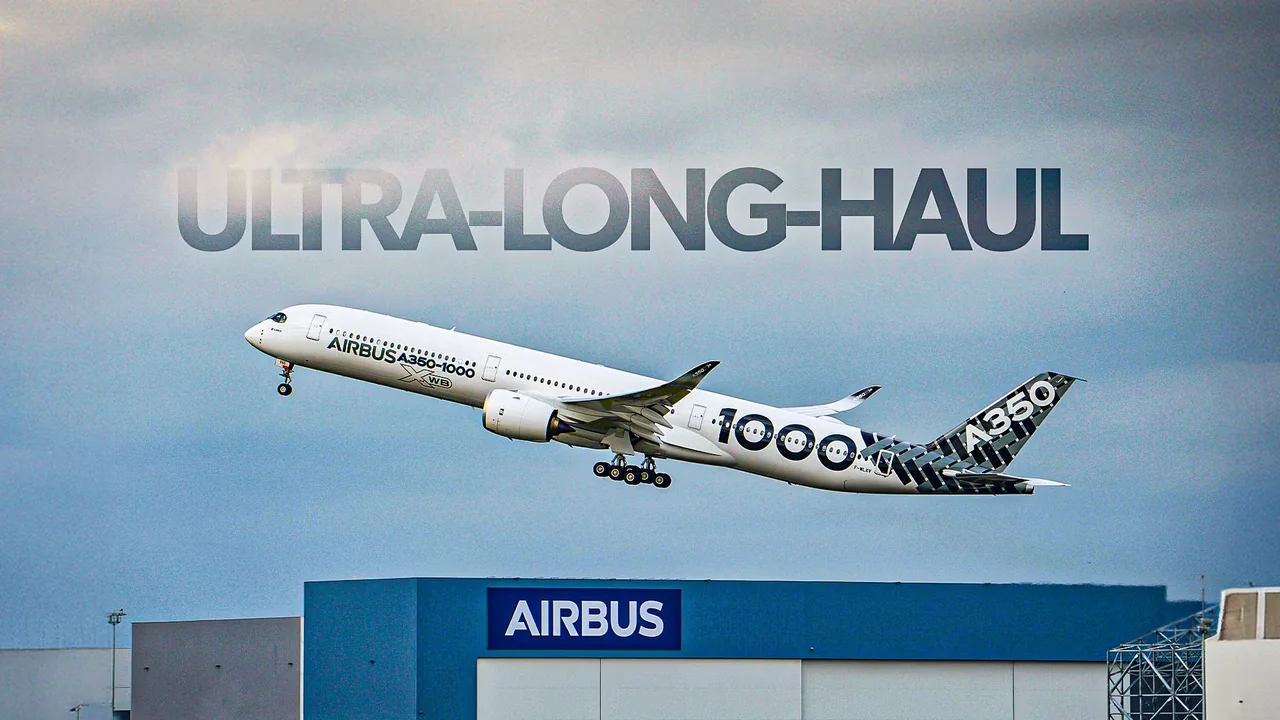
The aviation industry is witnessing a significant shift in the way airlines approach ultra-long-haul routes. Once considered a niche market, these flights are becoming increasingly popular due to the capabilities and operating economics of the Airbus A350. The aircraft's ability to fly exceptionally far while maintaining passenger comfort and reliability has made it an attractive option for carriers looking to expand their networks.
The A350 was designed as a clean-sheet long-haul platform, combining advanced materials, efficient engines, and aerodynamic refinements. This approach has enabled the aircraft to offer carriers the range to attempt routes once considered unrealistic while keeping trip economics under control. The result is a more viable business model for ultra-long-haul services.
The Airbus A350 family has become central to the next phase of long-haul network planning, with airlines using it to rethink what nonstop service can look like. From Singapore's longest flights to North America to Qantas' planned Project Sunrise missions from Australia to London and New York, the A350 is the aircraft that best aligns airline ambition with operational reality.

The A350 is the manufacturer's flagship long-range twin-engine widebody aircraft family, designed for intercontinental flying of all kinds. The two main passenger variants are the A350-900 and the longer A350-1000, offering varying levels of seating capacity and range. In typical three-class layouts, Airbus lists the -900 at roughly 300 to 350 seats with an impressive maximum range.
For even the most extreme missions, the A350-900ULR pushes range even further, allowing flights of around 19 hours or more. This flexibility is a major advantage for airlines looking to offer unique services to their customers.
The A350's lightweight clean-sheet airframe made with 70% advanced materials, paired with Trent XWB engines and a highly optimized wing, provides a significant technical advantage over previous-generation competitors. From a commercial perspective, this translates into around 25% lower fuel burn or operating cost for carriers.

For passengers of all kinds, the A350 has become associated with improved comfort and reliability. The aircraft's advanced materials and efficient engines have reduced noise levels and increased overall passenger experience.
The A350's common pilot qualification across its variants also provides flexibility for airlines, allowing them to operate a range of aircraft without added training complexity. This is a major advantage in today's complex operational networks.
As the aviation industry continues to evolve, it will be interesting to see how the Airbus A350 fits into the future of ultra-long-haul flying. With its impressive capabilities and operating economics, it is clear that this aircraft has become an essential part of modern air travel.