The Second World War had a profound impact on the aviation industry, as countries sought to produce massive numbers of bombers and transport aircraft to support their war efforts. The conflict saw the Allies, particularly the US and UK, massively outproducing the Axis powers, leading to significant advancements in aircraft design and technology.
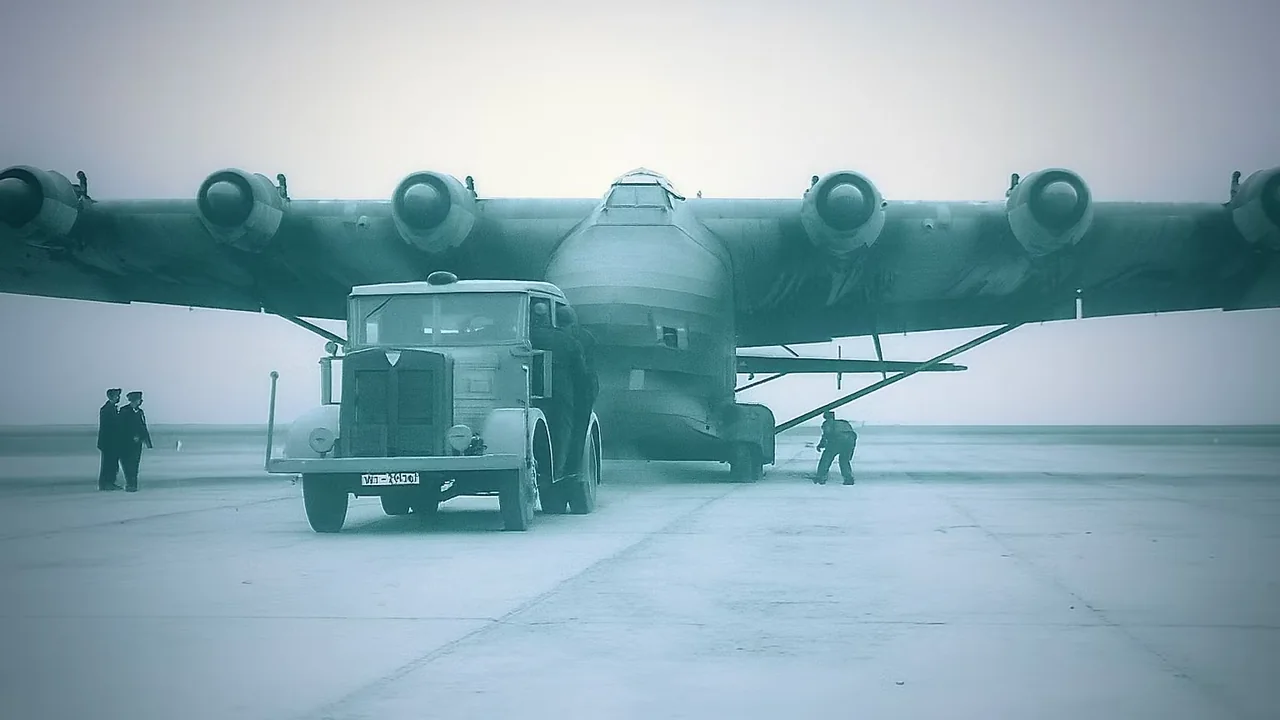
The German Me 323 Gigant is widely regarded as the largest land-based transport aircraft flown during the Second World War. This massive aircraft was a powered variant of the Me 321 military glider and was designed to meet the German requirement for a large assault glider for Operation Sea Lion, the planned invasion of Great Britain.
The Me 323 Gigant featured six Gnome-Rhône air-cooled radial piston engines, which provided the power needed to transport around 100 fully-equipped troops and carry military vehicles. Despite its size, the aircraft was relatively slow, with a top speed of around 160 mph.

The B-29 Superfortress is considered one of the most successful large aircraft built during the Second World War. This strategic bomber succeeded the B-17 Flying Fortress and was primarily used against Japan, playing a significant role in the fire-bombing campaign that devastated the country.
The B-29's impressive size and capabilities were made possible by its four Wright R-3350-23 Duplex-Cyclone radial piston engines, which provided the power needed to carry out long-range bombing missions. The aircraft's pressurized cabin and analog-computer-controlled fire-control system also set it apart from its contemporaries.
The B-29 Superfortress was a highly expensive military project, costing $3 billion at the time, although this is equivalent to around $50 billion today. Its development marked a significant investment in aviation technology, with many cutting-edge innovations being incorporated into the design.

The Douglas XB-19 was another strategic bomber developed during the Second World War, but it never entered mass production due to its high cost and limited capabilities compared to other aircraft of its time.
The Convair B-36 was a more successful heavy bomber that followed in the footsteps of the B-29, with over 750 units produced. Its larger size and range made it an effective platform for long-range bombing missions, but it also faced significant challenges in terms of maintenance and logistical support.
The development of large military aircraft during the Second World War marked a significant turning point in aviation history, as countries sought to outdo each other in terms of size and capability. The legacy of these aircraft can still be seen today, with many modern military planes drawing inspiration from their designs and innovations.

The development of large military aircraft during the Second World War marked a significant turning point in aviation history, with countries seeking to outdo each other in terms of size and capability.