

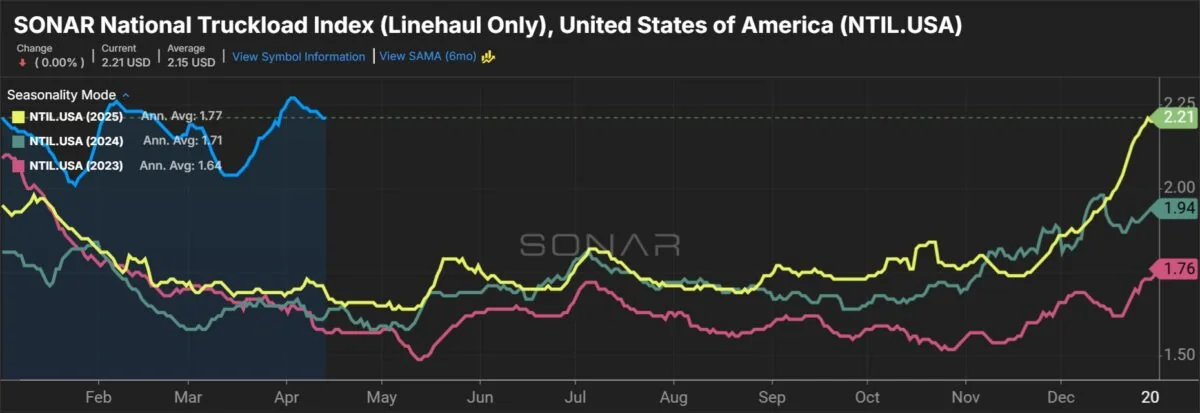
The first quarter saw a surge in trucking rate indexes, driven by a spike in diesel fuel prices and dwindling truckload capacity. This trend has now inflected, with the freight cycle experiencing a shift towards higher rates. As a result, shippers can expect their budgets to take a hit as carriers focus on yield improvement amid the fuel price surge.
The increase in LTL rate-per-pound was particularly notable, standing at 66.9% above its January 2018 baseline during the seasonally weak first quarter. This represents a significant jump from the fourth quarter, which saw rates 90 basis points lower than the previous year.
Despite the seasonal weakness of the first quarter, the data suggests that the trend is expected to continue in the second quarter, with LTL rate-per-pound projected to be 68.4% above the baseline and 520 basis points higher year over year.

This would mark a new high for LTL rates, with the dataset showing a decade-long upward trend. The increase in rates has been driven by a combination of factors, including fuel price surges and dwindling truckload capacity.
The industrial complex, which accounts for nearly two-thirds of LTL revenue, appears to be shaking off its three-year downturn, leading to an increase in weight per shipment. This improvement is expected to have a positive impact on the industry as a whole.
Manufacturing sentiment has been improving, with the Purchasing Managers' Index remaining positive all three months of the first quarter. This trend suggests that demand for LTL services may be on the rise.

The increase in weight per shipment and fuel prices pushed LTL cost per shipment 3% higher sequentially in the quarter, keeping the cost dataset more than 40% above the baseline.
As carriers focus on yield improvement, higher shipment weights and fuel surcharges are both accretive to LTL carrier margins. This trend is expected to continue in the second quarter, with rates projected to increase further.
The impact of these trends on shippers' budgets will be significant, and it remains to be seen how they will adapt to the changing landscape of the transportation industry.
The impact of higher fuel prices on shippers' budgets is expected to be significant.