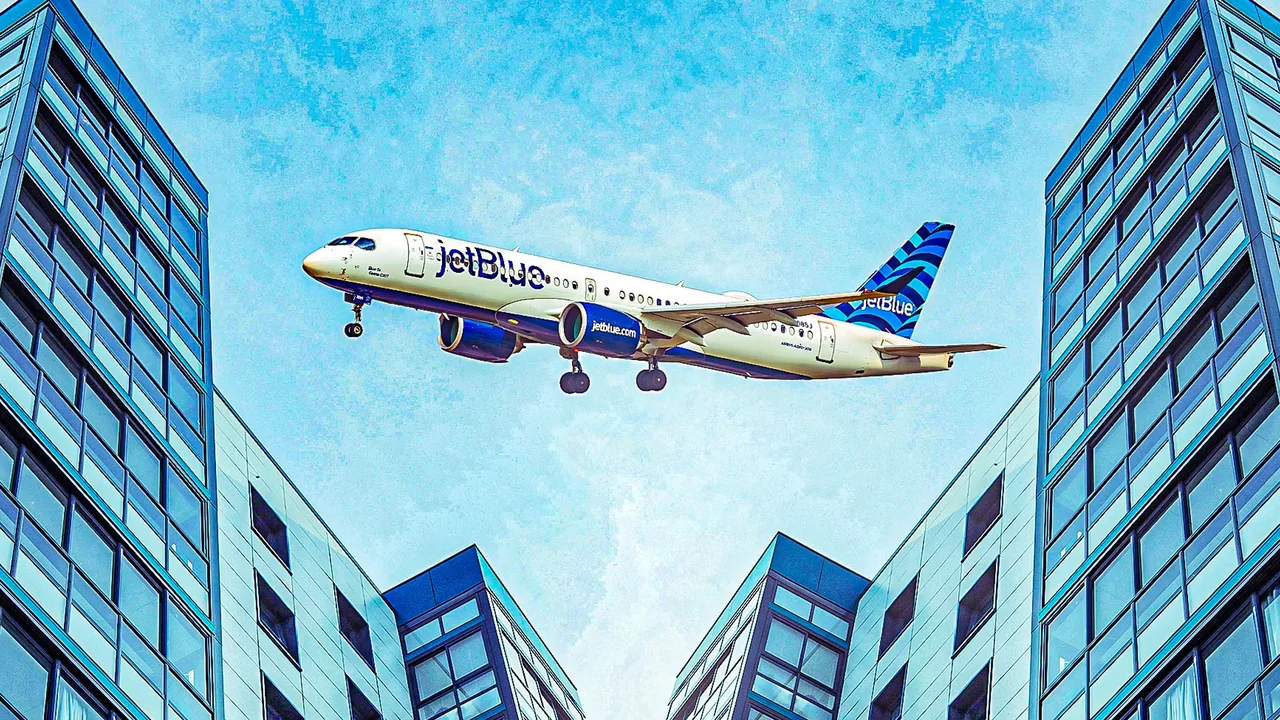
JetBlue Airways has secured a new $500 million debt facility by pledging over 20 owned Airbus A320 and A220 family aircraft. This financing arrangement provides the low-cost carrier with an additional source of liquidity as it continues its extensive turnaround efforts. The deal is notable not only for its size but also for its unique structure, which sets it apart from traditional debt financing arrangements.
By tying these loans to specific aircraft, JetBlue can convert its unencumbered fleet assets into cash without the need to issue equity. This approach allows the airline to manage its balance sheet more effectively, particularly at a time when it is still working through losses and leverage.
The transaction is structured under a framework agreement with affiliates of SKY Leasing and UMB Bank, which enables JetBlue to borrow from creditors through specific aircraft-based loans rather than a single type of borrowing. This arrangement provides the airline with more flexibility in managing its debt obligations.

The facility is collateralized by up to 22 currently owned Airbus A320 and A220-family jets, with each loan secured directly by a first-priority interest in the particular pledged jet. The maturities for these loans run far in advance, with payments due from 2033 to 2037, all with interest expected to fall within a range of 6.00% to 6.75%.
This is a standard range based on US Treasuries and a risk premium spread that any creditor would require. The arrangement also includes features such as no-call protection, prepayment at the face value of the loans, cross-default and cross-collateralization, and an accordion option that could expand total borrowing capacity by another $250 million.
The emergency financing comes amid a relatively strained backdrop for JetBlue, which has been struggling like many of its low-cost peers. The airline reported a 2025 net loss of $602 million and a negative 4.1% operating margin, indicating that profitability has not yet been restored despite some improvement from the prior year.

A number of factors have contributed to this underperformance, including JetBlue's relatively weaker pricing power in key markets. However, the airline has ended 2025 with $2.5 billion of liquidity, which is certainly meaningful but also acknowledges its sizable debt burden.
From an operational perspective, JetBlue has been dealing with Pratt & Whitney-based engine issues affecting parts of its A220 and A321neo fleets, with some aircraft expected to remain fully grounded into 2026 and potentially beyond.
This deal demonstrates JetBlue's ability to navigate complex financial restructuring and leverage its assets to secure necessary funding. The airline's focus on managing its balance sheet effectively will be crucial in restoring profitability and driving long-term growth.

This deal demonstrates the airline's ability to navigate complex financial restructuring and leverage its assets to secure necessary funding.