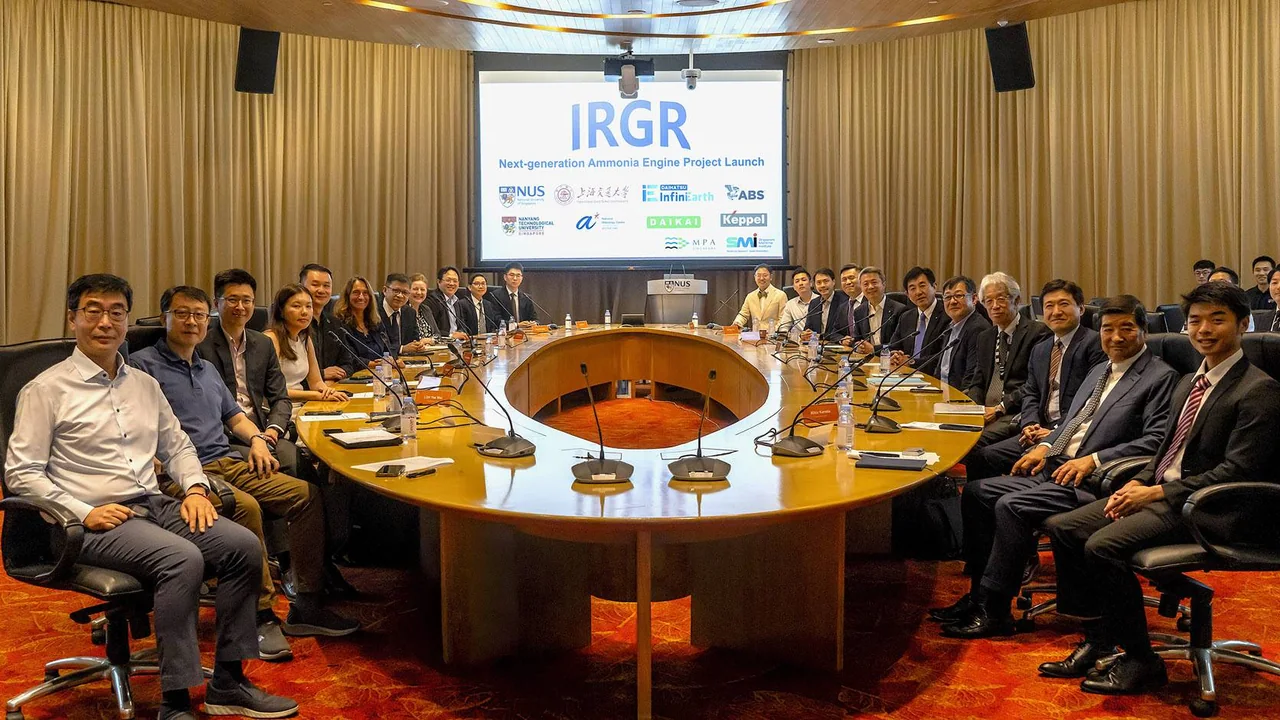
A groundbreaking research project at the National University of Singapore (NUS) is pushing the boundaries of innovation in the maritime industry by developing next-generation ammonia-fueled marine engines that promise to decarbonize the global shipping sector. The ambitious initiative aims to overcome key limitations that have hindered the adoption of ammonia as a marine fuel, with a focus on improving combustion efficiency and reducing pollutants.
By tackling these challenges, the project seeks to strengthen Singapore's position as a hub for maritime innovation and sustainable shipping technologies. The consortium behind this project is comprised of top institutions and industry partners, including Daihatsu and the American Bureau of Shipping (ABS), who are committed to advancing engine research and talent development.
With a three-year timeline, the team is working towards scalable engine concepts that could support the future deployment of low- and zero-emissions vessels worldwide. The project's success would be a significant step forward in the global transition to sustainable shipping, with far-reaching implications for the environment and the economy.
By harnessing the potential of ammonia as a marine fuel, this initiative has the potential to transform the maritime industry and create a more sustainable future for generations to come.
The development of next-generation ammonia-fueled marine engines is a critical step towards decarbonizing the global shipping industry. With the right technological advancements, we can significantly reduce greenhouse gas emissions from shipping and help mitigate climate change.