
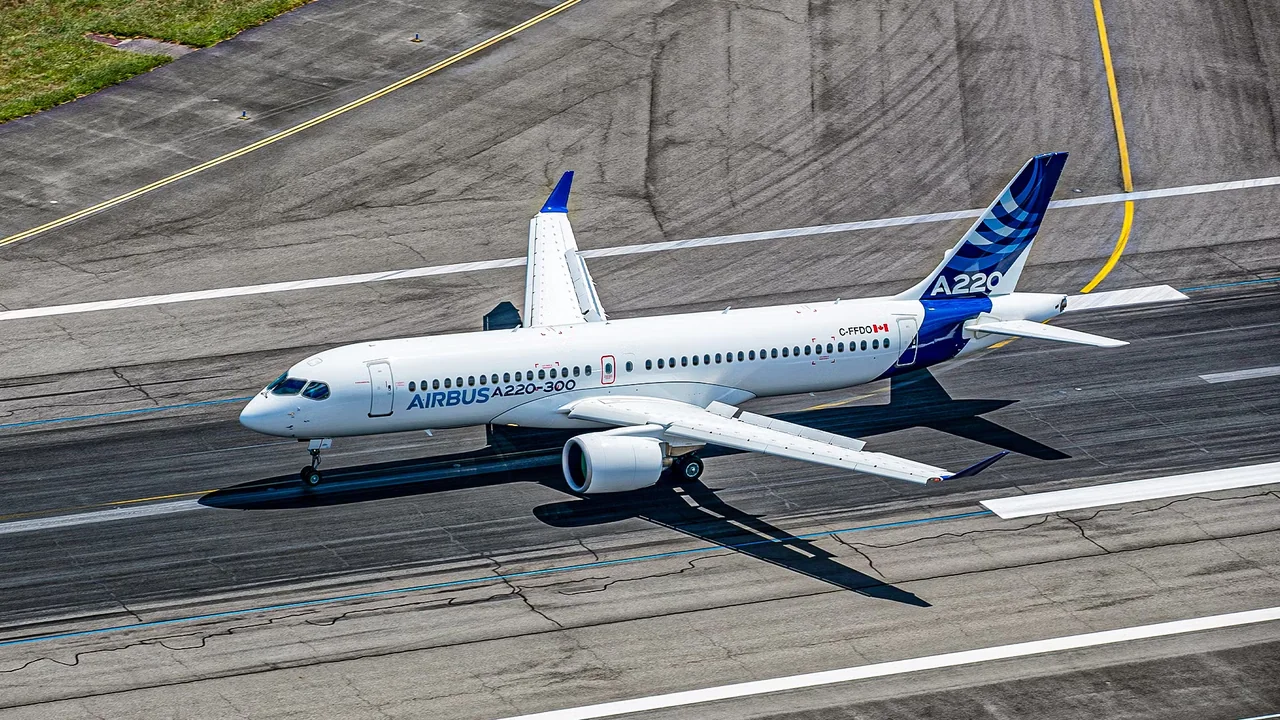
The narrowbody aircraft market in the United States is undergoing a structural shift as airlines reassess fleet composition in response to changing economics, network strategies, and passenger expectations. At the center of this transition is the Airbus A220 , a relatively new entrant that is rapidly gaining favor among major and emerging carriers alike.
Originally developed as the Bombardier CSeries, the aircraft has evolved into a highly competitive platform that occupies a unique niche in the 100 to 150-seat segment.
Airlines in the US are increasingly drawn to the A220 because it addresses multiple operational challenges simultaneously. It delivers strong fuel efficiency, supports new route development, and offers a passenger experience that is notably superior to older narrowbody aircraft.

At the same time, it provides a practical replacement path for aging fleets such as the Boeing 737-700 and the Airbus A319 , both of which are becoming less economical to operate in today’s environment.
The A220's combination of performance and flexibility is becoming difficult to ignore. Its rise is not based on a single advantage, but rather on a convergence of economic, operational, and competitive factors that align closely with the evolving priorities of US carriers.
Airline profitability is heavily influenced by operating costs, with fuel representing one of the largest variables. Especially in recent weeks, the variable nature of fuel costs has become an increasingly important factor in airline operations.

The A220 has established itself as a leader in efficiency within its size category, offering approximately 20 percent lower fuel burn per seat compared with older A319ceo aircraft and earlier 737 variants.
For US airlines, this translates into immediate and measurable cost savings. Lower fuel consumption reduces direct operating expenses and improves margins, particularly on short and medium-haul routes where cost sensitivity is highest.
The A220's economic profile positions it as a highly attractive option for US airlines seeking to reduce operating costs and improve profitability.