The US-Mexico trucking market is experiencing a tightening in supply, but not in the way traditional freight indicators suggest. Instead of a demand-driven cycle, capacity constraints tied to security, compliance and driver qualification are reshaping how freight moves across the border. This phenomenon has been described as 'phantom capacity.'
The underlying demand for cross-border freight has remained relatively stable, but usable capacity has shrunk due to stricter security requirements and operational concentration along key industrial corridors in Mexico. San Francisco-based Uber Technologies operates three platforms: Uber, Uber Freight, and Uber Eats, which are all contributing to the complexities of this market.
Despite headline metrics such as spot rates and tender rejections signaling a loose market, s say that these indicators are increasingly misleading. The real issue is supply constraints, primarily driven by security concerns and carrier consolidation on specific corridors.
The result is a growing gap between theoretical capacity and freight that can actually move reliably, particularly in cross-border lanes requiring vetted carriers and secure transit. This has led to lower tender acceptance rates and increased reliance on the spot market, even before a full pricing upcycle takes hold.
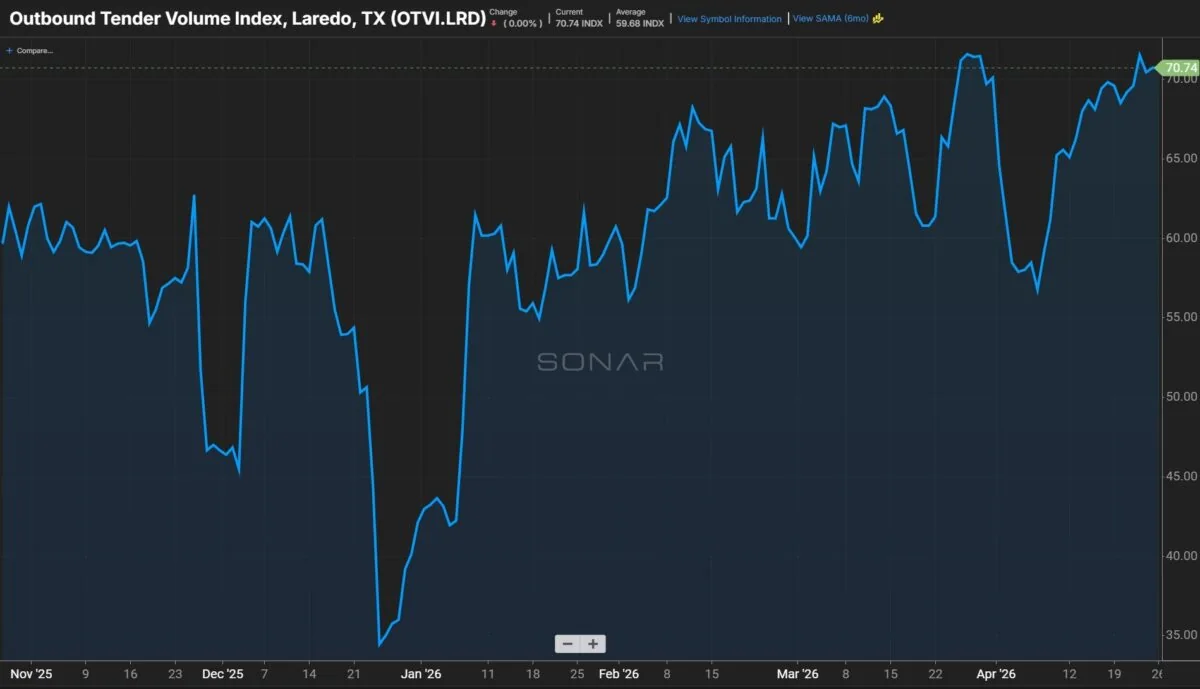
SONAR's Outbound Tender Volume Index shows tender volumes remaining relatively stable to slightly elevated in early 2026, reflecting resilient cross-border demand despite broader freight market signals. However, rising volatility in tender acceptance suggests that underlying capacity is tighter than volumes alone indicate.
One of the biggest constraints on the US-Mexico trucking market is not a lack of drivers overall, but a shortage of drivers who meet tightening compliance and security standards. This is forcing carriers to quickly adapt to changing regulations and requirements.

The impact of these compliance constraints is most pronounced on northbound freight into the U.S., where demand significantly outweighs southbound flows. Carriers are struggling to keep up with the increased demand, leading to longer wait times and higher costs for shippers.
s say that the current market conditions are creating a complex and unpredictable environment for shippers and carriers. The 'phantom capacity' shortage is highlighting the need for greater transparency and cooperation between stakeholders in the US-Mexico trucking market.
As the market continues to evolve, it's essential for players to stay informed about changing regulations and requirements. By doing so, they can better navigate the complexities of this market and ensure that freight moves efficiently and reliably across the border.
s say that the current market conditions are creating a complex and unpredictable environment for shippers and carriers.