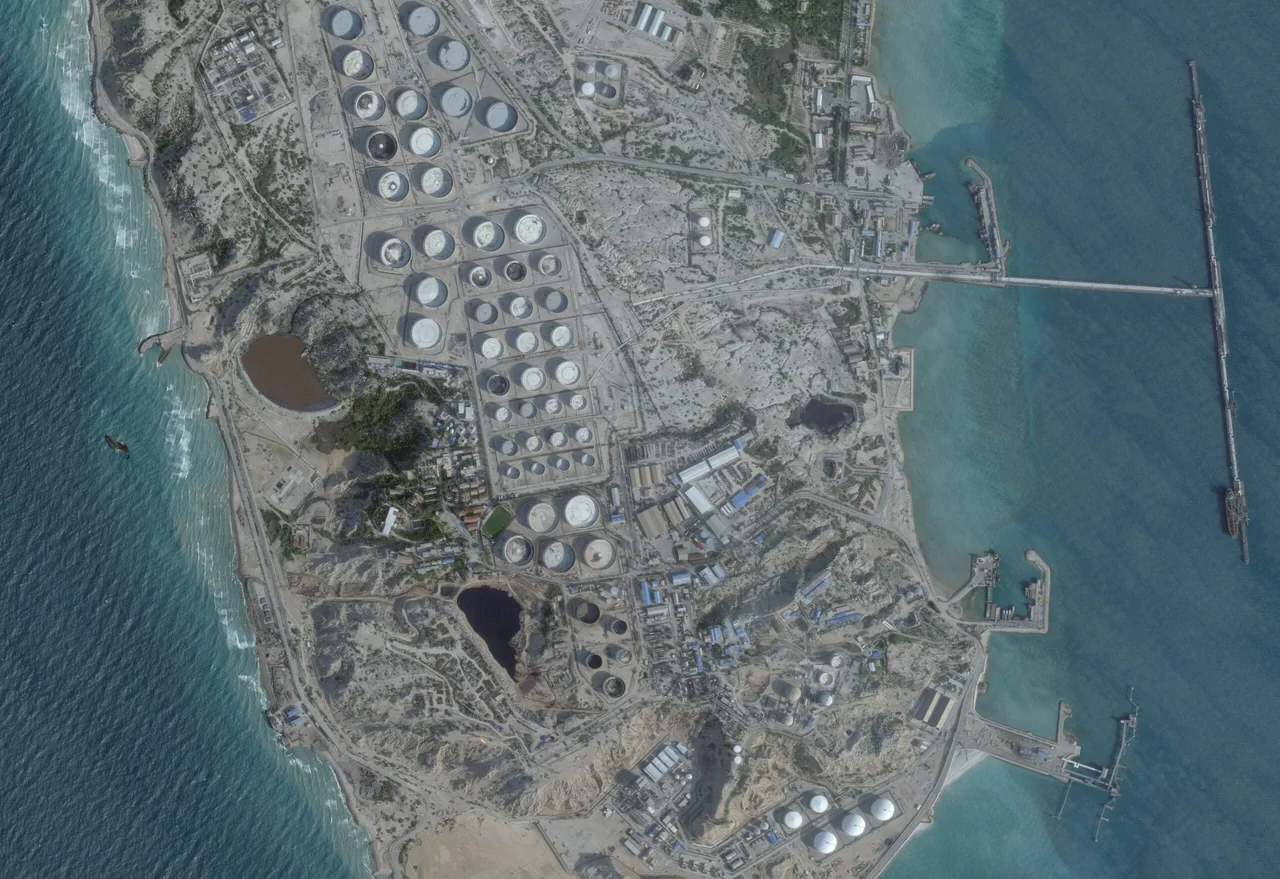
A 29-year-old Iranian supertanker has appeared at Kharg Island after years off the radar, a sign that Tehran could be using retired ships to keep loading oil as its storage space runs out. The Nasha, built in 1997, is an Iran-flagged very large crude carrier.
The vessel appears to have been re-mobilized after last delivering a cargo two to three years ago. It’s not entirely clear what Nasha had been up to since it was last seen — whether it was sailing or idled, or within or outside the Persian Gulf — as the vessel had stopped signaling its location.
The US blockade means a growing number of tankers carrying Iranian oil remain stuck in the Persian Gulf or the Gulf of Oman, while other ships can’t sail through the Strait of Hormuz to pick up oil. As a result, Iran is fast running out of places to store its oil, with capacity likely to last for at most another three weeks at the current rate.
Iran has proven itself to be able to endure significant economic pain, but the physical reality of having US warships in the Gulf of Oman will force it to find increasingly creative alternatives.
Reactivating Nasha — and ships like it — could buy Tehran some time to allow production to continue and to retain some storage space. The country has been known to tap on onshore and offshore capacity in a way that’s more dexterous than its neighbors before tanks are full.
Last year, just days before Israel began pounding the country in June, Iran managed to ramp up loadings and move up to 2.33 million barrels a day.
The fundamental problem of the US blockade still exists as they struggle to bring in the ballast vessels,” said Xavier Tang, a senior market analyst at ship-tracking platform Vortexa Ltd. “The bigger question is perhaps when they will slow down their crude production.”
The reactivation of Nasha highlights the challenges facing Iran's oil industry under the current blockade. It also underscores the need for creative solutions to address storage space constraints.
As the situation continues to unfold, it remains to be seen how Iran will adapt and respond to the ongoing blockade.
The reactivation of vessels like Nasha can help Iran in the short run, but the fundamental problem of the US blockade still exists.