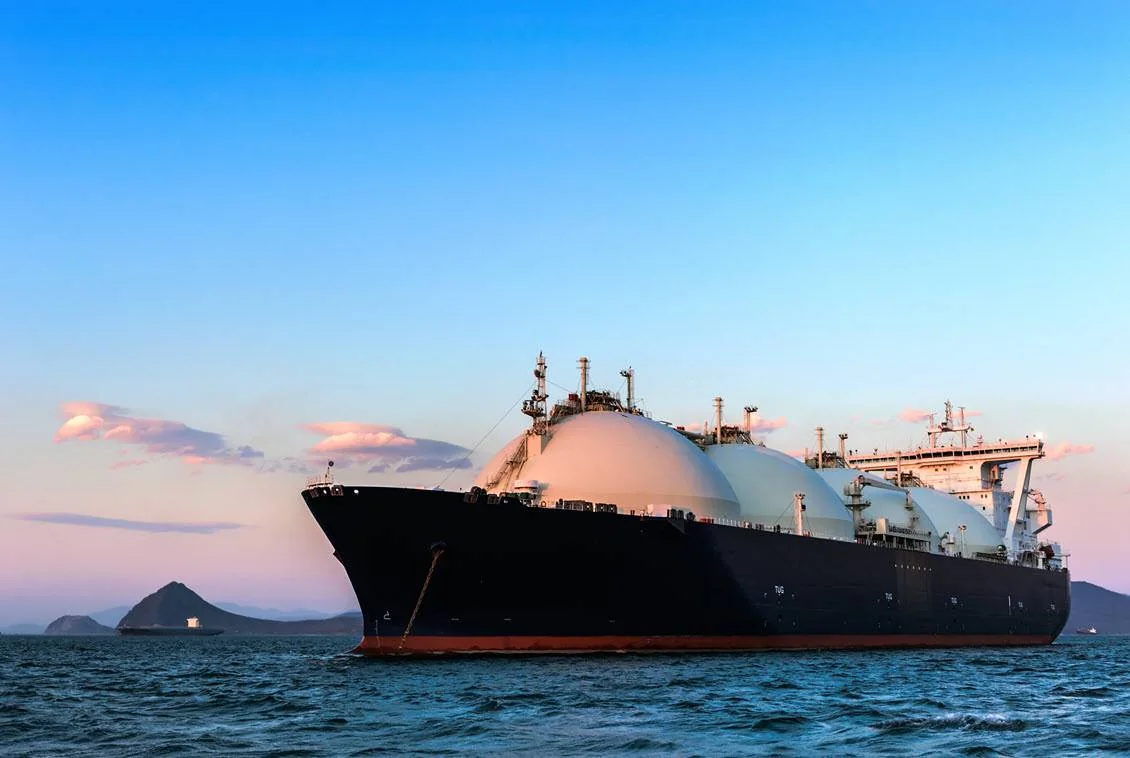
Russia has added four new liquefied natural gas (LNG) carriers to its fleet, according to data from LSEG ship-tracking and the Russian ship register. The addition of these vessels could help Russia increase its market share ahead of an EU ban on Russian gas imports set for 2027.
The European Union gave its final approval to the ban in January, which is expected to have a significant impact on Russia's energy exports. The bloc has also imposed sanctions on Russia in response to its war on Ukraine, limiting the country's access to vessels needed to gain a bigger share of the global LNG market.
The four new LNG tankers were built between 2005 and 2006 and have been reflagged to Russia after changing names and owners. The vessels include the Orion, Luch, Mercury, and Kosmos, which were previously owned by an Omani company.
Data from the Equasis vessel information system showed that the tankers changed owners in February this year. The Kosmos and Luch were transferred to Mighty Ocean Shipping Ltd, registered in Hong Kong, while the Orion and Mercury came under the ownership of Celtic Maritime & Trading SA, registered in Turkey.
The Russian register on Wednesday showed that all four vessels were heading north in the Atlantic Ocean. The destination of the LNG carrier Luch is listed as Murmansk, near to where the Saam LNG floating storage unit is located.
Ship-to-ship LNG transshipment operations are also being conducted near the port for the Yamal LNG project, transferring cargoes from ice-class tankers to conventional gas carriers. This indicates that Russia's expanded fleet may be focused on increasing its presence in the Arctic LNG market.
The addition of these new vessels could lead to increased competition in the global LNG market, particularly ahead of the EU ban on Russian gas imports set for 2027. Russia's energy exports are expected to be significantly impacted by this move.
The expansion of Russia's LNG fleet may also have implications for other countries seeking to increase their energy security through diversification of their fuel supplies. As a major LNG producer, Russia is likely to remain a significant player in the global market despite these challenges.
Overall, the addition of four new LNG carriers to Russia's fleet highlights the country's efforts to maintain its position as a major energy player in the face of growing sanctions and increasing competition.
Russia's expansion of its LNG fleet may lead to increased competition in the global market.