The less-than-truckload (LTL) market has experienced significant upward pressure on its rates, with the highest levels seen since Yellow's exit from the market in summer 2023.
This increase is largely driven by the truckload market's shift, which is causing shippers to seek guaranteed capacity through the LTL market at a higher cost.
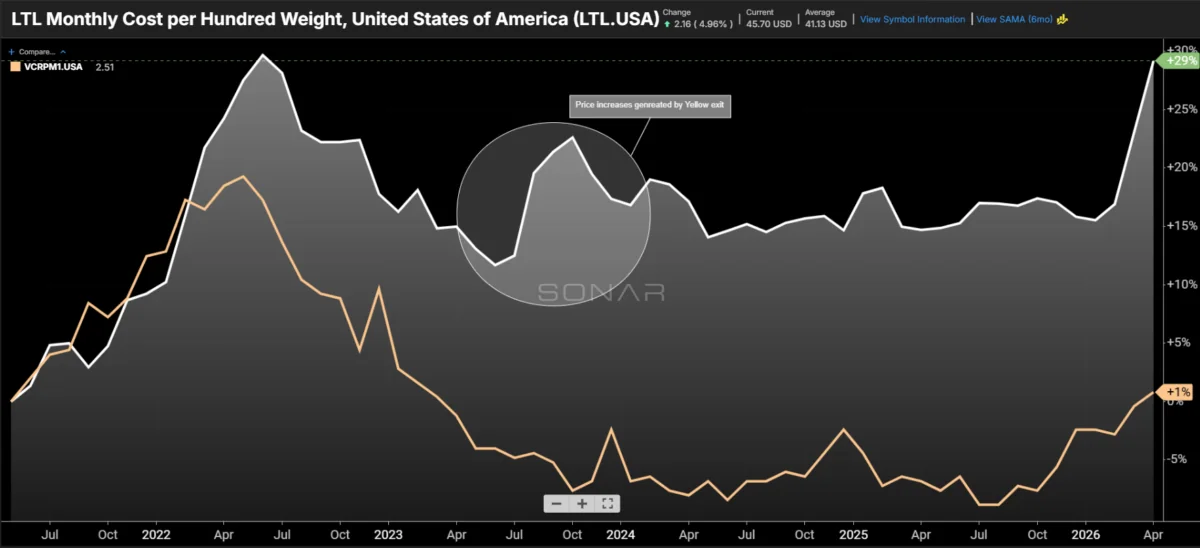
The LTL monthly cost per hundredweight index measures pricing change momentum in the LTL market and tracks directional changes based on transactional data.
As new bids and general rate increases work their way through the market, they are being priced at roughly 12.5% higher levels than at this point last year and 29% higher than in May 2021.
The dry van truckload contract rate index VCRPM1 showed upward pressure building on truckload rates in November, most likely due to route guide failures and tender waterfalling rather than permanent rate increases.
This continued movement reflects that truckload rates are increasing more sustainably, leading to a stronger-than-expected response from the LTL market.

The LTL market tends to follow the truckload environment by roughly three to six months, with shippers using the LTL market as a relief valve for truckload tightness at lower service levels and higher prices.
The current surge in LTL rates is likely due to the truckload market's shift, as shippers seek guaranteed capacity through the LTL market at a higher cost.
This trend is also influenced by the average weight per shipment increasing approximately 11% since the start of the year, indicating that shippers are breaking up full truckloads and moving them through the LTL market for guaranteed capacity.
The current surge in LTL rates is likely due to the truckload market's shift, as shippers seek guaranteed capacity through the LTL market.