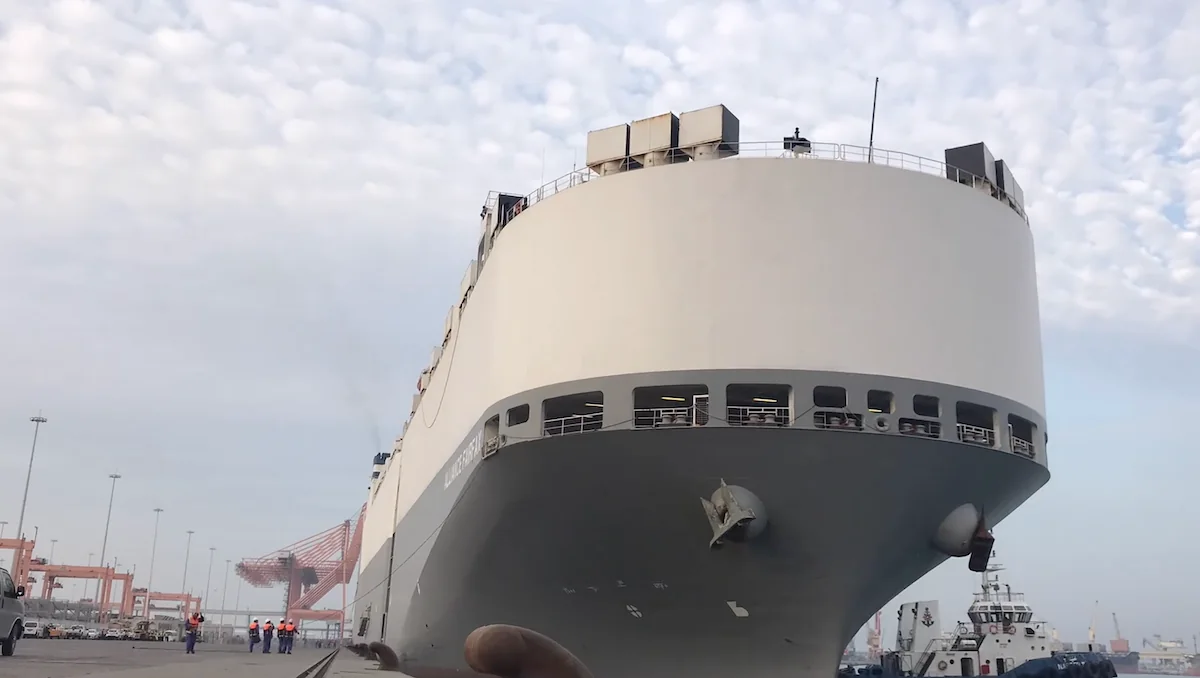
Maersk has successfully navigated its U.S.-flag ship, Alliance Fairfax, through the Strait of Hormuz, marking a historic milestone in freight security. The vessel's safe transit comes after months of uncertainty in the region, with tensions between the US and Iran escalating. The Strait of Hormuz is a critical waterway for international trade, with over 20% of global oil exports passing through it.
The Alliance Fairfax ro-ro carrier, operated by Farrell Lines, a subsidiary of Maersk Line Limited, was escorted by American naval forces to ensure its safe departure from the Persian Gulf. This move demonstrates the US government's commitment to protecting merchant vessels and ensuring the stability of global trade routes.
According to the Maritime Trade Operations security monitor, there have been three suspected attacks on merchant vessels in the region since Sunday. These incidents highlight the growing threat of maritime piracy and terrorism in the Strait of Hormuz.

The Alliance Fairfax is one of approximately 60 ships that comprise the Maritime Administration's Maritime Security Program, which provides defense sealift requirements for the US government. The program aims to enhance the security of US-flag vessels operating in high-risk areas like the Strait of Hormuz.
As tensions between the US and Iran continue to escalate, the importance of maritime security cannot be overstated. The successful transit of the Alliance Fairfax through the Strait of Hormuz serves as a reminder that the industry must remain vigilant in protecting its assets and personnel.
The Strait of Hormuz has long been a critical chokepoint for international trade, with many countries relying on it to transport goods across the globe. Any disruption to this waterway could have far-reaching consequences for global markets and economies.
Freight security is an existential threat to the industry, with double brokering, AI deepfakes, and identity theft being just a few of the tactics used by fraudsters. The successful transit of the Alliance Fairfax marks a significant step forward in protecting against these threats.
The future of maritime trade will likely be shaped by advances in technology, including artificial intelligence and cybersecurity. As the industry continues to evolve, it is essential that security measures are implemented to mitigate the risks associated with these emerging technologies.
Reshoring and reshoring-related policies may also play a role in shaping the future of freight demand. Shippers, rail executives, and government officials will gather at upcoming symposia to discuss the implications of this trend and how it may impact the industry.
The increasing threat of maritime attacks highlights the need for enhanced security measures in the industry.