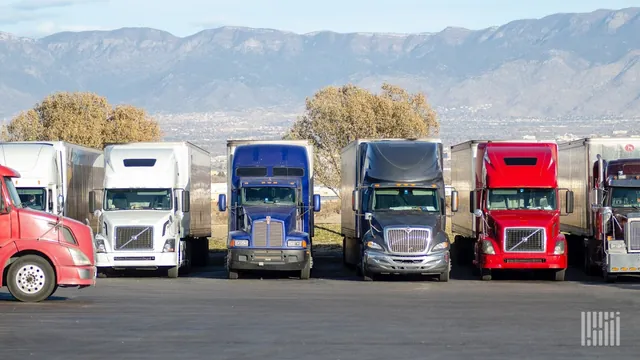



A recent wave of enforcement announcements in the U.S. and Canada highlights the growing threat of cargo crime, which now spans cyber-facilitated freight fraud, bulk narcotics concealment inside commercial trailers, and export smuggling schemes embedded within legitimate logistics flows.
Cargo thieves are targeting North America's freight system at multiple points, with authorities reporting a range of sophisticated scams and thefts involving stolen truckloads of frozen seafood and blueberries.
Federal prosecutors in Massachusetts charged a New York man, Romoy Forbes, 31, in what officials describe as a coordinated, cyber-assisted cargo theft conspiracy.
Forbes allegedly participated in a scheme that involved hacking into legitimate trucking carrier email accounts, impersonating carriers to book loads, and diverting freight for resale.
The thefts included goods such as frozen seafood and blueberries, which were diverted from their intended destinations and sold illicitly.
Canadian authorities announced the largest narcotics seizure ever at the Abbotsford-Huntingdon port of entry in British Columbia, involving 692-pounds of methamphetamine concealed inside a commercial truck and trailer.
The driver, Satnam Singh, was arrested and charged with multiple offenses related to the seizure, which represents the largest narcotics interception in the port's history.
In another cross-border operation, the Ontario Provincial Police and CBSA seized 93-pounds of alleged heroin from a tractor-trailer attempting to enter Canada from Buffalo at the Peace Bridge port of entry.
The estimated street value of the heroin was $5.2 million, highlighting the significant financial stakes involved in cargo crime.
The increasing sophistication of criminal networks is making it challenging for authorities to detect and prevent cargo crimes.