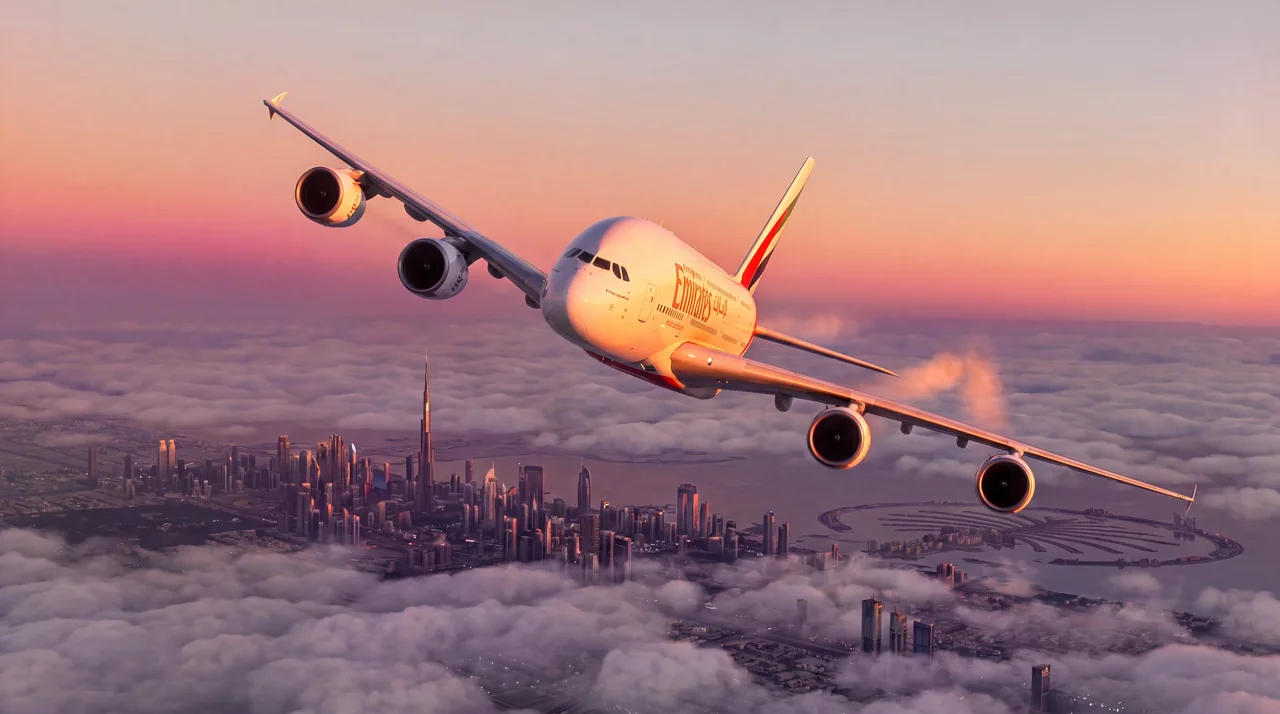
Emirates has ended its operations on 23 routes using the Airbus A380. The Gulf giant still holds a significant presence of the type, with 116 aircraft in its fleet, accounting for around 43% of its regular passenger-configured planes.
The airline had planned to introduce the first passenger-carrying flight of its new, three-class, 569-seat superjumbo on May 6, but this did not occur. Instead, the A380's debut destination was Birmingham, which never saw the aircraft in service.
A summary of Emirates' A380 operations reveals that the type has been a significant contributor to the airline's revenue, with its first revenue-generating flight taking place in August 2008.

Schedule analysis conducted on the A380's network from Dubai between June 2026 and February 2027 identified where the aircraft is no longer flown. The findings also highlighted destinations currently affected by the war in Iran.
The reduction in A380 flights marks a significant shift for Emirates, with many routes previously served by the type now no longer available.
Four routes had 500 or more departures on the A380 from Dubai, including Beijing Capital, Kuwait, Hamburg, and Riyadh. These destinations were among the most frequent users of the aircraft.

The airline's decision to end A380 flights on 23 routes is likely driven by a desire to optimize its network and reduce costs. The significant reduction in A380 services highlights the airline's focus on efficiency and cost-cutting measures.
Emirates' A380 fleet still holds considerable value, with 116 aircraft in operation. However, the airline's decision to end flights on certain routes may signal a broader trend in the industry towards more efficient operations.
The significant reduction in A380 flights highlights the airline's focus on efficiency and cost-cutting measures.