

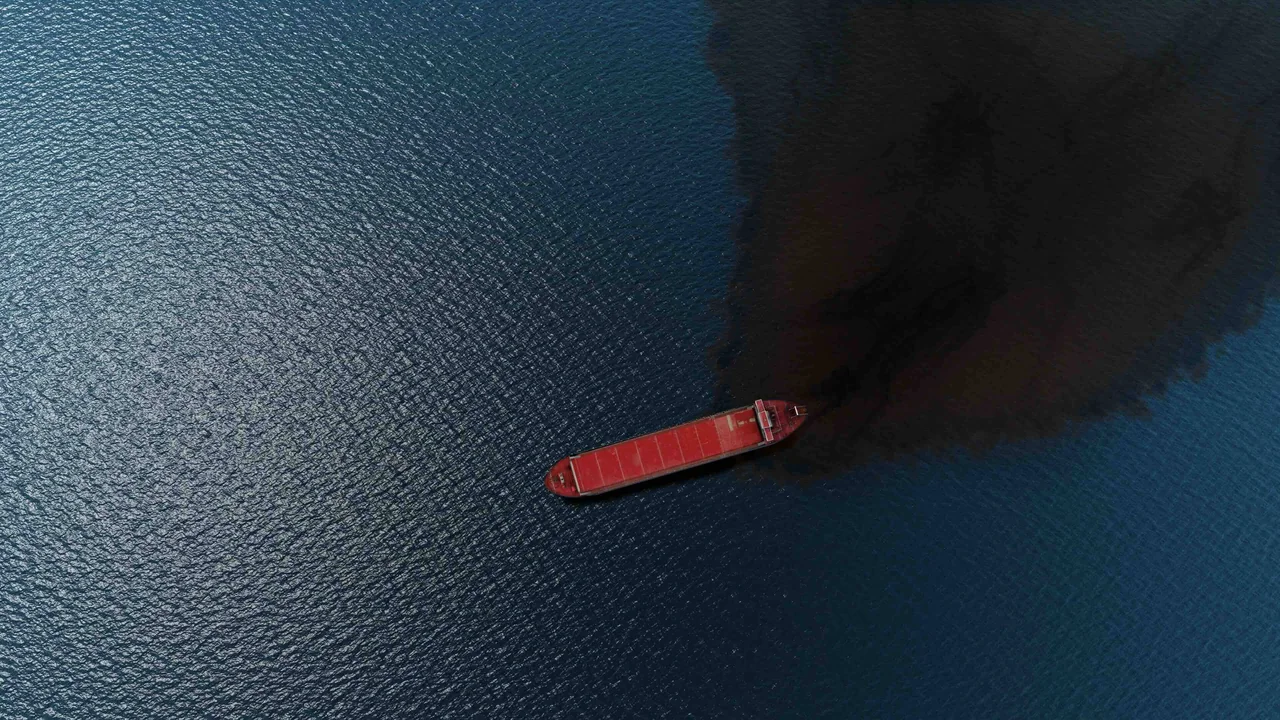
A suspected oil spill covering dozens of square kilometres of sea near Iran's main oil hub of Kharg Island has been seen on satellite imagery this week. The images were taken by Copernicus’s Sentinel-1, Sentinel-2 and Sentinel-3 satellites on May 6-8.
The likely spill appears as a grey and white slick on the satellite images, covering waters to the west of the 8-kilometre long island. Researchers estimate that it is covering an area of approximately 45 square km.
Experts agree that the images are likely showing an oil slick, which could be one of the largest since the start of the U.S.-Israel war against Iran 70 days ago.
The cause of the possible spill and the point of origin are currently unknown. Images from May 8 showed no evidence of additional active spills.
Kharg Island is a critical hub for Iran's oil exports, with much of its oil bound for China. The U.S. Navy has been blockading Iranian ports in an attempt to stop tankers from entering and exiting.
The war has also trapped hundreds of ships in the Gulf and caused significant disruptions to crude oil supply, as well as hitting global supplies of oil products and liquefied natural gas.
The impact of this spill could be felt globally, particularly in the energy sector. It is essential to determine the cause of the spill and take necessary measures to mitigate its effects.
The U.S.-Iran conflict has significant implications for the global energy market, with many countries relying on Iranian oil exports. The situation remains fluid, and further updates are expected as more information becomes available.
The international community will be watching developments closely, as this incident highlights the complexities of global energy politics and the potential consequences of such events.
The impact of this spill could be significant, given the strategic importance of Kharg Island and the current global energy landscape.