
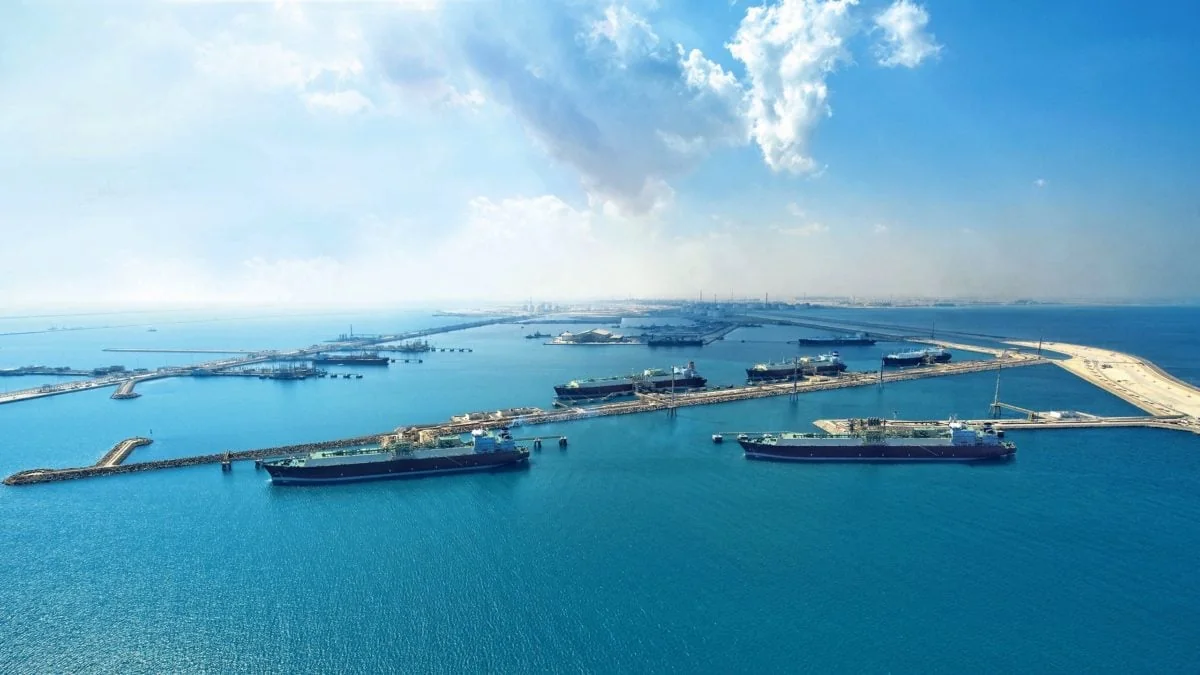
A Qatari LNG tanker, Al Kharaitiyat, is set to make history by sailing through the Strait of Hormuz for the first time since the start of the war in Iran. The tanker, managed by Nakilat Shipping Qatar Ltd, departed Qatar's Ras Laffan on Saturday and is headed towards Port Qasim in Pakistan. This historic passage marks a significant development in the region's geopolitics and energy dynamics.
The LNG shipment is being sold under a government-to-government deal between Qatar and Pakistan, with Iran having approved the transit to help build confidence between the two countries. The agreement is seen as an attempt to ease tensions and address Islamabad's urgent need to address its gas shortage.
Pakistan has been in discussions with Iran to allow limited LNG tankers to pass through the strait, a move aimed at alleviating the country's energy crisis. The vessel's safe passage is coordinated by Iran and Pakistan, marking a significant step towards confidence-building measures.
The Al Kharaitiyat tanker has a cargo capacity of 211,986 cubic meters, making it one of the largest LNG tankers in the world. Its successful passage through the strait would not only be a historic milestone but also a testament to the resilience of Qatar's LNG export industry.
Qatar is the world's second-largest exporter of LNG, with shipments mostly going to buyers in Asia. However, Iranian attacks have knocked out 17% of Qatar's LNG export capacity, with repairs expected to sideline 12.8 million tons per year of the fuel for three to five years.
The recent uptick in tensions between Iran and its regional neighbors has had a significant impact on the global energy market. The successful passage of the Al Kharaitiyat tanker would be seen as a positive development, signaling a return to normalcy in the region's energy dynamics.
The maritime industry is closely watching this historic event, with many experts seeing it as a crucial step towards rebuilding confidence between Iran and its neighbors. As the world's largest LNG producer, Qatar's ability to maintain its exports would have significant implications for global energy markets.
The Strait of Hormuz remains one of the most critical chokepoints in the world's energy supply chain, with any disruption having far-reaching consequences for global energy prices and stability.
As the situation in the region continues to evolve, it will be interesting to see how this historic event unfolds and its implications for the global energy landscape.