The demand for thrusters on recreational and commercial vessels has increased rapidly in recent years, providing vessels with enhanced capabilities. This growth can be attributed to the need for improved manoeuvrability and precise control over a vessel's course and position. As a result, new markets have emerged to capitalize on these opportunities.
Thruster operation may be manual by the helmsman or integrated with an autopilot, relieving constant hands-on duty for crew members. However, the integration of thrusters with Autonomous Navigation Systems (ANS) takes navigation to the next level, offering real-time situation awareness monitoring and hazard detection.
The system's own intelligence allows for autonomous control of propulsion systems, thrusters, and steering, creating COLREGS-compliant vessel movements without human intervention. An optional module enables automatic command to steer a path that avoids collisions, further enhancing safety.
A similar alternative system enables remote piloting under radio or satellite control, ensuring safe passage and return to base even if communication links are lost. This feature is particularly valuable for vessels operating in remote areas with limited connectivity.
The variety of thrusters on the market caters to different applications, each with unique characteristics. The type of thruster determines the driving motor's attributes, such as mechanical, electrical, or hydraulic properties.
For propulsion, varying speed control is crucial, while simple manoeuvring may require on/off thruster motors. Precise control of speed is fundamental for maintaining station or position, dictating motor type and rating in hours rather than minutes.
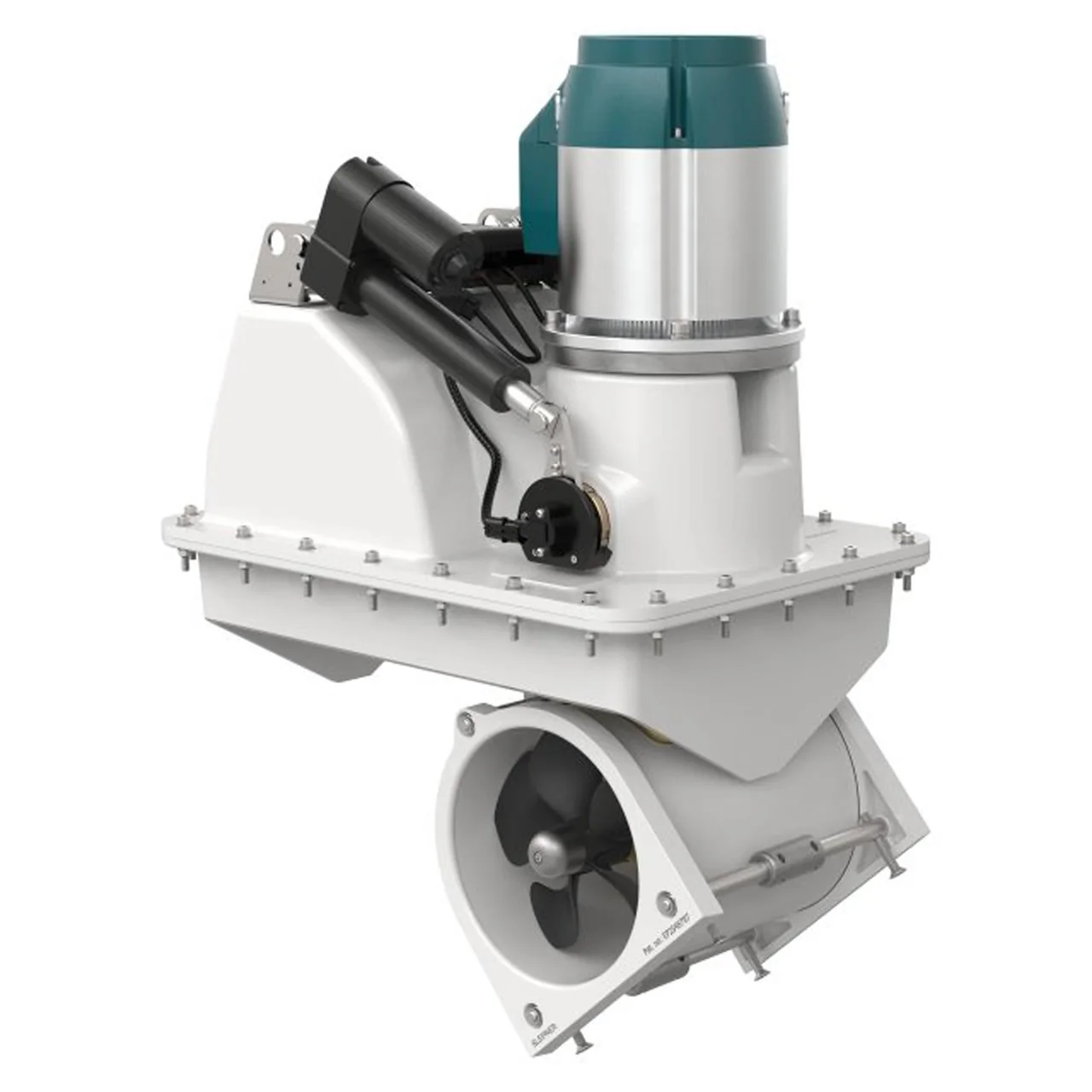
Tunnel Thrusters are installed within the hull transversely in the bow or stern, providing enhanced thrust and reduced cavitation. Azimuth Thrusters offer full 360-degree rotation, eliminating the need for a rudder and enabling vessels to navigate with increased flexibility.
The use of thruster technology is poised to revolutionize the maritime industry, enabling vessels to operate with greater precision and autonomy.
Thruster technology is a crucial component in the advancement of autonomous navigation systems, enabling vessels to navigate complex waters with increased precision.