
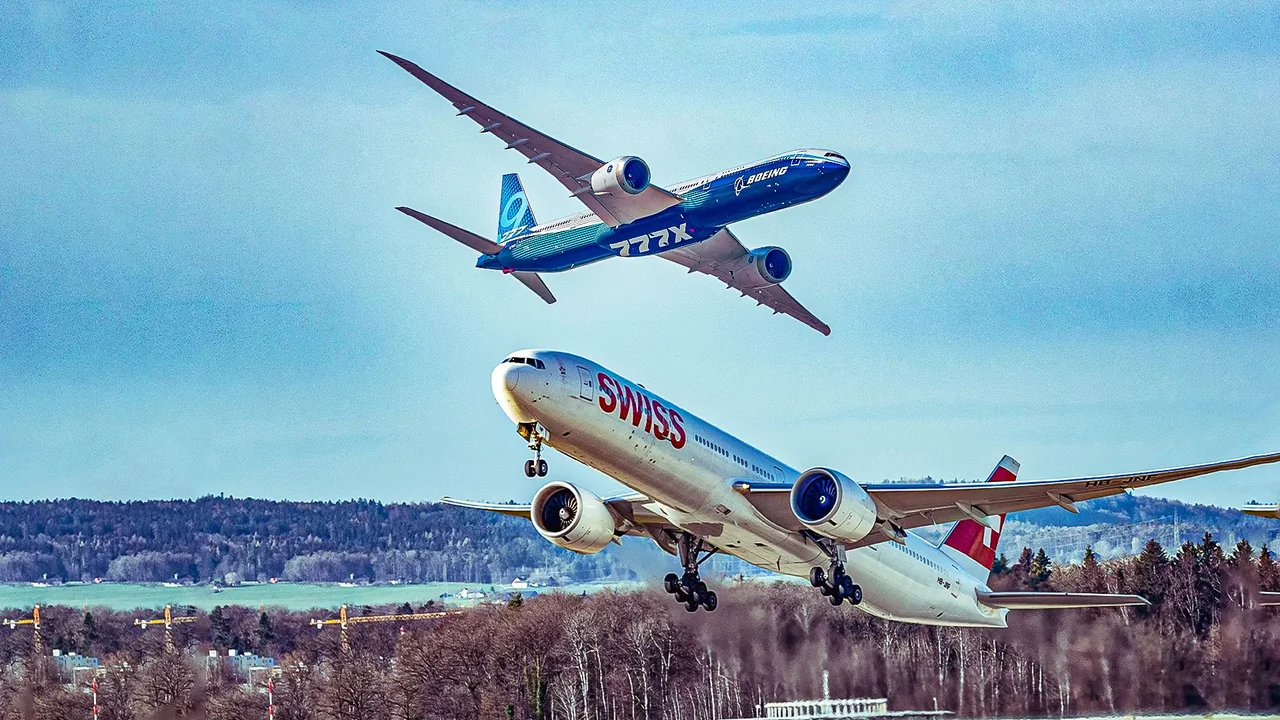
The comparison between the Boeing 777X and the Boeing 777-300ER is fundamentally a study in performance evolution. While both aircraft occupy the same long-haul, high-capacity segment, their design philosophies diverge in critical ways that directly affect range capability and fuel consumption. The popular 777-300ER represents the peak of early 2000s widebody efficiency, optimized around proven aerodynamics and high thrust engines.
For airlines, these performance metrics are not abstract engineering benchmarks. Range determines route flexibility and payload capability, while fuel consumption dictates operating economics and environmental impact. Even small percentage improvements translate into millions of dollars in annual savings across large fleets.
The 777X, by contrast, integrates new materials, advanced wing geometry, and next-generation propulsion systems designed to reduce fuel burn per seat while maintaining or improving operational range.
This strategic approach enables airlines to offer more competitive pricing and increase their market share without compromising on passenger comfort. As a result, understanding how these two aircraft compare requires examining the underlying aerodynamic and propulsion changes that drive real-world efficiency.
The 777X's improved fuel efficiency is particularly noteworthy in the context of growing environmental concerns and increasing regulatory scrutiny. Airlines must balance operational costs with their responsibility to reduce greenhouse gas emissions and minimize their carbon footprint.
By evaluating the range and fuel consumption rates of these two aircraft, airlines can make informed decisions about which variant best suits their specific needs and goals.

The Boeing 777X's advanced design and propulsion systems also offer improved noise reduction and reduced engine emissions, making it an attractive option for passengers seeking a more comfortable flying experience.
In contrast, the 777-300ER relies on its proven aerodynamics and high thrust engines to maximize range. While this approach has served the aircraft well in the past, it is no longer sufficient to meet the evolving demands of modern air travel.
Ultimately, the choice between the Boeing 777X and the 777-300ER will depend on an airline's specific priorities and requirements.

The 777X's improved efficiency and range capabilities make it a compelling option for airlines looking to reduce costs and increase their competitiveness in the long-haul market.
The Boeing 777X's advanced design and propulsion systems make it a more efficient choice for airlines looking to reduce costs and environmental impact.