

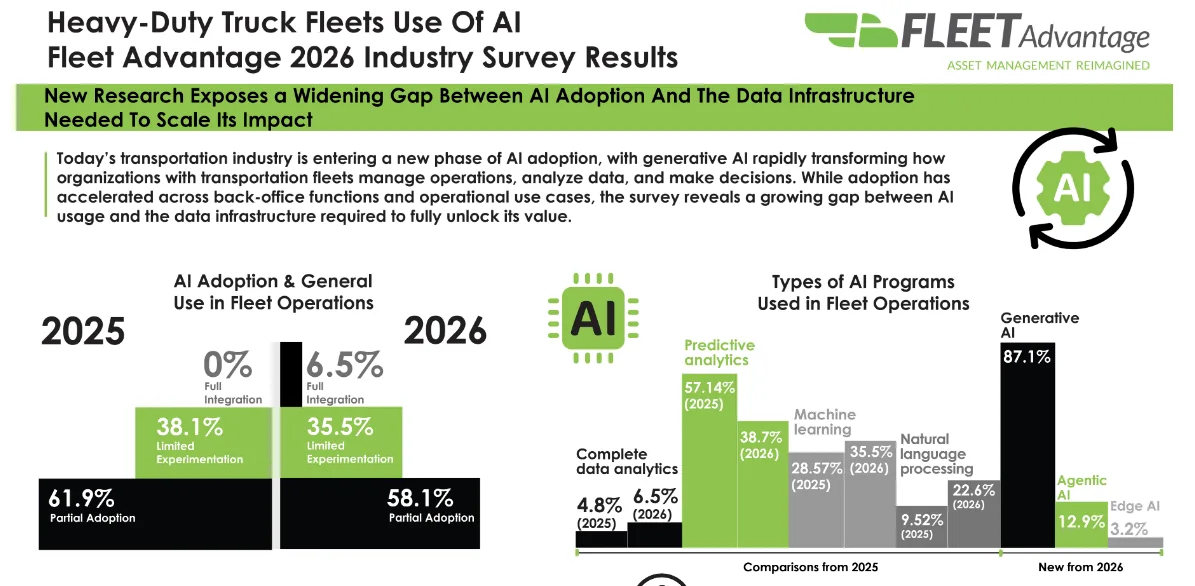
Generative artificial intelligence has rapidly become a mainstream tool among private fleets, with 87.1% of respondents using large language models for various applications.
However, weak data infrastructure and limited measurement capabilities are preventing many organizations from realizing deeper operational benefits.
The survey found that generative AI's rapid rise represented one of the largest year-over-year shifts in AI adoption, with technology category not appearing in the 2025 survey at all.
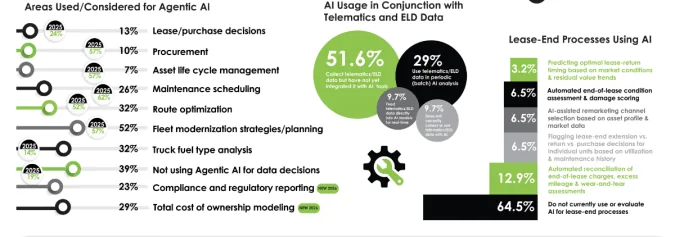
Fleets reported sharp increases in operational AI use cases, including route optimization, maintenance scheduling, and fuel type analysis, but data integration issues remain a major obstacle.
The lack of formal driver safety monitoring programs is also a concerning gap in baseline safety practices, with 6.5% of respondents reporting no such program at all.
Fleet Advantage noted that implementation challenges intensified significantly year over year, with concerns about inaccurate data and lack of AI expertise on the rise.
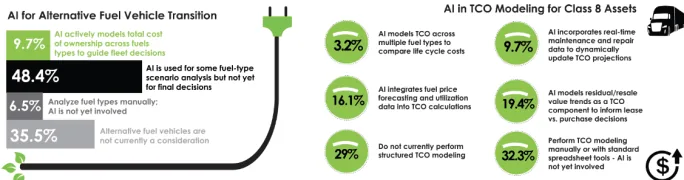
Despite these challenges, fleets are expected to continue leveraging generative AI for efficiency gains, but data quality and measurement capabilities must improve.
The use of agentic AI technologies has declined, with nearly 40% of respondents reporting no use at all, highlighting the need for more effective data integration and ROI tracking.
The use of generative AI in fleets is expected to continue growing, but data quality and measurement capabilities must improve.