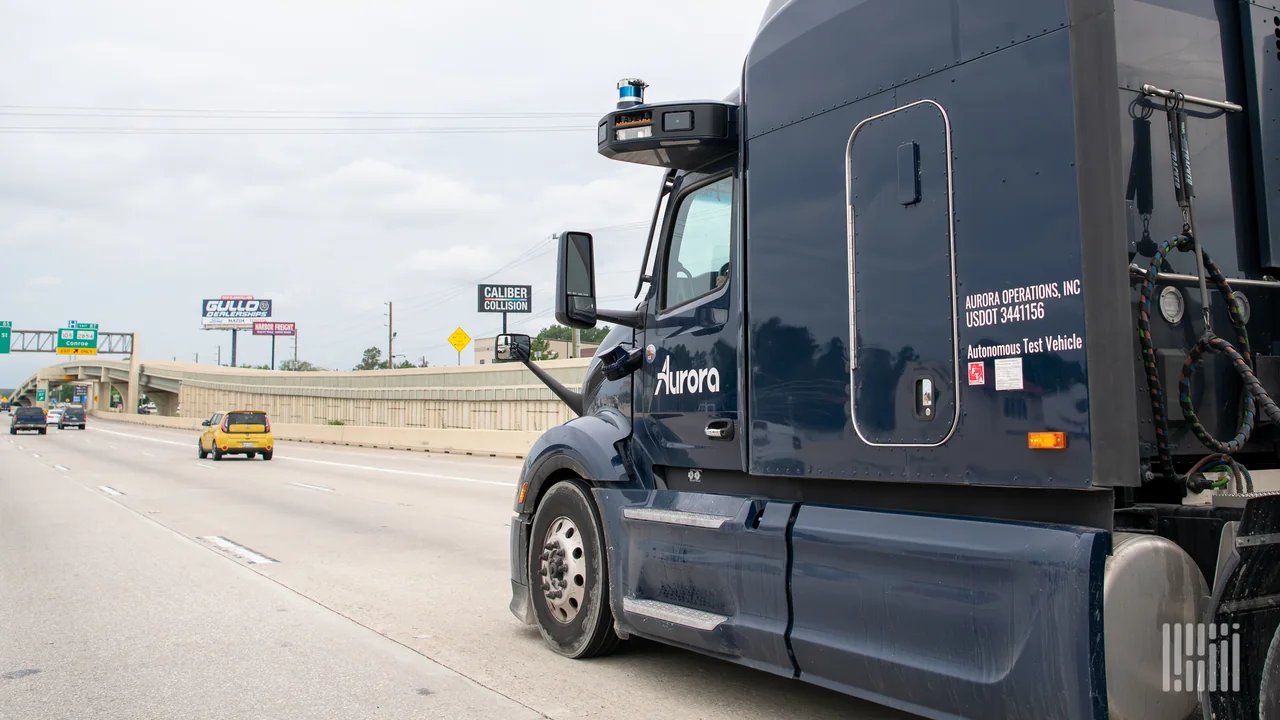
The autonomous trucking industry is expanding rapidly, with companies like Aurora Innovation and Kodiak Robotics deploying driverless Class 8 trucks commercially between Dallas and Houston. This expansion raises concerns about the industry's ability to address maintenance and repair procedures when autonomous trucks break down on the highway.
Autonomous trucks are being deployed commercially, but the industry has not yet addressed the critical issue of who will figure out what is wrong with these vehicles when they break down. The lack of transparency and accountability in this process is a major concern for safety regulators and the public.
The maintenance problem that autonomous trucking poses is complex and multifaceted. It requires more than just technological advancements to ensure safe operation, but also comprehensive infrastructure development and robust maintenance procedures.

When an autonomous truck breaks down, who will be responsible for figuring out what is wrong with it? The answer to this question has not been adequately addressed by the industry, leaving many to wonder about the safety implications of this technology.
The data set used to train autonomous trucks is limited and controlled, making it difficult to understand the full scope of the issue. As the industry scales up deployment, it is essential that we address these concerns through targeted research and development.
Professional drivers play a critical role in highway safety, but their expertise is often overlooked in discussions about autonomous trucking. What they bring to the job – years of accumulated pattern recognition and contextual awareness – cannot be replicated by algorithms alone.
The industry's focus on technological advancements has overshadowed the need for deliberate engineering to fill the gap left by professional drivers' expertise. This raises questions about whether the industry has adequately addressed this critical issue at scale.
As autonomous trucks become more prevalent, it is essential that we prioritize infrastructure development and maintenance procedures to ensure safe operation. The lack of preparedness in these areas poses significant risks to public safety.
The expansion of autonomous trucking highlights the need for a comprehensive approach to safety and infrastructure development. By addressing these concerns proactively, we can mitigate potential risks and ensure a safer transportation system for all.
Ultimately, the industry must take responsibility for ensuring the safe operation of autonomous trucks. This requires more than just technological advancements – it demands a commitment to transparency, accountability, and comprehensive infrastructure development.
The industry's lack of preparedness for autonomous truck breakdowns highlights the need for a comprehensive approach to safety and infrastructure development.