The offshore wind industry is facing a significant challenge in transporting substructures for fixed turbines. These massive structures weigh thousands of tonnes, making them difficult to handle with traditional cranes. However, researchers are now exploring innovative solutions to overcome this hurdle. One promising approach involves using an unusually wide barge to transport multiple substructures simultaneously.
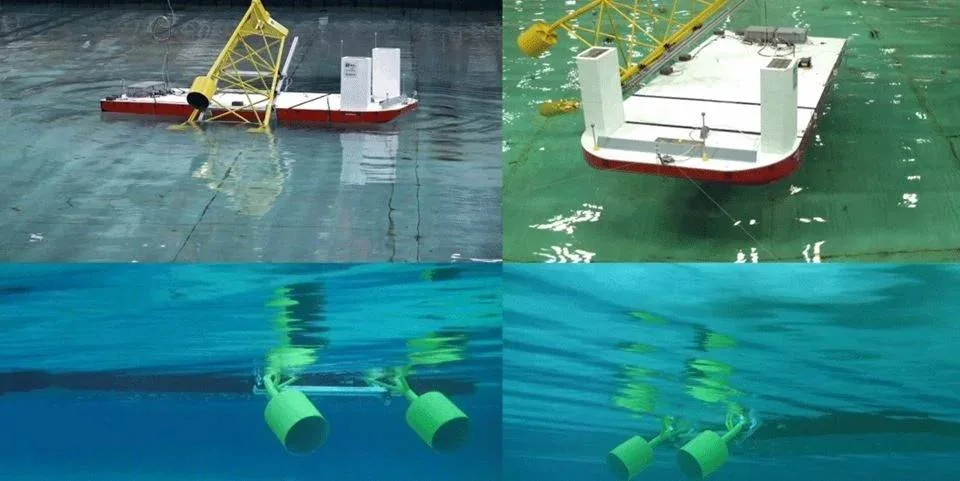
The concept of the wide barge was developed in collaboration between Aker Solutions, Sarens, and BOA. The team spent time at SINTEF's Ocean Basin in Trondheim testing the feasibility of this new design. Their results are promising, and further research is underway to refine the process.
A key feature of the wide barge is its ability to be lowered to a depth of over 30 meters with the deck 22.5 meters below the water surface. This allows for more efficient transportation of substructures, reducing the need for cranes or other specialized vessels.
The cargo can either be floated out without a crane vessel altogether or lifted off the barge using smaller, cheaper, and more accessible vessels. This approach could significantly reduce costs associated with offshore wind turbine installation.
According to Robert Indergård, a senior research scientist at SINTEF, the team is 'very satisfied' with the results of their tests so far. The numerical analyses conducted in advance have been validated by the practical trials, and further work is underway to refine the process.
The wide barge is one of the world's widest barges, measuring 166 meters long and over 73 meters wide. Its unique design enables it to transport multiple substructures simultaneously, reducing the need for cranes or other specialized vessels.
Unloading and placing substructures on the seabed will require further development. However, if successful, this approach could strengthen Norway's offshore wind supplier industry both nationally and internationally.
The success of this project would enable the use of smaller, cheaper vessels for unloading and placing substructures on the seabed. This could lead to significant cost savings and improved efficiency in offshore wind turbine installation.
Overall, the development of the wide barge concept represents a promising step forward in addressing the challenges faced by the offshore wind industry. Further research and testing are needed to fully realize its potential.
The success of this project would enable the use of smaller, cheaper vessels for unloading and placing substructures on the seabed.