

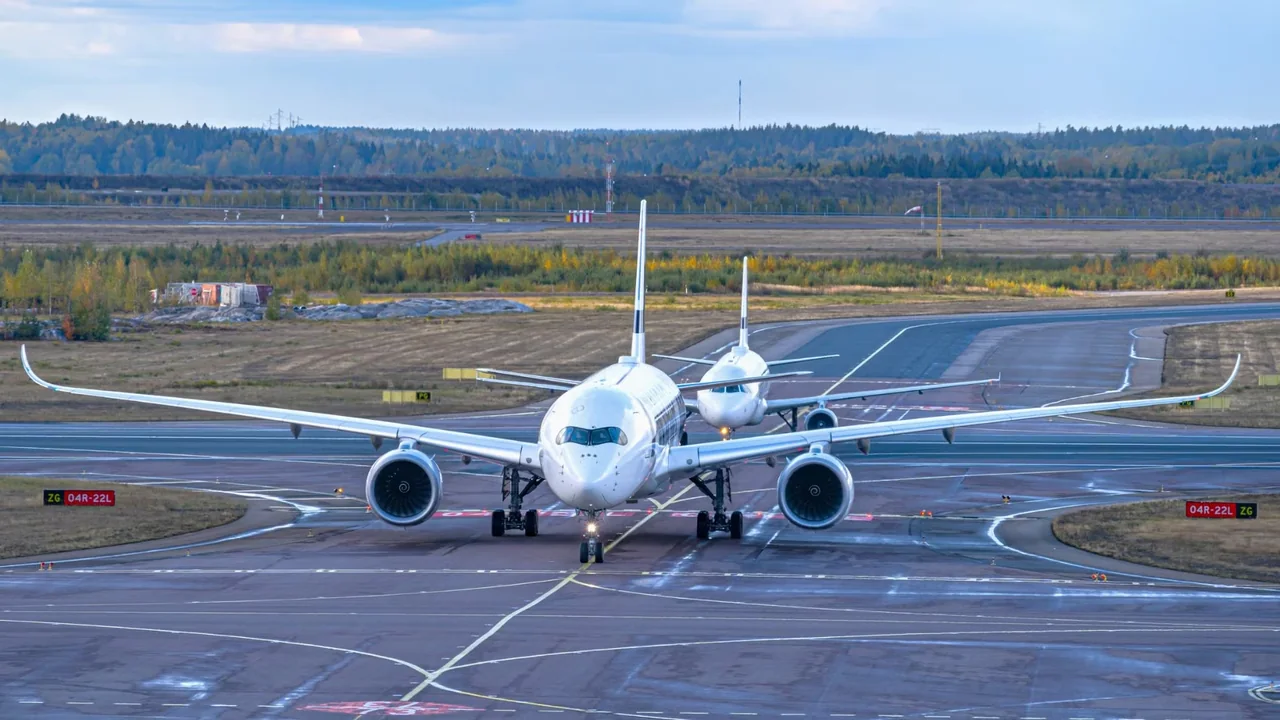
Helsinki Vantaa Airport was brought to a temporary standstill earlier this morning after an emergency drone warning prompted an airspace closure in the region. The Air Force scrambled F/A-18 fighter jets to deter the threat. The incident had considerable knock-on effects on operations, particularly during prime time for long-haul arrivals from Asia.
The emergency drone warning was issued by Finnish authorities at 3:49 AM local time, and a three-hour airspace closure was put in place from 4:00 AM to 7:00 AM local time. After the conclusion that no direct military threat had been posed, operations resumed at 7:19 AM local time.
According to Flight Aware, three departures and four arrivals were canceled in Helsinki today, with 23 departures and 31 arrivals being delayed. Finavia stated that morning delays may also affect departing and arriving flights later in the afternoon.

The knock-on effects of the operational disruption are still being felt at Helsinki Airport, with several diversions made by airlines. Flightradar24 reported that nine inbound flights were diverted due to their originally planned arrival time falling within the airspace closure window.
The incident is a reminder of the potential risks associated with drones in airspace, particularly in areas with close proximity to conflict zones like Russia and Ukraine. It highlights the need for robust security measures to prevent such incidents from occurring in the future.
As a result of the drone alert, several airlines had to divert their flights, including Finnair's services from Tokyo, Seoul, and Chengdu. The diversions resulted in delays and cancellations for passengers, causing significant disruption to operations.

The incident also underscores the importance of effective communication between authorities and airlines in responding to such incidents. In this case, the Air Force scrambled fighter jets to deter the threat, while Finnish authorities issued timely warnings to alert airlines and passengers.
In conclusion, the drone alert at Helsinki Vantaa Airport serves as a wake-up call for the aviation industry to prioritize drone security measures. It is essential to develop and implement effective strategies to prevent such incidents from occurring in the future.
The incident highlights the growing threat of drones in airspace, emphasizing the need for robust security measures.