The US military carried out strikes in Iran on Tuesday, sending oil prices soaring as investors bet heavily that a breakthrough will finally free up the long-paralyzed tankers stuck in and around the Strait of Hormuz. The strikes, which were described by Washington as defensive, have boosted Brent prices and widened the spread with West Texas Intermediate crude.
Brent futures rose more than 2% on Tuesday, reaching $98.50 a barrel, while US West Texas Intermediate crude fell slightly from Monday's last traded price but down $4.65, or 4.8%, from Friday's close.
The tensions in Iran have been ongoing for three months, with Tehran effectively halting nearly all non-Iranian shipping into and out of the Gulf via the Strait of Hormuz, choking off about a fifth of global oil and liquefied natural gas flows.
The US Secretary of State said negotiating a deal with Iran could take a few days, quashing hopes for an imminent end to the conflict a day after the strikes.
Iran's top negotiator and its foreign minister were in Doha for talks with Qatar's prime minister on a potential deal with the US to end the three-month-old war.
Both Washington and Tehran said they have made progress on a memorandum of understanding that would halt the war and give negotiators 60 days to reach a final deal.
The agreement includes Iran clearing mines from the strait within a 30-day window, after which vessels from all countries could navigate freely and safely.
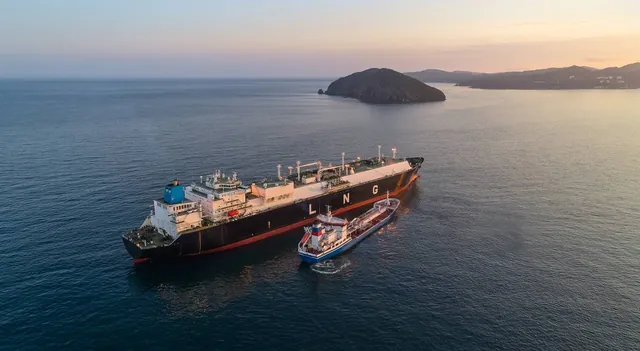
Traders are betting heavily that a breakthrough will finally free up the long-paralyzed tankers stuck in and around the Strait of Hormuz, with three liquefied natural gas tankers passing through the strait in recent days.
The deal's collapse at the eleventh hour remains a concern, as it has happened five times before.
The deal could still collapse at the eleventh hour, much like the five previous attempts before it.