
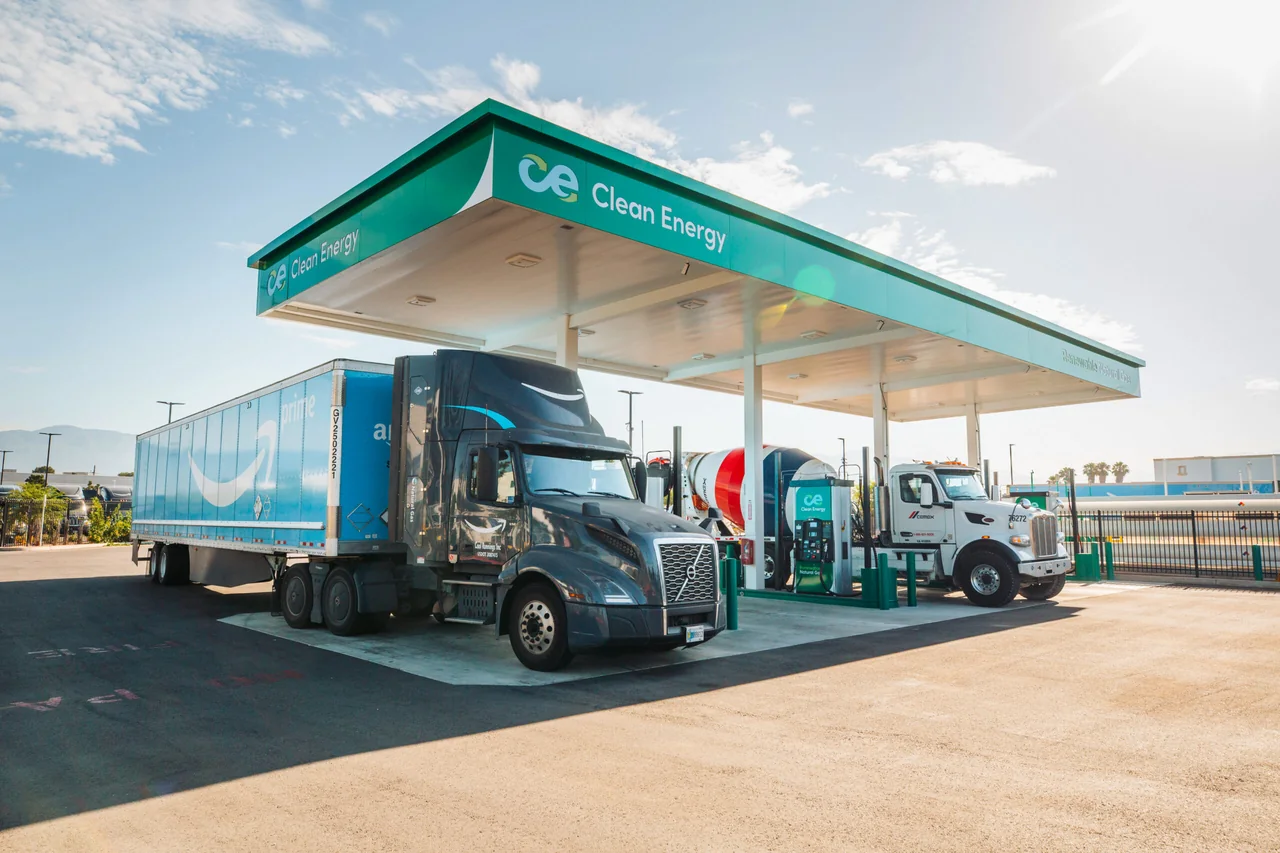
For over three decades, renewable natural gas has occupied a particular lane in the alternative fuel conversation. It's been respected but never quite mainstream in Class 8 trucking. The engine technology wasn't there, the fueling network had gaps, and diesel was the devil fleet operators knew.
A recent shift in calculus has changed the calculus for RNG in heavy-duty trucking. Clean Energy's Senior Vice President Chad Lindholm says a maturing infrastructure footprint and an engine platform have closed the gap that kept RNG on the sidelines of long-haul trucking.
The conversation started where most fleet procurement discussions do: cost per mile. There's a sharp contrast between diesel's exposure to global disruption and the domestic production profile of RNG.

Lindholm notes that diesel prices swing often, moving roughly two dollars per gallon in either direction, while RNG prices tend to fluctuate by about a dime. This stability shows up in the numbers, with substantial savings across every region of the country.
RNG can be found at an average savings of two dollars per gallon, and a bigger delta in some parts of the country. Clean Energy's own regional pricing data backs this up, with fleet customers operating X15N trucks seeing savings as high as $5.00 per gallon in certain areas.
However, there are still areas where RNG asks fleets to make tradeoffs. The upfront premium for a Cummins X15N-equipped tractor runs $80,000 to $100,000 over a comparable diesel unit, though this figure has come down since the engine entered production a year ago.

Fleet managers who haven't examined the data in the past year or so may be unaware just how much of an improvement there has been with the current generation of RNG technology and infrastructure. The previous 12-liter RNG engine carried a significantly higher fuel economy penalty, making the X15N's improvement a meaningful step forward.
Where the math turns in RNG's favor is in the TCO conversation over time. Fleets will see return from the Cummins X15N engine in about two years, resonating with fleets who hold assets for a minimum of five years.
The stability and domestic production profile of RNG make it an attractive option for fleets looking to reduce volatility.