
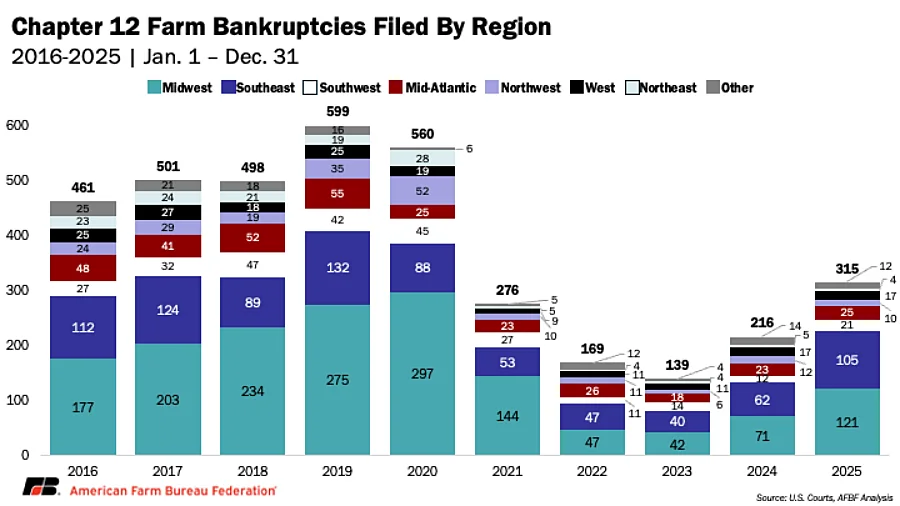
The agricultural sector is a vital component of the American economy, supporting a significant portion of trucking demand. Grain, livestock, fertilizer, seed, feed, refrigerated meat, packaged goods, ethanol, and farm equipment are all part of the freight ecosystems that depend on a stable farm economy. Recent reports have highlighted a sharp rise in farm bankruptcies and growing concern from agricultural leaders about systemic financial stress. This development has significant implications for freight markets, warranting careful attention.
Agriculture is not just a niche freight sector; it's a foundational one. Many small carriers may not directly haul grain or livestock, but agricultural output drives multiple layers of freight demand. The production process involves various stages, from planting to harvesting, each with its own set of transportation needs. When agricultural activity slows or consolidates, freight does not simply disappear; it restructures.
The 46% year-over-year increase in farm bankruptcies is a concerning trend that reflects financial stress building over time. High interest rates amplify debt servicing costs, particularly for operations carrying significant equipment or land loans. Compressed margins can lead to reduced truck utilization patterns and downward pressure on specific sectors.

Commodity prices have shown volatility across grains and livestock markets, with input costs remaining elevated while output prices soften. This compression of margins can have a ripple effect on the entire supply chain, impacting not just farmers but also manufacturers, distributors, and consumers.
If smaller farms exit at an accelerated pace, production may shift toward larger, vertically integrated operations. While consolidation may seem freight-neutral at first glance, it changes logistics behavior, with larger operations often negotiating long-term transportation contracts and relying on integrated supply chain systems.
The structure of demand changes even if the total output does not immediately collapse. Agricultural freight follows seasonal patterns, driven by planting seasons for fertilizers and seeds, harvest seasons for grains, and livestock cycles affecting reefer and live haul demand.
When farm financial stress intensifies, seasonal surges may soften. Producers may reduce acreage, delay capital investment, or scale herd sizes cautiously. This can have a significant impact on freight availability, particularly for carriers who depend on harvest spikes to stabilize annual revenue.
Freight markets are sensitive to marginal changes in volume, especially in already soft conditions. American agriculture is deeply integrated into global trade, with export demand influencing grain prices and production planning. Trade disputes, tariff uncertainty, and shifting international demand can amplify domestic financial stress for producers.
Agricultural stress affects not just commodity shipments but also farm equipment manufacturers, parts suppliers, and dealers, as well as rural construction and infrastructure projects. The ripple effect extends beyond the field, impacting energy markets and biofuel production margins.
Freight professionals who understand upstream economic signals gain strategic advantage. Watching the farm economy is not optional for carriers operating in agricultural corridors; it's part of reading the freight map accurately.
As the farm belt faces financial strain, freight markets must be aware of the ripple effects on transportation demand.