
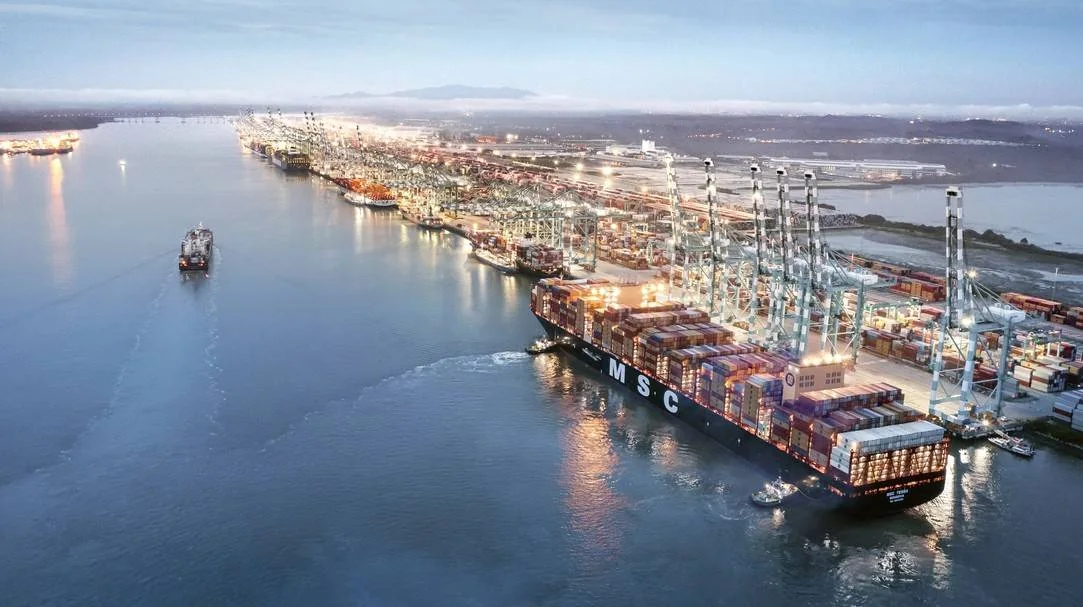
A container vessel operated by MSC Mediterranean Shipping Company (MSC) was struck by two projectiles while departing from the port of Umm Qasr in Iraq on June 1. The incident occurred when a projectile hit the vessel during departure, and another struck the crew accommodation area shortly afterwards. Fortunately, no crew members were injured in the attack. However, the incident has raised concerns about the safety of commercial shipping operations in the region.
The MSC Sariska V is a container vessel that was involved in the incident. The company has confirmed that all crew members on board were safe and unharmed following the attack. The vessel's cargo was also secured after the incident, according to reports. Despite the incident, the company has stated that it is committed to ensuring the safety of its crew and vessels.
The local media reports indicated that Iran's Islamic Revolutionary Guards Corps (IRGC) had claimed responsibility for the attack. The IRGC described the incident as a response to U.S. actions involving the vessel Lion Star. However, MSC has stated that it is a neutral commercial shipping company with no affiliation with either the United States or Israel.
MSC is headquartered and domiciled in Switzerland and is owned by the family of its founder, Italian national Captain Gianluigi Aponte. The company has emphasized its commitment to neutrality and has stated that it will continue to operate in the region despite the incident. However, the attack has raised concerns about the risks faced by commercial shipping companies operating in conflict zones.
The attack on the MSC Sariska V highlights the risks faced by commercial shipping companies operating in regions with high levels of conflict. The incident underscores the need for increased security measures to protect vessels and crew from such attacks. It also raises questions about the responsibility of governments and other parties involved in conflicts for ensuring the safety of commercial shipping operations.
The incident has sparked concerns about the stability of maritime trade in the region. The attack on a container vessel is a serious escalation of tensions between Iran and the United States, and it may have implications for global trade and commerce. As such, it is essential to monitor the situation closely and take steps to prevent similar incidents from occurring.
The MSC Sariska V's incident serves as a reminder of the importance of maritime security in regions with high levels of conflict. The company's commitment to ensuring the safety of its crew and vessels is admirable, but more needs to be done to address the root causes of such attacks. This may involve increased cooperation between governments, international organizations, and commercial shipping companies.
The attack on the MSC Sariska V has also raised questions about the role of private security companies in protecting vessels from attacks. While some private security companies offer protection services to commercial shipping companies, their effectiveness in preventing such incidents is uncertain. More research is needed to determine the efficacy of these services and to develop effective strategies for addressing maritime security risks.
In conclusion, the attack on the MSC Sariska V highlights the risks faced by commercial shipping companies operating in conflict zones. The incident underscores the need for increased security measures to protect vessels and crew from such attacks and raises questions about the responsibility of governments and other parties involved in conflicts for ensuring the safety of commercial shipping operations.
The attack highlights the risks faced by commercial shipping companies operating in conflict zones.