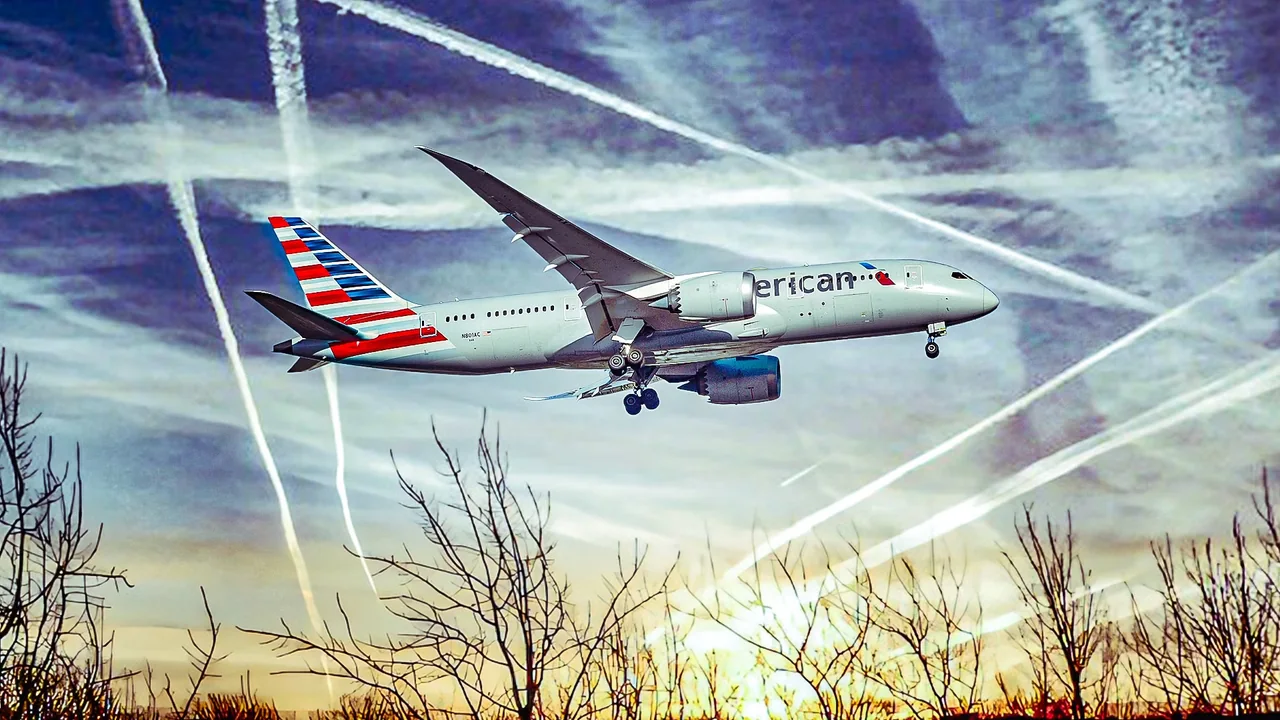
The visual asymmetry of modern air travel has become a persistent question for observers on the ground. One commercial airliner leaves a thick, bright white plume slicing through the upper troposphere, while another jet flying not too far above leaves absolutely nothing but empty blue air. This phenomenon raises questions about why condensation trails, or contrails, form behind some aircraft but not others. Contrails are not smoke or unburnt fuel, but rather a cloud of ice crystals manufactured by the intersection of engine physics and local atmospheric conditions.
The formation of contrails is influenced by the microclimate of the air mass surrounding the aircraft. When the atmosphere is both intensely cold and highly humid, water vapor from the engine exhaust freezes into ice crystals, forming a visible trail. However, if the atmosphere is dry or slightly too warm, these combustion byproducts remain invisible and dissolve into the surrounding air within a few milliseconds.
The difference in contrail formation between aircraft can be attributed to localized atmospheric physics rather than mechanical variance or specific airline operations. The separation guidelines for air traffic control dictate that aircraft traveling in the same direction must maintain a minimum vertical buffer of 2,000 feet, while opposing traffic is separated by 1,000 feet.

A small vertical shift in altitude can move an aircraft out of a dry pocket of air and into a highly volatile region. This can result in one flight crew experiencing a thick, persistent trail, while the trailing aircraft flies through a dry layer with zero visual trace.
The formation of contrails is not just a matter of chance; it's also influenced by the engine type and its ability to produce water vapor. Ultra-high-bypass engines have altered the contrail production window, making some trails more visible than others.
Predictive artificial intelligence is being used globally to rewrite flight paths and clean up the skies. By analyzing atmospheric conditions in real-time, AI can help pilots avoid areas with high humidity and cold temperatures, reducing the formation of contrails.

The use of AI in air traffic control has significant implications for reducing emissions and improving air quality. As aircraft become more efficient and environmentally friendly, it's essential to understand the factors that influence contrail formation and how to mitigate their impact.
By understanding the microclimate of the surrounding air mass, pilots can take steps to reduce contrail formation. This includes adjusting altitude and flight path to avoid areas with high humidity and cold temperatures.
The future of air travel will depend on our ability to manage contrails and reduce their environmental impact. As technology continues to evolve, it's essential to prioritize research into the factors that influence contrail formation and develop strategies for minimizing their effects.

The formation of contrails depends on the microclimate of the surrounding air mass.