
Autonomous yard trucks are being touted as a promising frontier for autonomous trucking. The technology has been developed by ISEE AI, which initially focused on building artificial intelligence for collaborative robots at the Massachusetts Institute of Technology. The company's co-founders, Yibiao Zhao and Chris Baker, were driven to create machines that could understand human social intentions and navigate complex environments like humans.
The focus of ISEE AI's research was on teaching machines to understand social intention: how a robot understands humans in a complex environment, how to navigate similarly to a human. This theory of mind research would prove foundational for the company's eventual product — autonomous yard trucks that must operate alongside human workers ranging from forklift operators to over-the-road drivers in chaotic, unstructured environments.
ISEE AI's initial bet was on the highway, but the company soon realized that the challenges of highway trucking were more complex than they initially thought. The problem was that everything beyond the demo required fail-operational systems that could handle nearly infinite edge cases at high speeds with 45,000 pounds of kinetic energy in tow.
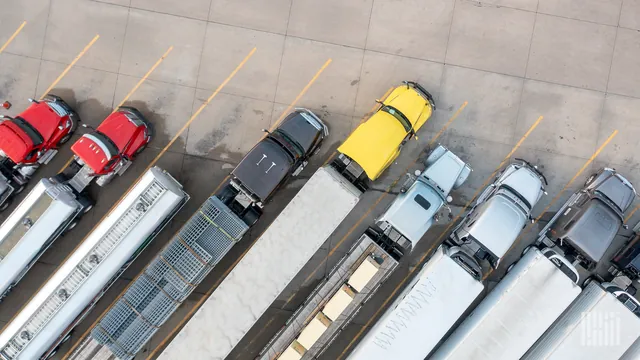
Customers saw the capability, but they then offered a different challenge: private yards. Because it's private property, there's no regulation, and there are fewer variables to consider. This made yard operations an attractive option for ISEE AI, which could shift its focus from fail-operational requirements to a fail-safe, fail-stop architecture.
By late 2018, ISEE AI had pivoted entirely to yard operations. The move let the company simplify its regulatory landscape and address public-acceptance issues largely disappeared. However, proving to customers that the technology worked remained a challenge.
One of the technical challenges facing autonomous yard trucks is mastering the 'inverted pendulum' — constant backing and parking in tight dock doors. This requires actively controlling the system to avoid diverging from the intended path.
Every trailer is different, with varying sizes, tandem positions, and weight distributions. Traditional autonomous systems calibrate over days or months, but ISEE AI has only seconds to make a connection in a busy yard.
The success of autonomous yard trucks will depend on their ability to navigate complex environments like humans do. As the technology continues to evolve, it's essential to address the unique challenges of yard operations and ensure that autonomous systems can operate safely and effectively.
As autonomous trucking continues to evolve, it's essential to address the unique challenges of yard operations.