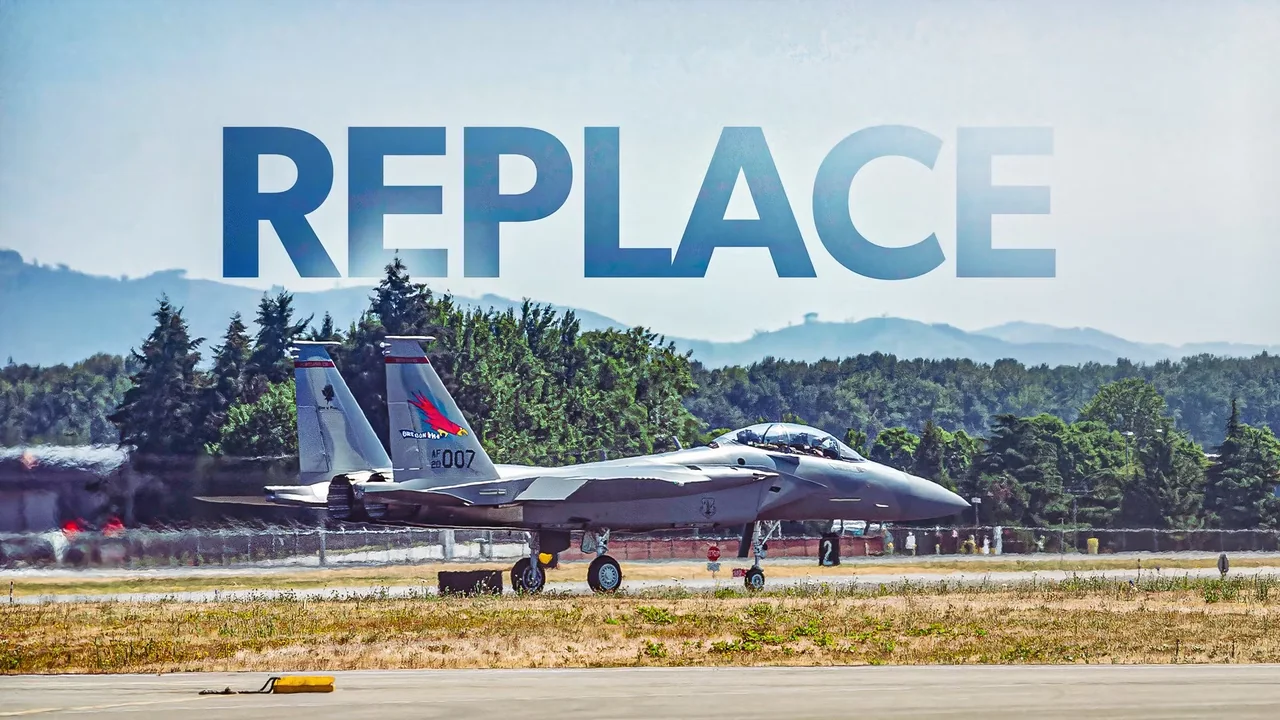
The US Air Force's decision to expand its planned Boeing F-15EX Eagle II fleet from 129 to 267 aircraft marks a significant shift in fighter procurement strategy.
This move reflects a broader rethink of how the Pentagon intends to balance stealth, payload, range, and long-term operating costs across future combat operations.
The F-35 remains central to penetrating high-threat environments, while the F-15EX is increasingly being positioned as a high-capacity 'missile truck' optimized for homeland defense, Indo-Pacific operations, and sustained large-scale air campaigns.

This adaptation highlights the evolving role of fourth-generation platforms in modern US military planning.
The expansion from 129 to 267 aircraft represents an increase of 107 percent, more than doubling the prior commitment in a single budget cycle.
The FY2027 request includes $3 billion for 24 additional Eagle IIs alongside $7.4 billion for 38 F-35A Lightning IIs.

This significant investment in the F-15EX reflects the urgent need to replace aging F-15E Strike Eagles, many of which are approaching structural limits after decades of continuous combat deployments.
The Air Force currently operates around 215 Strike Eagles, with the FY2027 budget requesting the retirement of 20 of the oldest F-15Es.
The new direction from the US Air Force marks a turning point in its fighter procurement strategy, with implications for future airpower planning and operations.

The expansion highlights how fourth-generation platforms are being adapted to support the realities of modern US military planning well into the 2040s.