The Middle East is home to one of the most premium and competitive airline markets on the planet. Legacy carriers such as Emirates, Qatar Airways, and Etihad Airways all offer business class products that are among the strongest in the market. Determining a winner among these three can be challenging and varies based on which aircraft you actually fly.
These carriers compete for all kinds of travelers, with connecting passengers increasingly becoming a major part of all their business models. The Qatar Airways Qsuite remains a key reference point for a business class seat with a suite-like feel, especially on routes where it is installed.
Emirates is in the middle of a consistency upgrade, with the carrier set to roll out retrofitted Boeing 777s with a modern 1-2-1 layout, an important shift from the older 2-3-2 cabin that many travelers have aimed to avoid.

Etihad's pitch is a more boutique vibe, with A350 business 'studios' that feature sliding doors and fully flat beds, aiming to blend privacy with a much calmer cabin.
A Look At Qatar Airways' Business Class
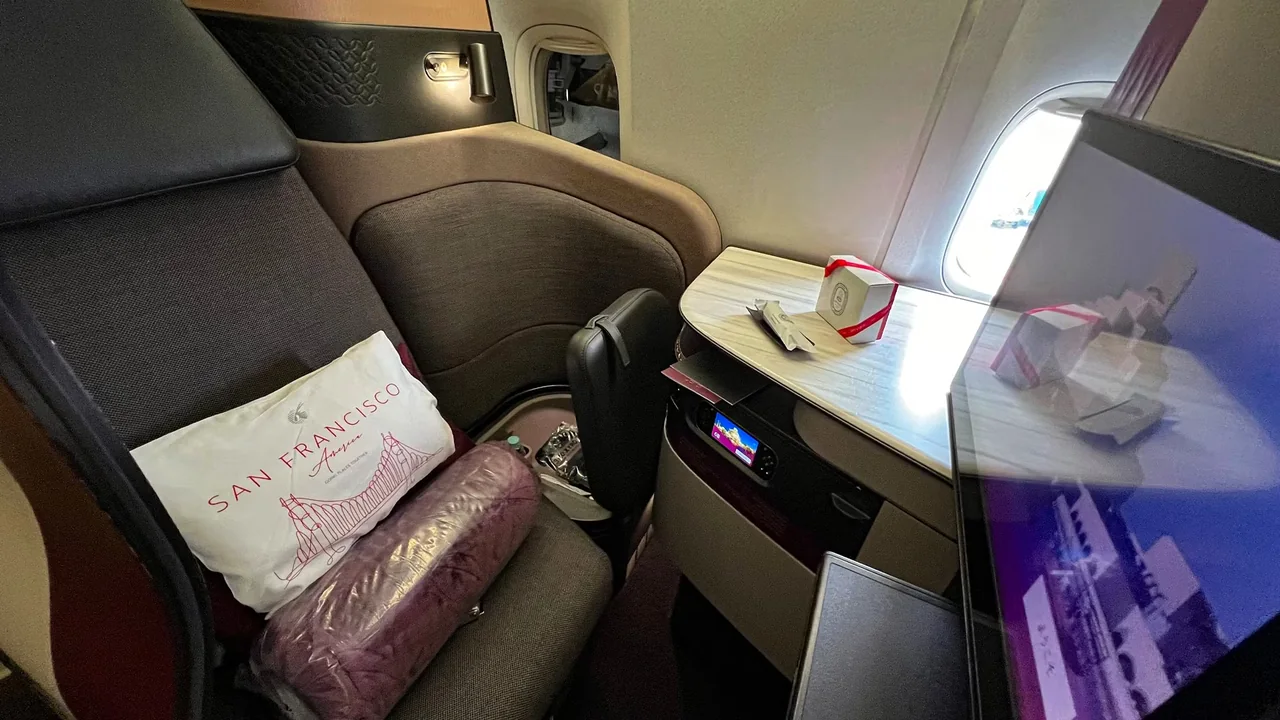
Qatar Airways' business-class product is built on the simple promise of making long-haul travel feel private, flexible, and genuinely restful, especially on overnight journeys. The headline product here is Qsuite , a suite-style seat that features a door, ambient lighting, and a fully lie-flat bed.

The airline's business class cabins mix forward and rear-facing seats, also featuring a signature quad configuration allowing four center seats to be opened up into a shared space for dining or communal conversation.
However, it is essential to note that Qatar Airways' business class seat offerings vary significantly by aircraft, with Qsuite only offered on select routes, and it can also disappear due to last-minute aircraft swaps.
The Middle East airline market is highly competitive, making it challenging to determine a clear winner among Emirates, Qatar Airways, and Etihad Airways.