
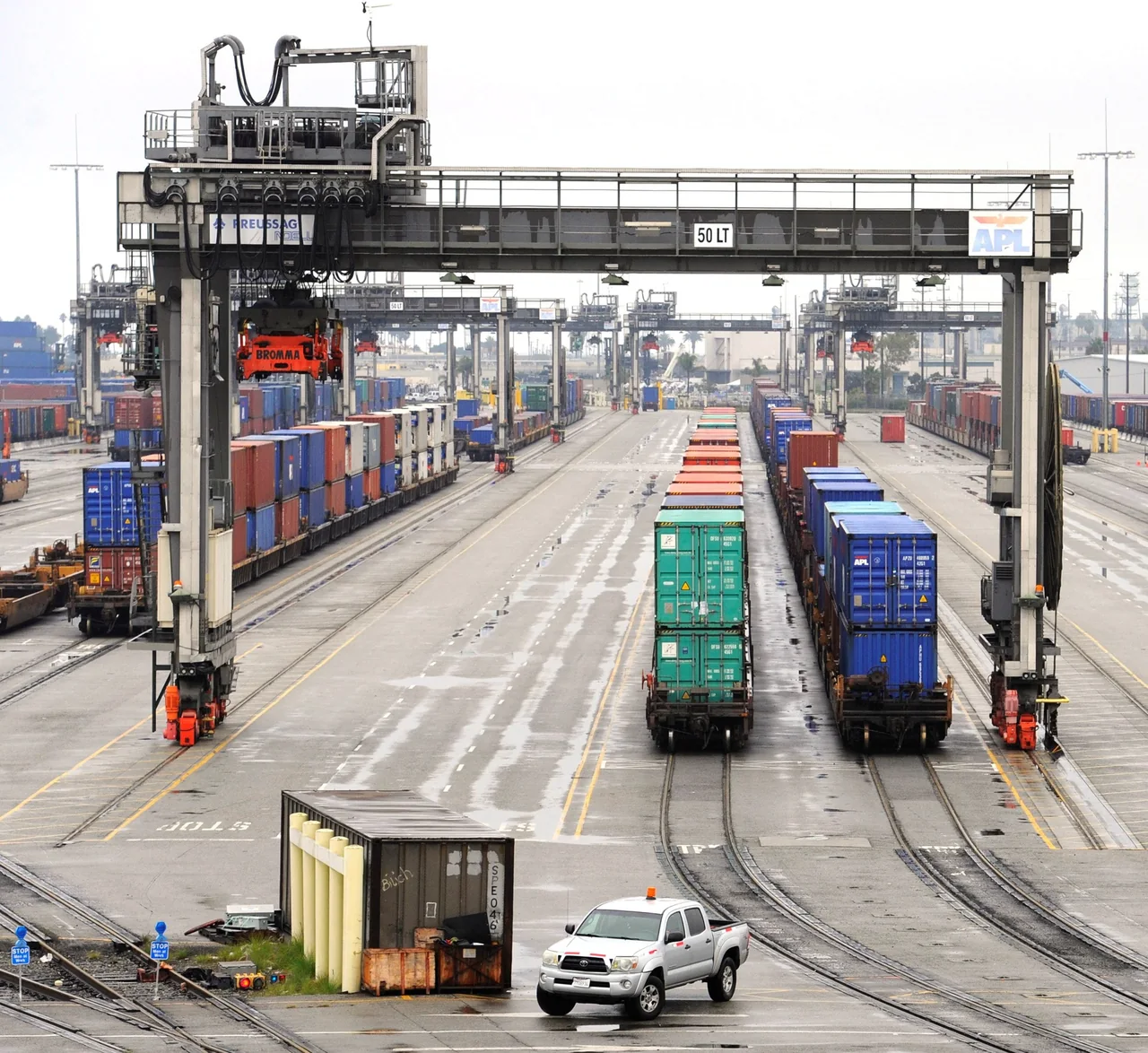
Container shipping rates have surged over the past week, with spot rates for 40-foot containers to northern Europe from Asia reaching $3,649, a 27% increase from the previous week. The cost to the US West Coast from Asia was up 20%, to $3,933. This surge in rates is attributed to higher fuel costs, congestion at some Asian ports, and a pickup in demand heading into peak season for booking ocean freight.
The numbers align with Drewry's latest composite reading for several long-haul routes, which also showed short-term rates posting a steep jump over the past week to the highest level in about a year. This indicates that the shipping industry is facing significant challenges due to the ongoing conflict in the Middle East.
Carriers are adding fuel surcharges and forcing importers to shoulder costs tied to the energy crisis, further exacerbating the situation. The added fees are causing capacity pressures heading into busy months for inventory restocking - July and August.
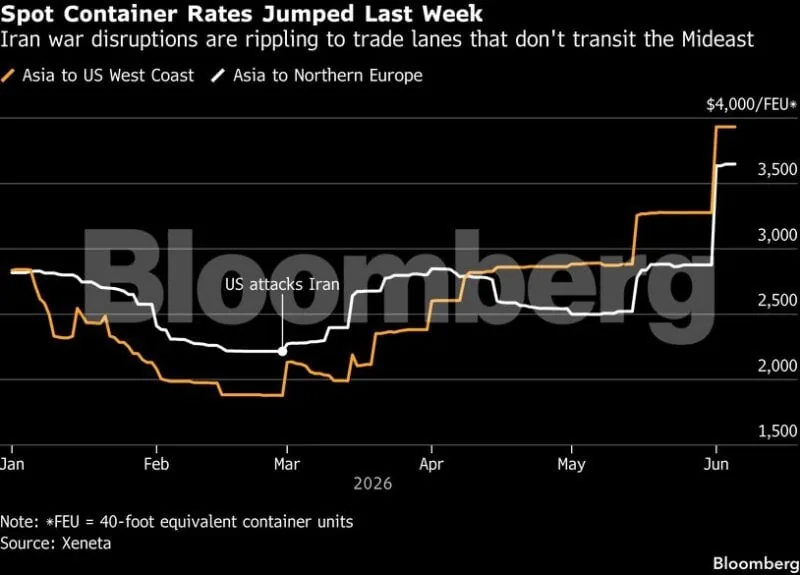
The Strait of Hormuz blockade is causing shipments to be rerouted, resulting in backups at Southeast Asian hubs such as Singapore and Malaysia's Port Klang, spreading the capacity pressures to trade lanes far from the Persian Gulf.
Peter Sand, chief analyst with Xeneta, warned that port disruption is toxic for supply chains, especially at transshipments hubs with global significance in Southeast Asia. This is driving massive market spikes on trades such as the transpacific which does not transit the Middle East.
The rate surge may have more room to run if shippers do look to front-load imports, and carriers will push rates higher, so the market may yet be far from its peak across trades globally.
Shares of A.P. Moller-Maersk A/S, the world's second-biggest container line, advanced about 13% this week, indicating that the company is benefiting from the surge in freight rates.
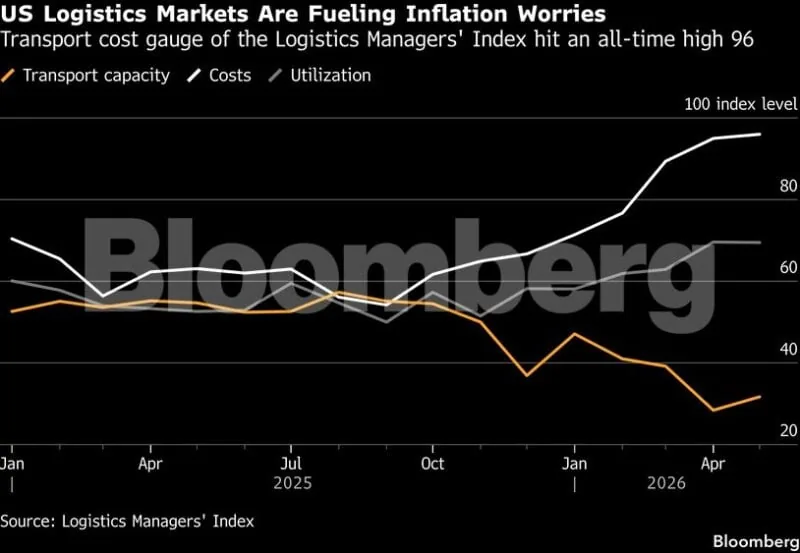
The surging cost of freight isn't confined to seaborne cargo, with the May reading of US transport costs in the monthly Logistics Managers' Index showing the fastest rate of expansion for any metric in the 10-year history of the report.
Overall, the surge in container shipping rates is a significant concern for businesses and consumers alike, as it highlights the need for greater transparency and predictability in the shipping industry.
The surge in freight rates is driven by a combination of factors, including higher fuel costs and increased demand heading into peak season.