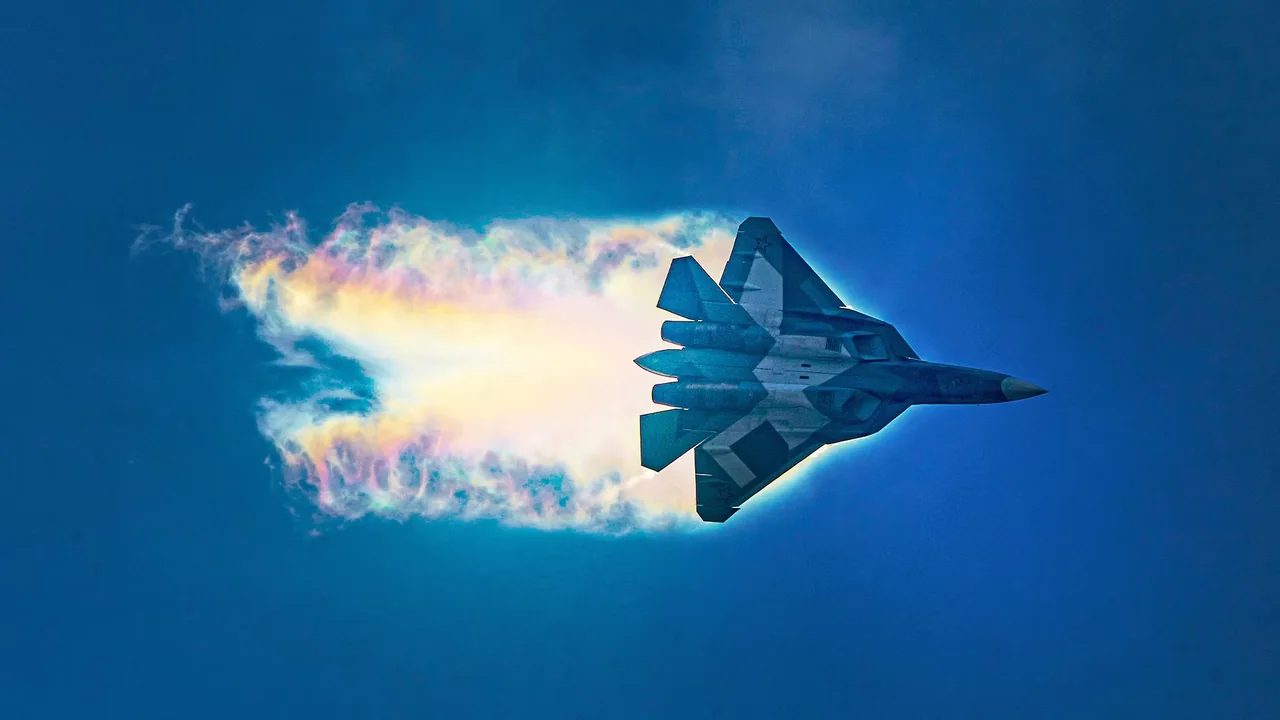
The world of fifth-generation fighter jets is a small class of highly advanced tactical aircraft, with only three nations producing examples: the United States, China, and Russia. This tiny pool has led to distinct design philosophies among these elite planemakers. The recent development of two-seat variants by Russia and China marks a new division in their approach to building stealth fighters.
The first twin-seat Sukhoi Su-57 Felon took flight on May 19, bearing the name '055 Blue.' This development is significant as it highlights the growing importance of two-seat variants in modern fighter jets. China also debuted its two-seat variant of the Chengdu J-20 Mighty Dragon in September 2025, further solidifying this trend.
The United States, however, has chosen to focus on automation instead of adding a second crew member to its stealth fighters. The Lockheed Martin F-22 Raptor and Boeing F-35 Lightning II are examples of this approach, with all being single-seat aircraft.

Despite the emphasis on stealth profile, which prevented consideration of a backseat in earlier designs, the F-22 remains the most stealthy fifth-generation fighter in the world. Its design has carried over to its successor, the F-35, which prioritizes manufacturing costs and sustainability over adding a second crew member.
The F-35's core processor automatically ingests raw data from various sensors, allowing the lone pilot to focus on tactical decisions. This system includes the AN/APG-81 AESA Radar, Electro-Optical Targeting System, and AN/ASQ-239 Electronic Warfare suite.
Additionally, the F-35 features a Helmet Mounted Display System that projects real-time, 360-degree infrared imagery onto the pilot's visor. The computer also stitches camera feeds together to provide a comprehensive view of the surroundings.

The F-35's direct voice input commands eliminate the need for physical control inputs during critical actions, enhancing the pilot's situational awareness. This advanced system enables the F-35 to control multiple collaborative combat aircraft and loyal wingman drones.
The focus on automation in Western stealth fighters may limit their effectiveness in certain situations, particularly those requiring human judgment and decision-making. The use of two-seat variants by Russia and China highlights an alternative approach that prioritizes crew safety and situational awareness.
As the military landscape continues to evolve, it will be interesting to see how the design philosophies of these elite planemakers play out in real-world combat scenarios.

The focus on automation in Western stealth fighters may limit their effectiveness in certain situations.