
Amazon's investment in European fulfillment centers is a significant step towards modernizing its logistics operations. The company plans to deploy three types of new robots as part of a $10 billion expansion plan. This move aims to support the growth of its workforce by 25,000 by the end of the decade.
The retail logistics behemoth has recently surpassed 1 million robots developed, produced and deployed across its operations network. This milestone highlights Amazon's commitment to investing in robotics technology to enhance operational efficiency and worker safety.
Amazon's new Proteus autonomous robot is designed to perform physically demanding tasks such as moving heavy carts with packages over long distances to the outbound loading dock. This allows employees to reduce their risk of injury and focus on managing inventory flow, quality control and other high-skill work.
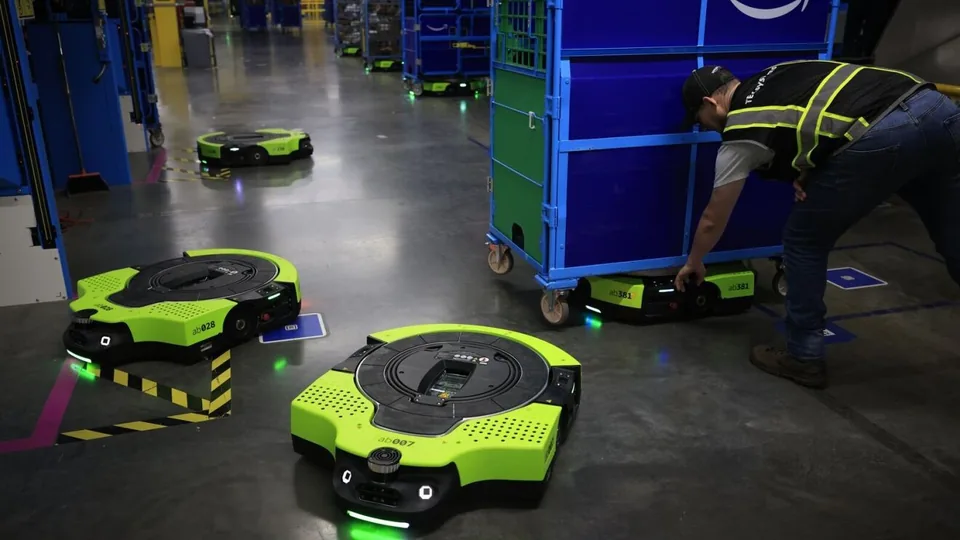
The next-generation Proteus 2.0 robot is capable of understanding instructions in plain, conversational language with no technical commands or programming interface. This enables warehouse workers to assign tasks to the robot the way they would communicate with a colleague.
The new system can travel much further than the original and operate anywhere items need to be moved, including transporting containers as they arrive at a site, transferring them between workstations, and assisting employees across Amazon's fulfillment centers and delivery sites.
The deployment of Proteus 2.0 is expected in Europe in the first half of 2027, with current testing taking place in Amazon labs.

Amazon's robotics roadmap has reached new heights with the launch of its next-generation fulfillment center in Shreveport, Louisiana. The site uses eight different robotics systems that work in harmony to support package fulfillment and delivery.
The company's focus on robotics technology is expected to have a significant impact on the logistics industry, driving innovation and improving operational efficiency.
As Amazon continues to expand its operations, the integration of robotics technology will play a crucial role in supporting the growth of its workforce and enhancing operational efficiency.
The integration of robotics technology is expected to improve efficiency and reduce worker injuries.