
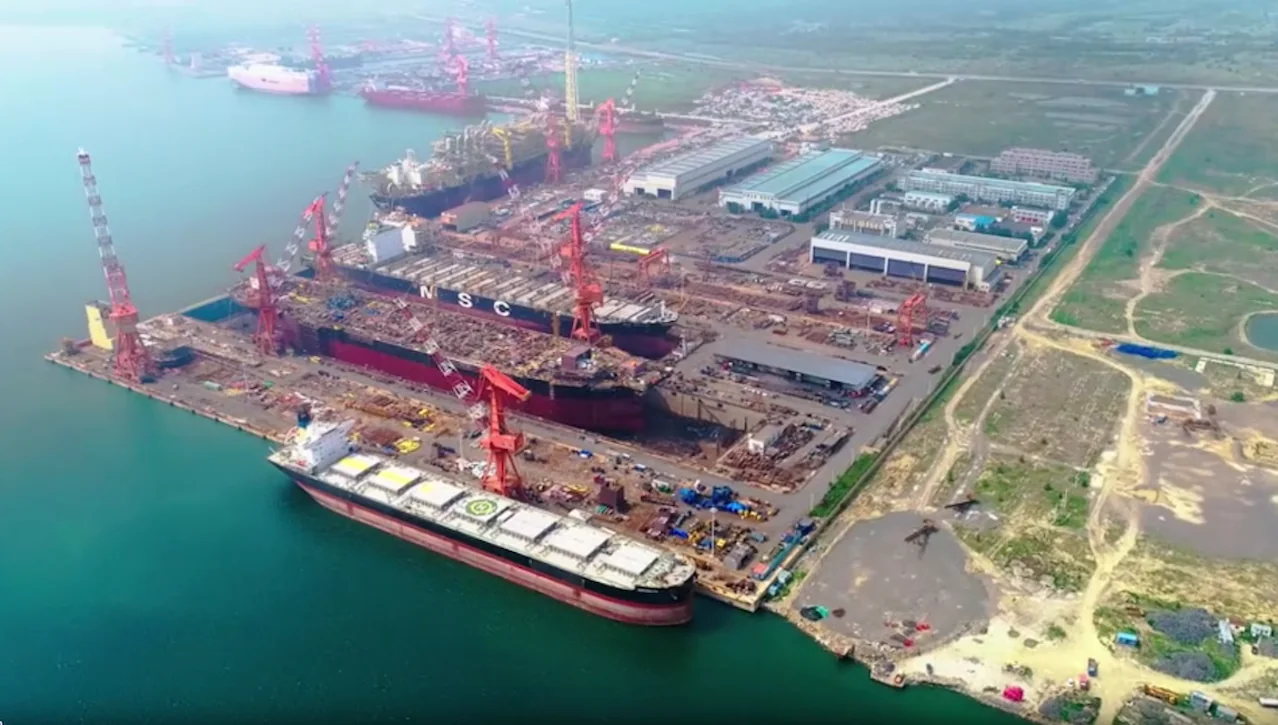
Leading Democrats in Congress are calling for a reinstatement of a port tax on Chinese ships after the U.S. and China agreed to a mutual postponement in May. This move would significantly impact the global shipping industry, particularly with regards to trade between the two nations.
The charges would total approximately $3.2 billion annually for large Chinese-built container and bulk vessels calling U.S. ports. The port tax was implemented in 2025 after an investigation found that China leveraged unfair advantages to build a dominant position in global shipping and shipbuilding. This move aims to protect domestic shipbuilding interests and promote fair competition.
Democrats Mark Kelly of Arizona and Elizabeth Warren of Massachusetts have urged United States Trade Representative Jamieson Greer to reinstate the fees, citing concerns over the impact on U.S. maritime industry jobs and competitiveness. The strategy to resurrect the business would require tens of billions of dollars in subsidies over several decades, observers say.

The port tax has been a contentious issue since its introduction, with some arguing that it unfairly targets Chinese shipbuilders while others see it as necessary to level the playing field. s warn that U.S.-built ships would struggle to compete on a cost basis with shipyards in Asia without the tax.
Kelly has authored legislation aimed at reviving the U.S. maritime industry, which includes provisions for the reinstatement of the port tax. The Trump administration later released shipbuilding plans of its own, but critics argue that these plans do not go far enough to address the issue.
The impact of reinstating the port tax would be felt across various sectors of the global economy, from shipping and logistics to manufacturing and trade. It could also have implications for U.S. foreign policy and relations with China.
Reinstating the port tax would require a significant shift in U.S. trade policies and could lead to increased tensions with China. s caution that any move to reinstate the tax must be carefully considered to avoid unintended consequences.
The global shipping industry is already facing numerous challenges, including rising costs, supply chain disruptions, and environmental concerns. Reinstating the port tax would add another layer of complexity to an already complex landscape.
Ultimately, the decision to reinstate or not reinstate the port tax will depend on a range of factors, including economic considerations, trade agreements, and diplomatic relations with China.
As the global shipping industry continues to evolve, it is essential that policymakers consider the long-term implications of their decisions. The fate of the U.S. maritime industry hangs in the balance, and any move to reinstate the port tax must be carefully weighed.
s weigh in on the impact of reinstating the port tax.