


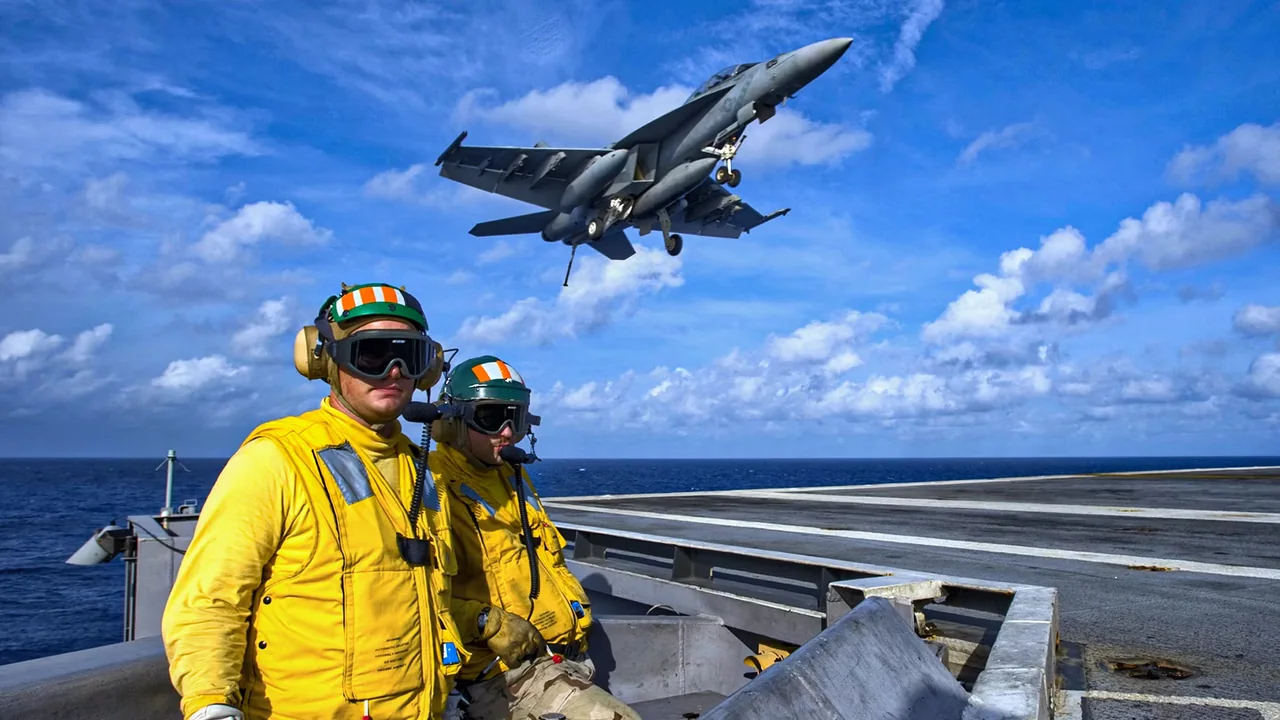
The F/A-18 Hornet is famous for its dramatic landing approach, which is a result of the physics of landing on a short flight deck. The aircraft needs to snag the arresting wire and maintain control while advancing engines to 100% throttle in case of a failed tailhook catch.
Landing on aircraft carriers is more difficult than conventional runways due to the need for immediate engine power to prevent the aircraft from tumbling into the sea if the tailhook fails. This requires carrier-based jets to execute high angles of attack.
The US Navy's F/A-18s are designed with a high angle of attack (around 8°) to cope with the strain of carrier operations and maintain control during landing. However, this also means they are heavier than their land-based counterparts due to structural reinforcement.

Carrier-based fighter jets receive adaptations such as robust landing gear and other reinforcements to withstand the stress of repeated takeoffs and landings on carriers.
The F/A-18's design is a trade-off between carrier operations and ground-based performance, with the latter being sacrificed for the former. This is reflected in the shorter life cycles of naval fighter jets compared to their land-based counterparts.
One reason naval fighter jets are rarely sold as second-hand aircraft is that they experience wear and tear due to salt-air exposure, which shortens their lifespan.

The need for high angles of attack also depends on pilot visibility and the controlled high descent rate ('Slam') required during carrier landings. The F/A-18's design prioritizes these factors over other considerations.
In contrast, retiring land-based fighter jets like the F-16 can expect longer service lives due to reduced exposure to salt-air and less strain from carrier operations.
The F/A-18's extreme angles of attack are a testament to its unique design requirements for carrier-based operations, highlighting the trade-offs made in aircraft development between different operational environments.

The F/A-18's design prioritizes carrier operations over other factors.


