

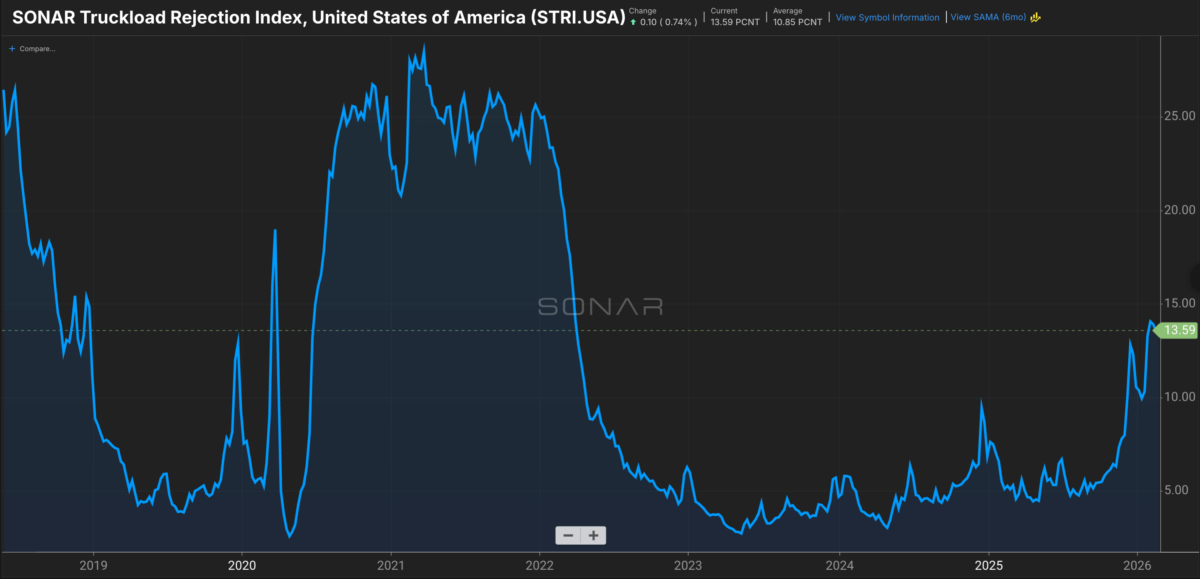
The trucking industry is bracing for a potential super cycle of rate surges as the Dalilah Law takes shape. The Senate bill, introduced by Sen. Jim Banks (R-Ind.), would trigger a sharp, immediate contraction in trucking capacity if enacted, potentially igniting a capacity crunch with overnight rate surges amid severely tight supply. This could lead to much higher trucking rates becoming permanent, giving carriers the best operating conditions in decades. The bill's strict eligibility criteria for commercial driver's licenses (CDLs) would force states to revoke thousands of existing CDLs held by undocumented individuals and many others with temporary or non-qualifying immigration status.
The legislation also mandates English-only knowledge and skills testing, plus a mandatory recertification process for current holders, all enforced by the threat of withheld federal highway funding for non-compliant states. This is not another FMCSA regulation, guidance document, or agency interpretation that could be softened, delayed, or reversed by a future administration. If Congress passes the bill and the President signs it, the Dalilah Law becomes statutory federal law, effective immediately upon enactment.
The capacity math is straightforward and severe. Foreign-born drivers currently comprise roughly 18–19% of the U.S. trucking workforce, around 630,000–720,000 out of approximately 3.5–3.8 million total drivers/CDL holders. The bill's strict eligibility criteria would align closely with scenarios analyzed in a detailed report prepared for J.B. Hunt by Noël Perry of Transport Futures.

The analysis estimates that full implementation of similar immigration enforcement policies could put over 600,000 drivers at risk, or about 16% of the active driver population. This breakdown includes roughly 197,000 from English proficiency failures, 252,000 (net) from undocumented status/documentation issues, and 167,000 (net) from non-domiciled status revocations, plus overlaps and hiring restrictions.
The removal of so many operators from the road would shrink available capacity overnight, echoing but accelerating beyond the most aggressive prior enforcement projections. Fewer trucks chasing the same freight volumes would mean tighter supply in key lanes and a severe capacity crunch. This could lead to massive spot rate increases for truckload capacity, followed by sharp rises in contract rates as shippers and carriers adjust to reality.
Trucking firms would face far fewer available drivers and would sharply increase wages, with sign-on bonuses potentially reaching tens of thousands of dollars. The result would resemble a COVID-like capacity crunch, but without the relief valve of new immigrant drivers, whose influx previously sustained excess capacity and contributed to the Great Freight Recession.

Historical precedents from capacity crunches saw spot and contract rates surge in double-digit percentages when supply tightened significantly. A loss on this scale could trigger similar or sharper increases: high double-digit rate hikes (potentially 50–100% on some lanes) aren’t out of the question, especially if removals occur fast and hard without gradual offsets.
While higher trucking rates would be highly impactful for trucking companies and could contribute modestly to goods price increases, trucking freight represents a small share of finished goods prices—typically less than 4% depending on the product—and any broader inflationary effects on headline CPI would likely remain limited and contained. Doubling of trucking rates would increase consumer prices by less than 1%.
Fleets would gain massive negotiating leverage in the short term due to reduced competition, but replacing or hiring drivers would become slower and more expensive in a constrained pool. Larger carriers might accelerate consolidation to capture remaining capacity, but the overall dynamic remains clear: supply tightens dramatically, rates rise sharply.
The Dalilah Law would reset who can legally hold a CDL nationwide, and trucking would feel the resulting capacity squeeze and corresponding rate surge immediately. This isn’t a gradual policy shift with built-in cushions or prolonged legal challenges. It’s hard statute, locked in until Congress acts again.
The proposed law could lead to a sharp contraction in trucking capacity, triggering massive spot rate increases and contract rate hikes as shippers and carriers adjust to reality.


