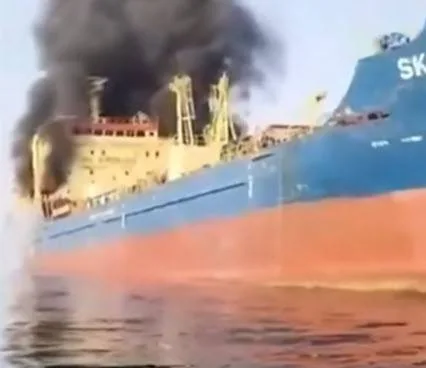
At least three tankers were damaged off the Gulf coast, with one seafarer killed, as Iranian retaliation for US and Israeli strikes on Iran exposed ships to collateral damage. The incident has raised concerns about the risks to commercial shipping in the region. Shipping data showed that over 200 vessels, including oil and liquefied gas tankers, had dropped anchor around the Strait of Hormuz and surrounding waters in response to the increased security risk.
Risks to commercial shipping have surged in the past 24 hours, with more than 200 vessels dropping anchor around the Strait of Hormuz and surrounding waters. The incident has prompted Asian governments and refiners to assess oil stockpiles, highlighting the potential impact on global energy markets. The US military has announced its first casualties, as a new poll showed only one in four Americans supported strikes against Iran.
The US military has launched a series of airstrikes on Iranian targets, including B-2 stealth bombers dropping 2,000-lb bombs on hardened, underground Iranian missile facilities. Major container shipping lines have rerouted round the Cape of Good Hope to avoid the affected area. The incident highlights the growing tensions between the US and Iran, with the latter accusing the former of aggression.
The security risk to ships operating in the Persian Gulf and adjacent waters has increased dramatically, according to Jakob Larsen, chief safety and security officer at shipping association BIMCO. Ships with business connections to US or Israeli interests are more likely to be targeted, but other ships may also be targeted deliberately or in error.
A projectile hit the Marshall Islands-flagged product tanker MKD VYOM, killing a crew member on board as the vessel sailed off the coast of Oman. The incident highlights the potential for collateral damage and the need for increased vigilance among shipping companies. The IMO has urged companies to avoid sailing through the affected area until conditions improve.
The risk of mines being laid by Iranian forces in the narrow lanes within the Strait of Hormuz has also been raised, with security sources warning of the potential for retaliatory strikes. War risk insurance rates are expected to surge when underwriters review cover on Monday, according to maritime sources.
The European Union's naval mission Aspides for the Red Sea, Gulf and Indian Ocean will be reinforced with additional ships, according to the bloc's foreign policy chief Kaja Kallas. The reinforcement is part of a broader effort to bolster maritime security in the region.
The incident has significant implications for global shipping, highlighting the need for increased cooperation among nations to ensure maritime security. As tensions continue to escalate, it remains to be seen how the international community will respond to the growing threat in the Gulf.
The recent escalation of tensions in the Gulf has significant implications for global shipping, highlighting the need for increased vigilance and cooperation among nations to ensure maritime security.