
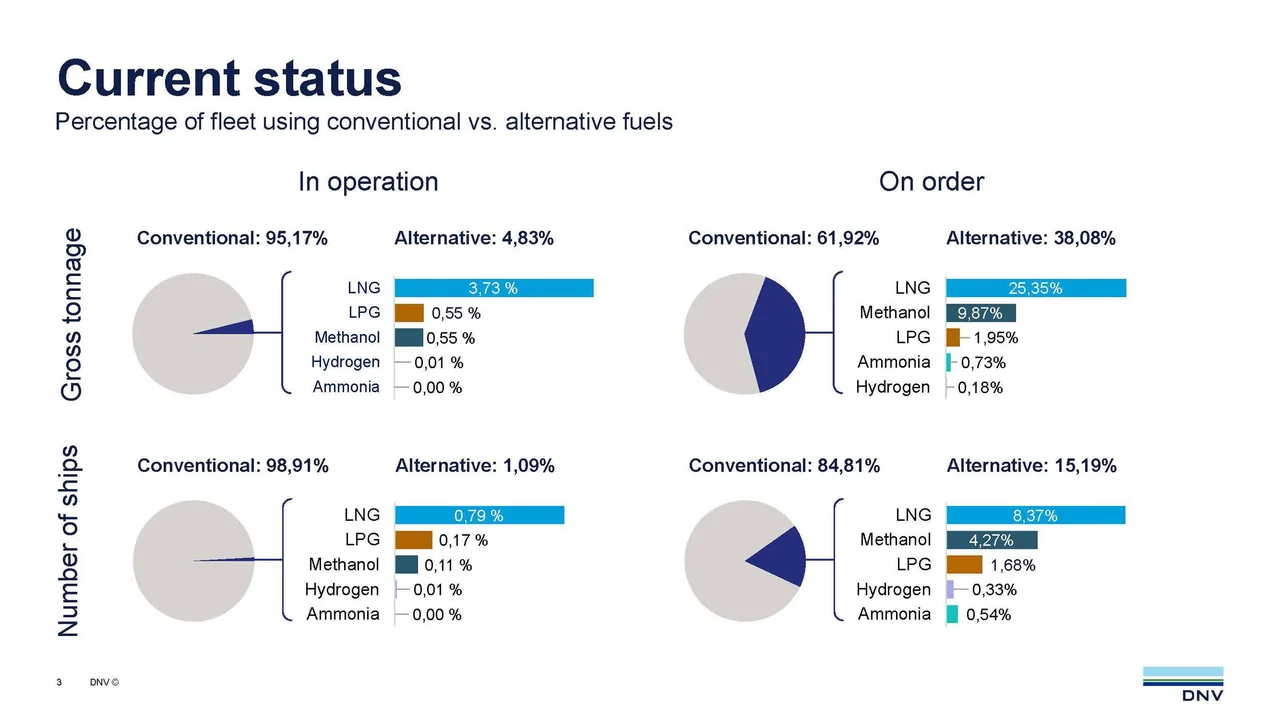
February 2026 saw a relatively slow month in the maritime industry's transition to alternative fuels, with 17 new orders placed for vessels fueled by such alternatives. This represents a significant decrease from the same period last year, when 54 alternative-fuelled vessels were ordered. The majority of these recent orders, 14, were for liquefied natural gas (LNG)-fuelled vessels, which are primarily used in the container segment. This dominance of LNG is largely driven by cargo owners seeking to reduce their environmental impact through lower-emission transport options.
Of the remaining three orders, all were for dual-fuelled ethane gas carriers, a type of vessel that can operate on both conventional fuels and alternative gases. The continued growth in the LNG bunkering fleet also warrants attention, with two new orders placed for LNG bunkering vessels in February 2026. This expansion is reflective of the increasing need for supporting infrastructure as more LNG-fuelled vessels enter operation.
The slow pace of adoption may be attributed to various factors, including high upfront costs associated with alternative fuels and the need for significant investments in supporting infrastructure. Additionally, regulatory frameworks governing the use of alternative fuels are still evolving, which can create uncertainty among shipowners and operators.
Despite these challenges, the progress made so far is encouraging, particularly when considering the broader context of the fuel transition. The fact that 37 alternative-fuelled vessels have been ordered in the first two months of 2026, compared to 54 during the same period last year, suggests a continued shift towards more sustainable maritime practices.
The industry's focus on reducing greenhouse gas emissions and mitigating climate change has led to increased demand for alternative fuels. As a result, companies like DNV Maritime are investing heavily in research and development, as well as providing valuable insights through their Alternative Fuels Insight platform.
DNV Maritime's Global Decarbonization Director, Jason Stefanatos, noted that the recent orders represent 'a relatively slow month' in the alternative-fuelled space. However, he also emphasized the importance of continued growth in the LNG bunkering fleet, which reflects the increasing need for supporting infrastructure as more LNG-fuelled vessels enter operation.
Stefanatos highlighted that the fuel transition is progressing, albeit at a more measured pace than anticipated over the past two years. This underscores the need for sustained industry investment and regulatory support to drive adoption of alternative fuels in the maritime sector.
The slow but steady progress in alternative fuels underscores the importance of cooperation among stakeholders, including shipowners, operators, and regulatory bodies. By working together, we can create a more sustainable future for the maritime industry.
As the industry continues to navigate the complexities of transitioning to alternative fuels, it is essential to prioritize transparency, innovation, and collaboration. Only through these efforts can we achieve our goals of reducing greenhouse gas emissions and mitigating climate change in the maritime sector.
The slow pace of alternative fuel adoption highlights the need for sustained industry investment and regulatory support.